





Wedding Backdrops 2026: Top Trends & Ideas
Introduction:
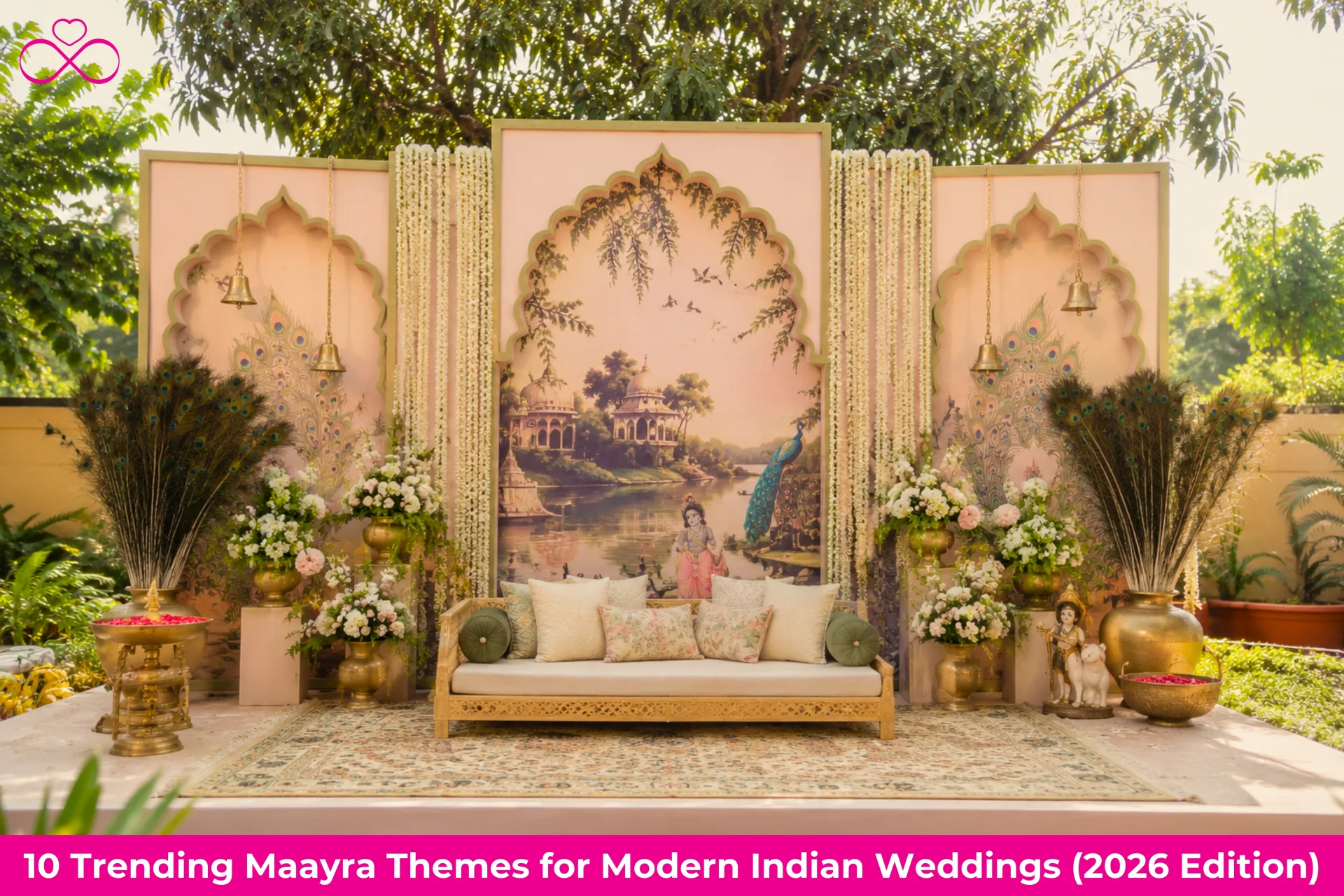
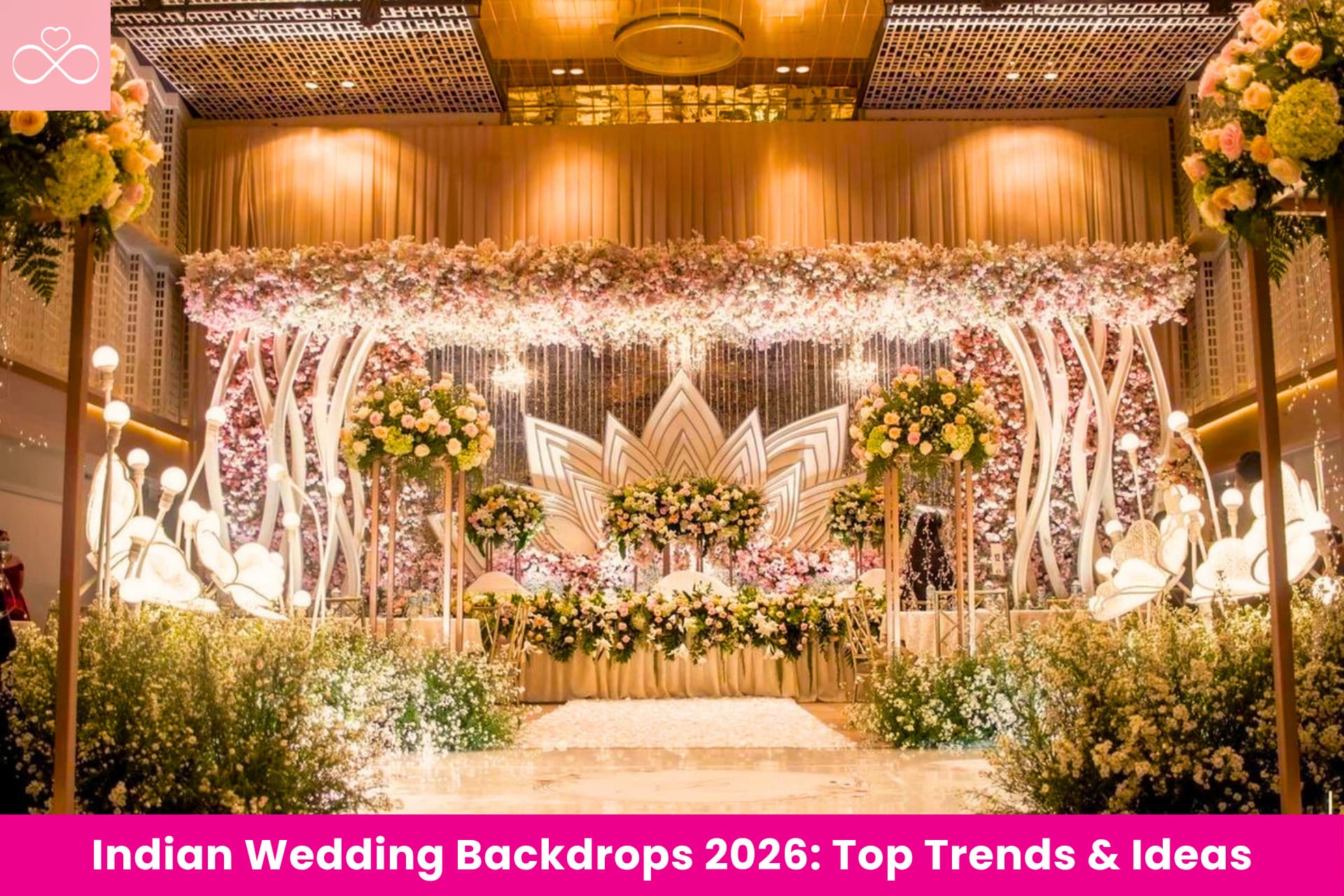
Here is the thing nobody tells couples at the start of wedding planning: the backdrop is not a finishing detail. It is the decision that quietly controls everything else. The photographer composes most of their key frames against it. The lighting director works around it. The florist takes their colour cues from it. Get the wedding stage backdrop right, and every other decor element has something to respond to. Get it wrong — or worse, leave it to the decorator to figure out at the last minute - and no amount of fresh roses or fairy lights will save the look. The Eternal Weddingz team has spent time across Maharashtra, Madhya Pradesh, Rajasthan, Hyderabad, and Goa in 2026, looking at what couples are actually booking and what decorators are actually recommending. This is not a list assembled from Pinterest boards. It is what is working.
The Indian wedding backdrop market in 2026 looks different from two years ago. The wall-to-wall artificial flower panel - those tight grids of plastic roses that were everywhere from 2018 to 2023 — is disappearing fast. Partly because of the enforcement of the plastic flower ban, which directly affects banquet halls and decorators using non-biodegradable artificial florals. Partly because couples who came of age on Instagram have seen the foam-backed flower wall in roughly nine hundred reception albums and are done with it. What is replacing it is more varied, more interesting, and in several cases, genuinely cheaper when you account for reuse across multiple functions.
We break down eight categories of wedding backdrops trending in 2026 - from fresh floral drops and Sheesh Mahal mirror panels to LED stage walls and handloom textiles — with honest budget ranges, what each format actually requires from the venue, and where each one makes sense for different types of functions. Skip the trend reports that make everything sound equally good. Some of these formats cost three lakhs more than others. That information matters.
1. What Makes a Wedding Backdrop Actually Work — And What Doesn't.
Most backdrop problems start the same way. The couple and the decorator have their first detailed meeting three weeks before the wedding, the venue is already booked, the colour palette is settled, and the backdrop is the last thing on the list. So the decorator proposes what they have in stock, what they know how to install quickly, and what they know photographs acceptably. The couple says yes. The backdrop is fine. Fine is a bad outcome at a wedding.
The backdrop decision needs to happen early because it is load-bearing. The lighting designer needs to know the backdrop material before they can plan their rig — a reflective mirror panel and a matte fabric drape require completely different lighting approaches. The photographer needs to know the backdrop before they can plan their framing. And the florist needs to know the backdrop before they can advise on what floral colours will read well against it versus what will disappear. When the backdrop is decided last, all of these other decisions have already been made without it, and the result is a stage that looks like it was assembled by committee.
How to Brief Your Decorator (Before They Brief You):
- Decide the format before the first decorator meeting: Fresh floral? Fabric? LED? Metal? Narrowing to one category before the meeting means quotes are comparable and the conversation is productive, not exploratory at the couple's expense.
- Ask for photos from actual events, not styled shoots: Portfolio images from real weddings under real event lighting are the only reliable indicator of how a backdrop material performs. Studio shots of sample installations look good in every lighting condition. Real weddings do not.
- Test scale against ceiling height: A backdrop sized for a farmhouse ceiling will look proportionally small in a hotel ballroom with 22-foot clearance. This is a detail decorators should flag, but often do not unless asked directly.
- Think across all functions, not just the reception: A modular textile or metallic panel backdrop used at the reception can often be reconfigured for the sangeet or engagement at a fraction of the cost of a second independent installation. Plan for reuse before the first quote is raised.
- Confirm setup access timing with the venue: Large floral drops, mirror panel assemblies, and LED configurations typically require six to twelve hours of installation time. If the venue only provides decorator access from two hours before the function, complex backdrops are not viable regardless of cost.
2. Fresh Floral Backdrops in 2026 - Not Dead, But Very Different.
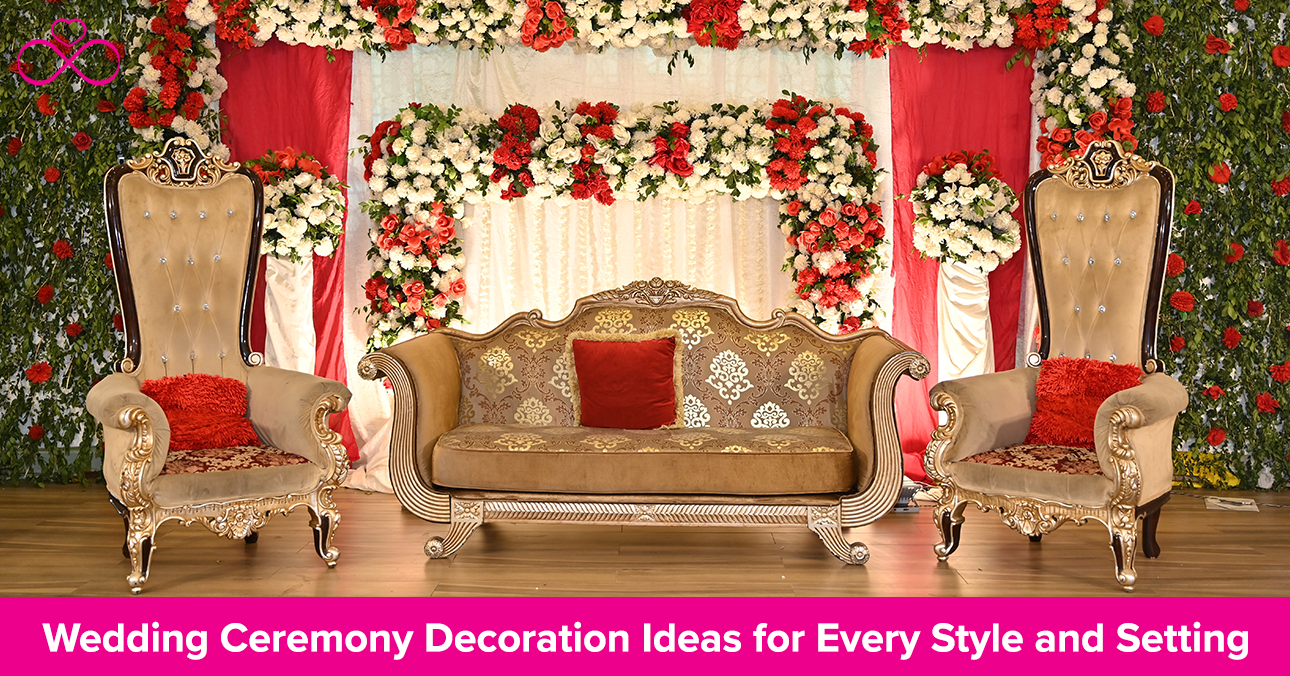
The tightly packed artificial flower wall had a decade-long run in Indian weddings. Roses pressed into foam panels, either plastic or fabric-backed, spanning twelve feet behind the couple's sofa, and photographed at every price point from banquet hall receptions to five-star palace weddings. That format is not exactly over, but it has aged noticeably. Couples who have attended six weddings in the last two years have seen it in all six albums. The question is not whether flower backdrops work — they do — but whether a static flat wall of single-variety blooms is still the right format.
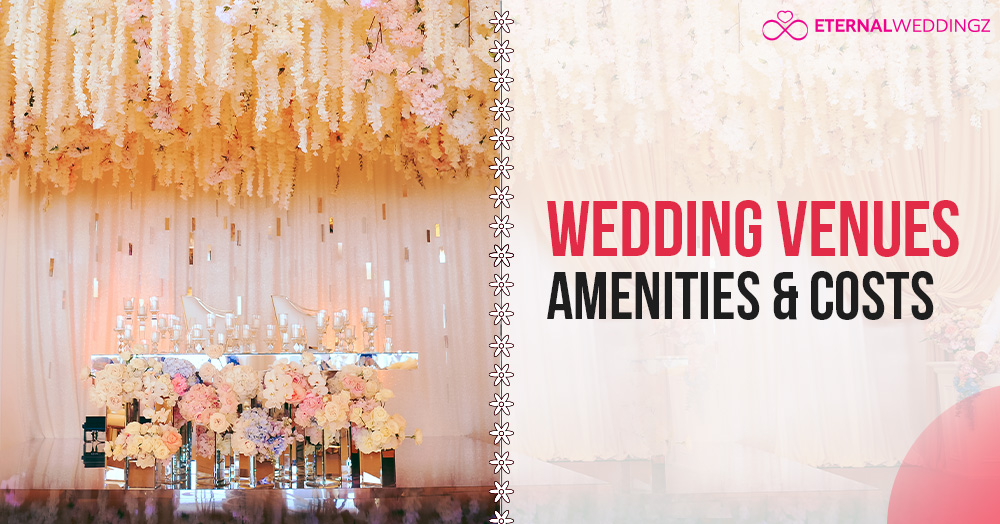
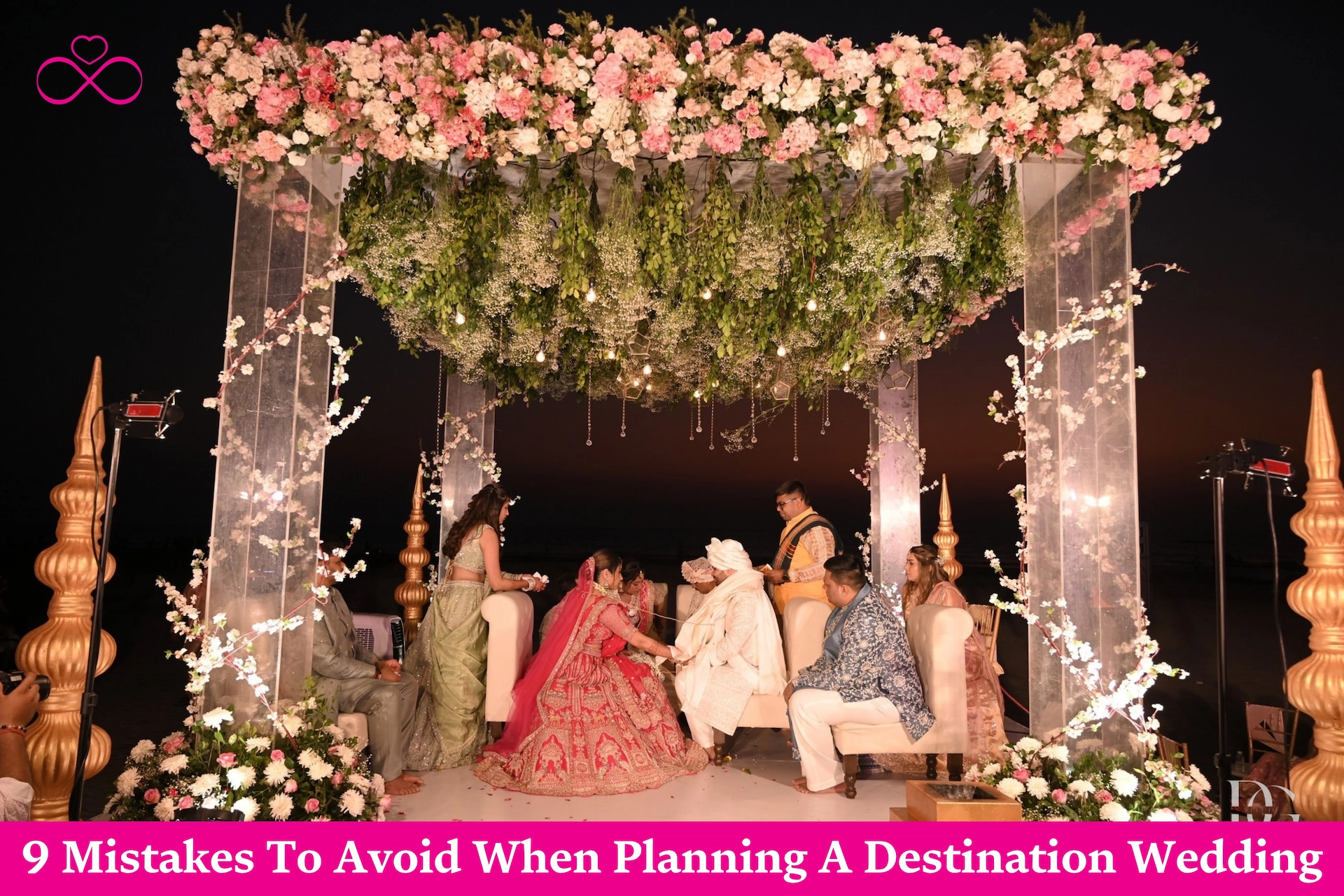
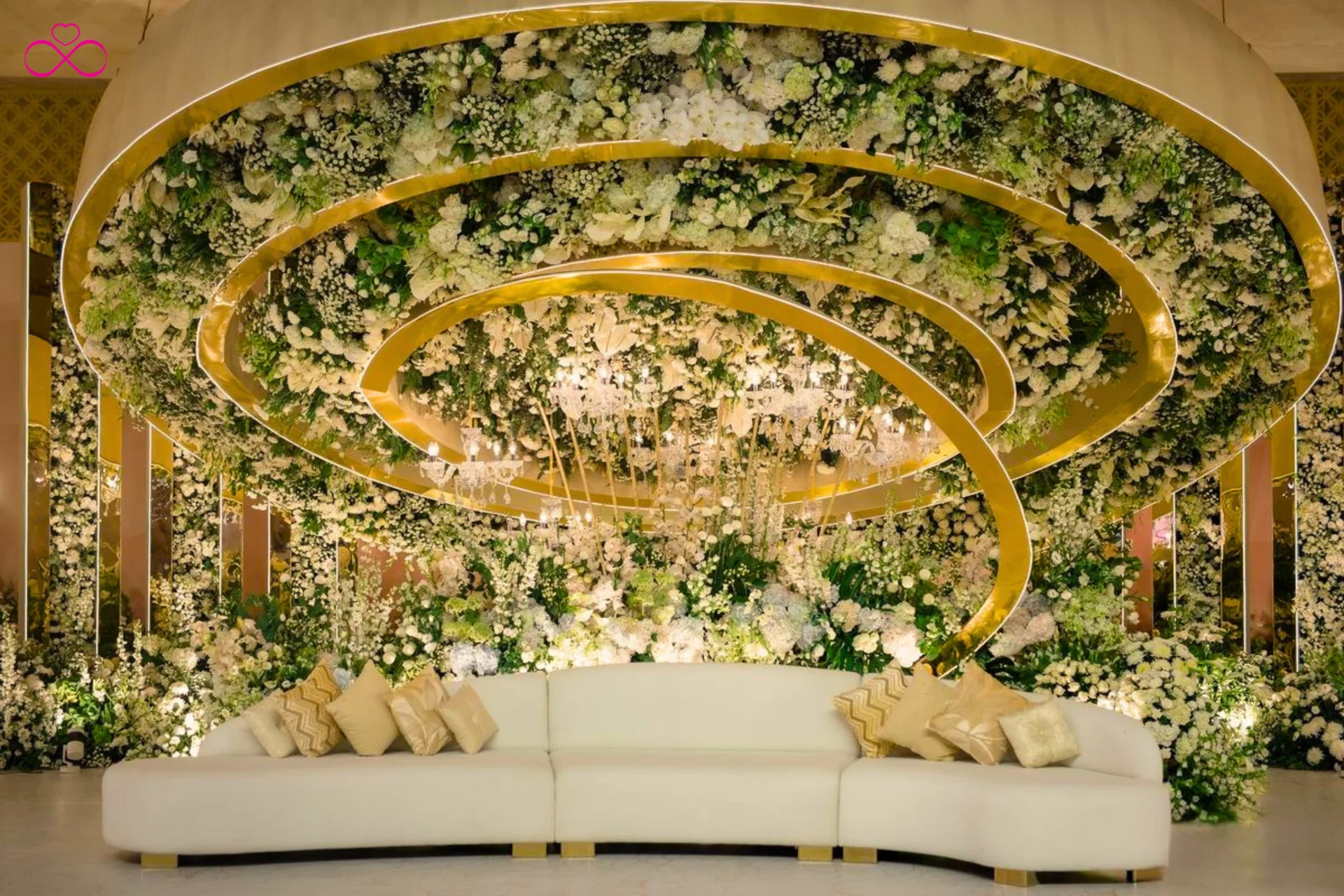
What is replacing it in 2026 is more dimensional. Hanging overhead floral drops behind the couple's seating — cascading jasmine, tuberose, and seasonal blooms falling from a ceiling rig — create a three-dimensional environment that reads entirely differently in photographs. The backdrop is no longer flat behind the couple. It surrounds them. Marigold is also having a genuine design moment: not as filler but as a deliberate primary flower in garland-form installations layered with mogra and seasonal greens. At destination weddings in Udaipur and Jaipur, particularly, marigold-led backdrops are being positioned as premium, specifically because of the fragrance and how warmly they photograph under golden-hour light.
Fresh Flowers vs. Artificial: The Honest 2026 Answer:
- In Maharashtra, artificial floral backdrops carry a compliance risk: Under the state's tightened plastic flower ban, decorators using non-biodegradable artificial flowers for event ornamentation face notices and fines. Couples booking venues in Mumbai, Pune, or Nagpur should confirm in writing that their backdrop materials are fresh or genuinely biodegradable.
- Fresh floral backdrops are assembled on the day: Most installers begin on-site from six in the morning. Venue access needs to be confirmed and written into the event contract — this is not something to assume based on a verbal "yes" from the coordinator.
- Marigold and local seasonal flowers are the most cost-predictable: Imported rose and orchid pricing swings dramatically between wedding season peak and off-peak months. Marigold, chrysanthemum, tuberose, and jasmine — all widely available across Maharashtra, Rajasthan, and Delhi markets — hold more stable pricing year-round.
- Mixed-species installations photograph better than single-species walls: A wall of identical white roses reads flat in images shot from more than four metres away. Layering bloom sizes, adding foliage, dried botanicals, or hanging vine elements introduces depth that shows up clearly in both wide shots and close portrait frames.
- Overhead drops are the 2026 fresh floral format to know: Instead of filling a wall, these installations hang from ceiling rigging behind the couple's stage. They require confirmed rigging points at the venue and a decorator experienced in weight management. Not all venues can support this — check before committing.
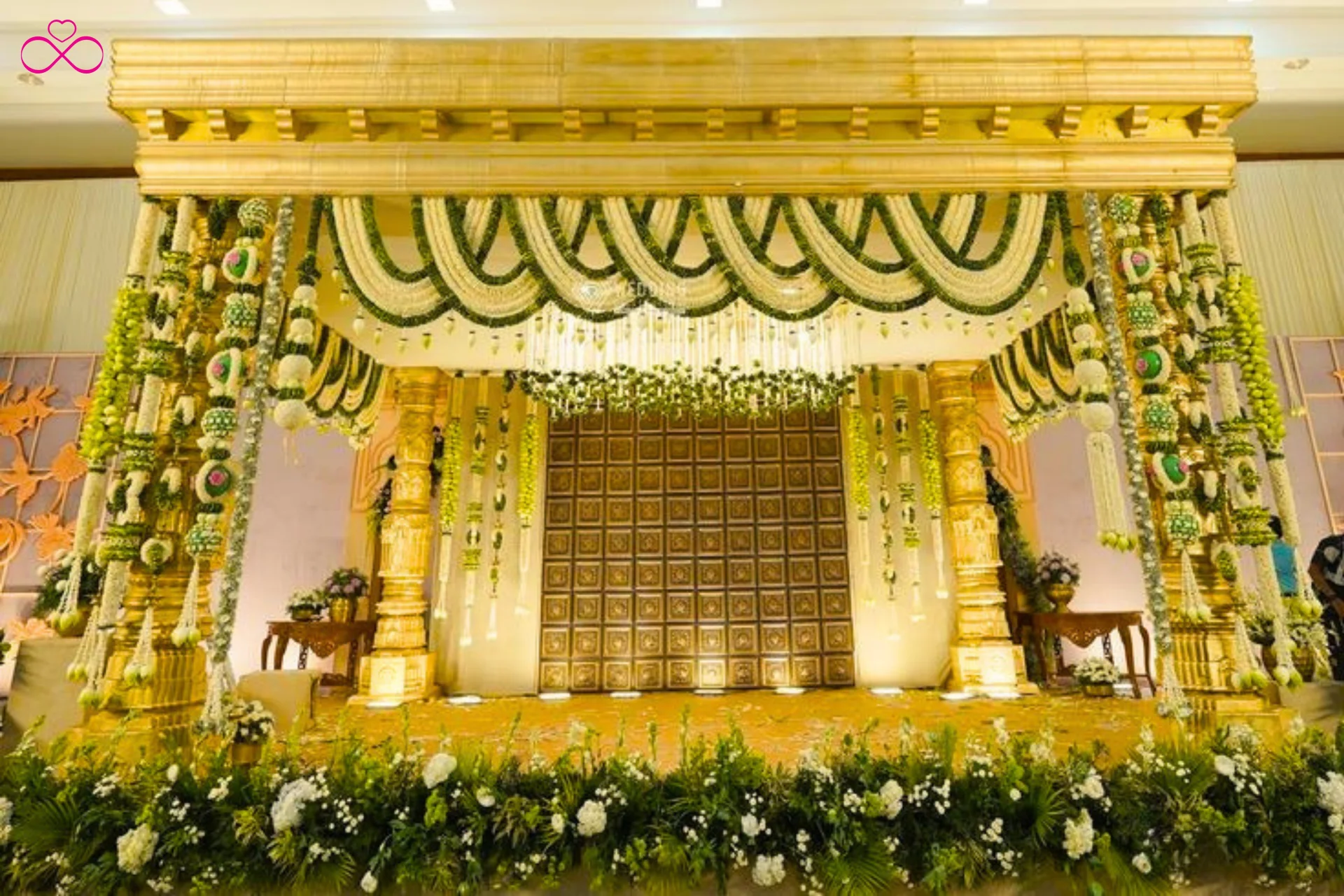
3. Mirror, Metal & Sheesh Mahal-Inspired Wedding Stage Backdrops.
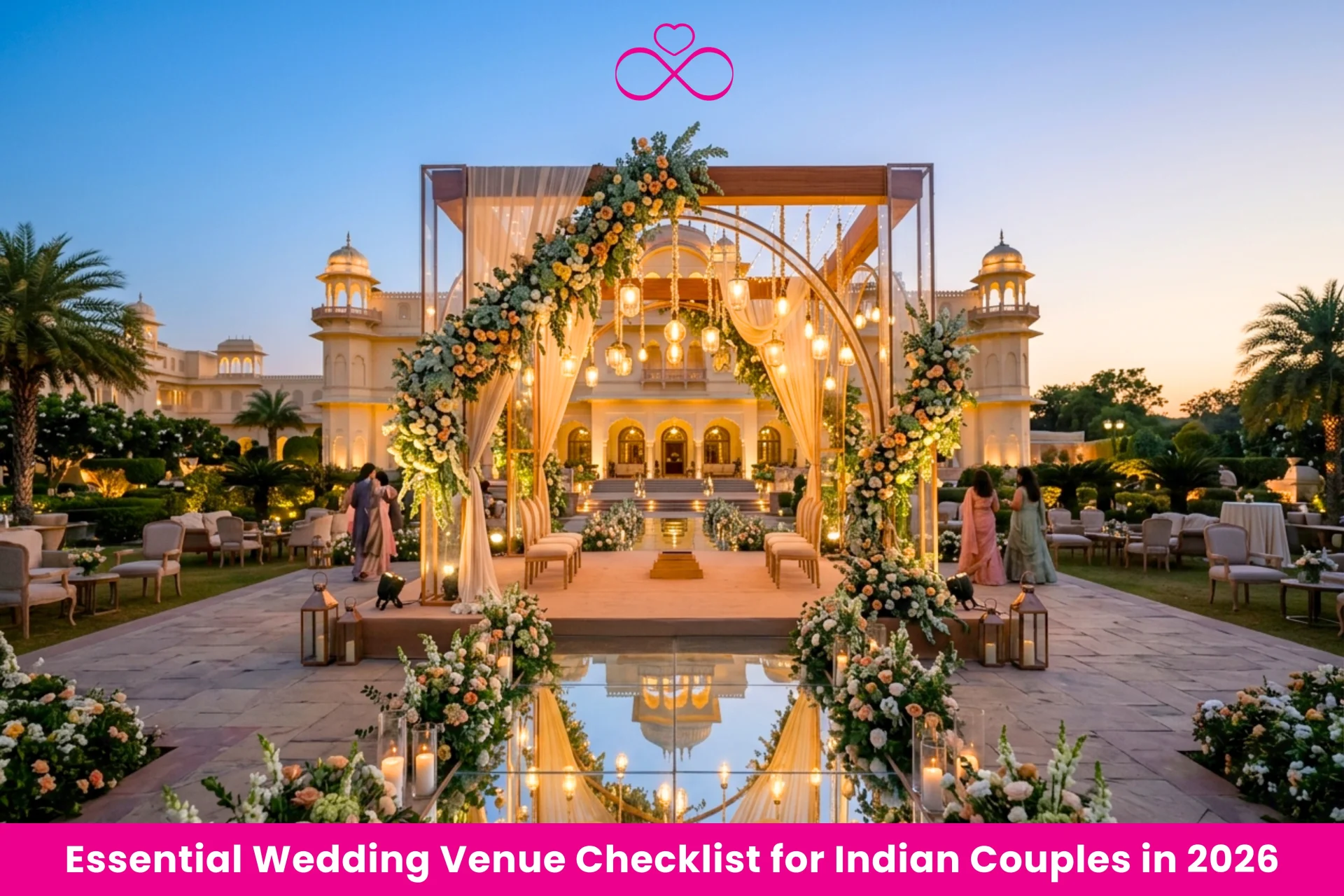
Mirror work in Indian wedding stage decoration has a cultural reference point that goes back to Rajasthani palace architecture — the Sheesh Mahal tradition of embedding convex mirrors into plastered walls to produce rooms that seem to glow from within. In 2026, that same principle is showing up in laser-cut gold metal panels with mirror tile insets, full acrylic mirror walls, and large geometric mirror frame clusters used as reception stage backdrops. The result under warm event lighting is something that printed fabric, foam, or PVC cannot produce: every surface catches light and redirects it, creating visual depth that makes the couple's stage look genuinely different from any angle in the venue.
There is a practical advantage here that couples rarely consider up front. Metallic and mirror panel installations are modular. A set of gold geometric arches bought or hired for the reception can be reconfigured for the engagement ceremony, sangeet, or even the mehendi without significant re-investment. For couples managing three-day wedding schedules across a single venue - a format increasingly common at destination weddings - this reusability has real budget implications. The trade-off is weight and installation complexity: mirror panels require structural frames or wall-mounting permissions, and the setup takes longer than fabric or dried floral alternatives.
Mirror Work, Metallic Arches & Acrylic Panel Options:
- Handcrafted Sheesh Mahal panels: Sourced from artisan ateliers in Jaipur or Jodhpur. Heavier, more expensive, and genuinely distinct in a way that mass-produced laser-cut panels are not. The mirror mosaic quality is visible up close and reads richly in photography. Best suited for palace or heritage venue weddings where the material makes contextual sense.
- Laser-cut gold and rose-gold metal arches: The most widely available metallic backdrop format in 2026. Can be combined with live flower placements in built-in holders, sized to venue dimensions, and hired daily from decorator studios across Mumbai, Delhi, and Bangalore at reasonable rates.
- Acrylic mirror tiles: Lighter than glass, easier to install, and noticeably cheaper. The reflection quality is slightly softer than genuine mirror glass, which some couples prefer and some do not. Works well for mid-budget receptions where the backdrop needs visual impact without the weight or cost of full mirror-panel installation.
- Backlit jali metal screens: Laser-cut metal panel screens with LED backlighting produce intricate shadow patterns across the surrounding walls and the couple on stage. This format works particularly well for sangeet nights where the lighting shifts through the evening - the jali creates a different visual effect as the LED colour changes.
- Stand-alone geometric mirror frames: Arched or hexagonal stand-alone mirror frames arranged as a cluster behind the couple's sofa. Works best for intimate weddings and cocktail receptions rather than large banquet halls, where the scale reads too small against a wide venue footprint.
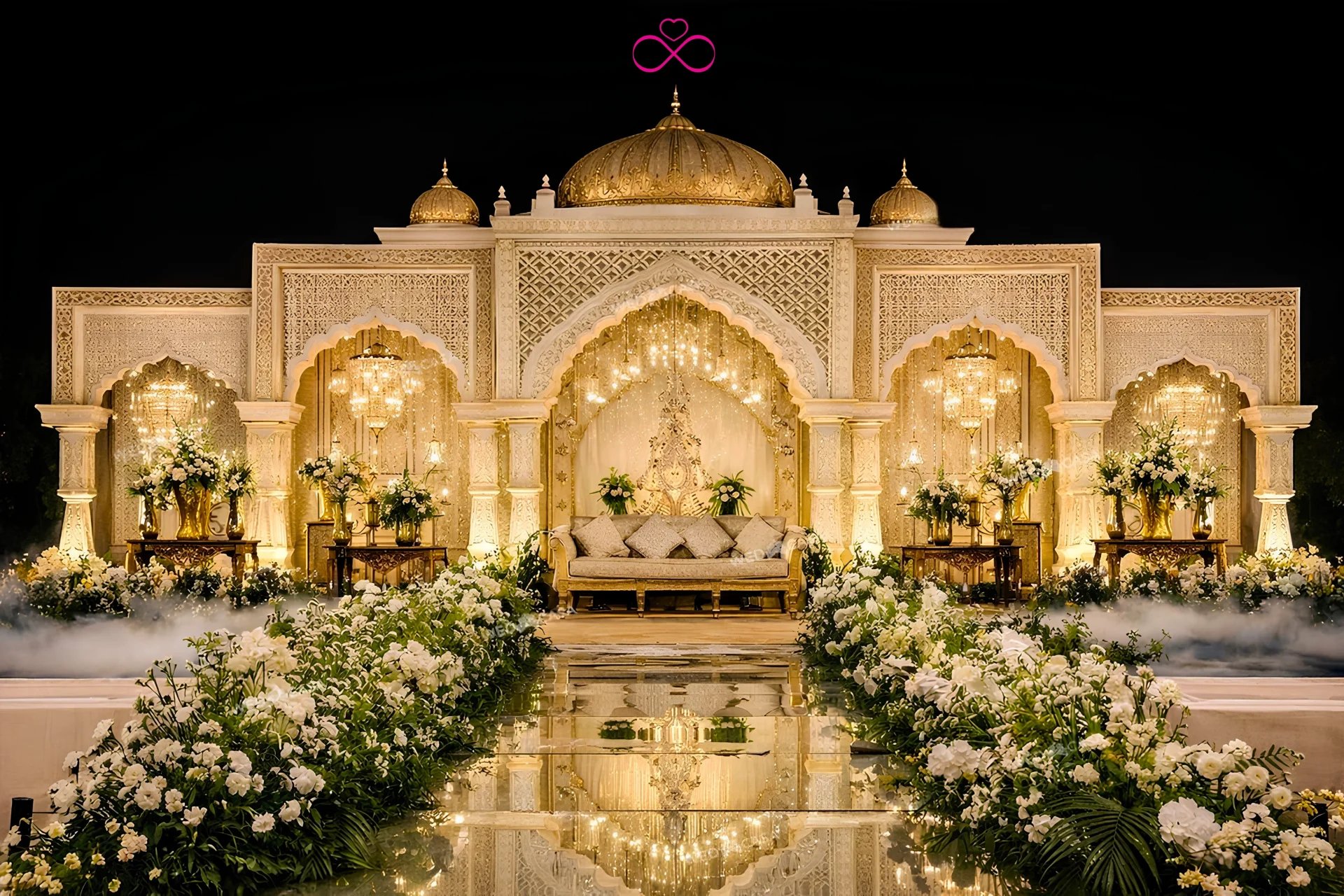
4. LED Stage Backdrops & Projection Mapping — What's Worth It.
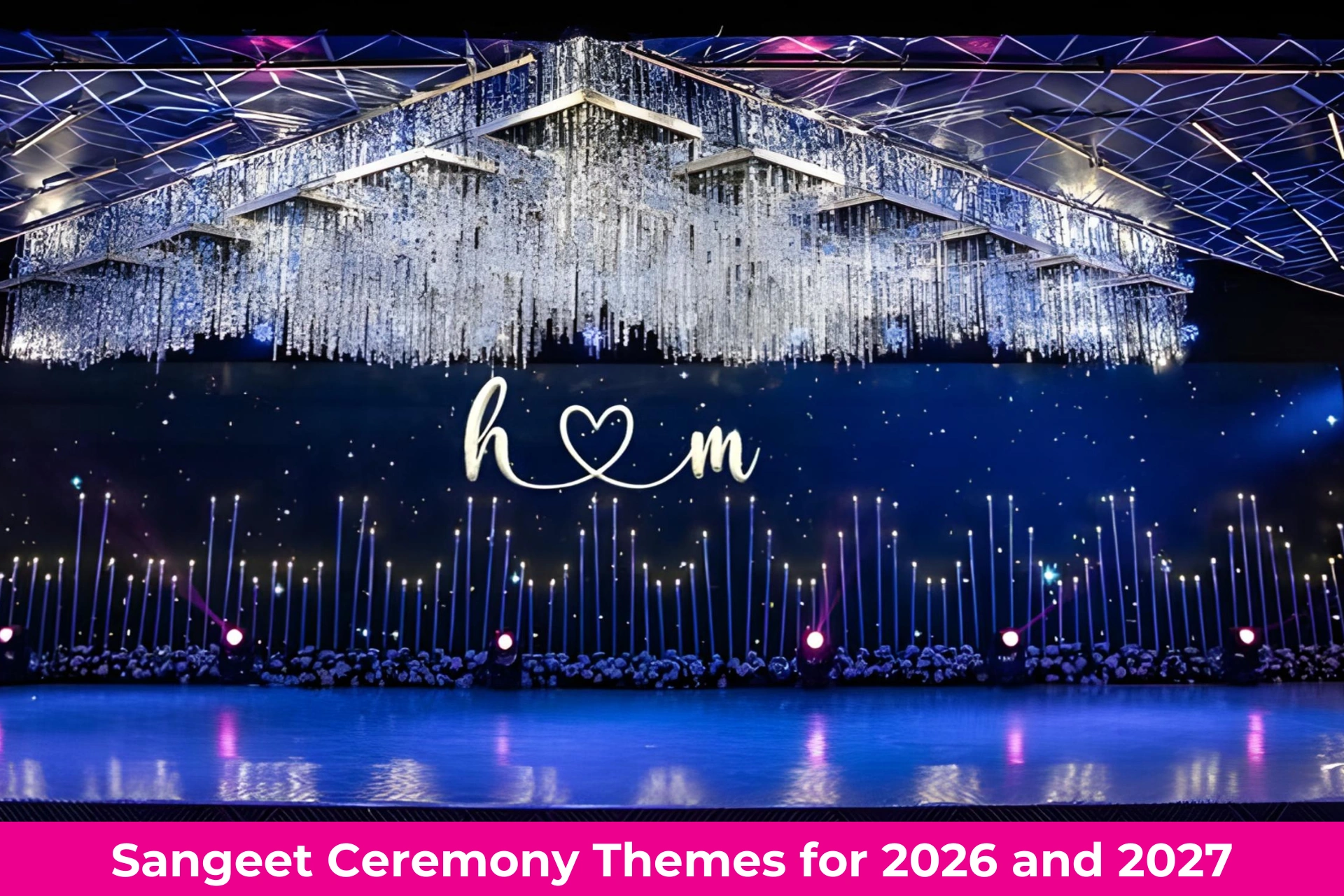
LED panel wedding backdrops have existed at premium Indian weddings for several years. What has changed in 2026 is not the technology but what couples are asking it to do. Early LED backdrop usage was effectively a large television playing a slideshow of a couple's photographs. The more interesting applications now involve custom animated content - moving floral patterns timed to background music, shifting architectural environments that change the visual theme of the stage between the couple's entry and the cake cutting, or personalized monogram animations displayed during key moments of the reception. The backdrop becomes a participant in the evening's storytelling rather than a wall that happens to be lit.
Projection mapping is a different category and worth treating separately. Unlike LED panels, which are self-lit and function in any ambient light level, projection mapping requires near-darkness to read clearly. That restriction limits it to evening-only functions in venues where house lighting can be substantially dimmed. Several decorator-technology studios in Mumbai and Hyderabad now offer projection mapping as a sangeet night add-on, running custom narrative sequences across the stage during couple and family dance performances. The results, when executed by experienced teams, are genuinely impressive. When executed by teams who underestimate the technical setup requirements, they are not.
LED Panel vs. Projection Mapping: Which Suits Your Venue?
- LED panels work in any lighting condition: Self-lit and equally effective in afternoon sunlight and evening ambient light. Suitable for daytime receptions, engagements, and pheras where event lighting cannot be controlled. Projection mapping fails in these conditions.
- Projection mapping needs darkness: Requires significant ambient light reduction. Works for sangeet nights, cocktail receptions, and evening-only functions in indoor venues with controllable house lighting. Outdoor projection requires complete darkness and is weather-dependent — a factor worth taking seriously.
- LED content has a design lead time: Custom animated content — monograms, personalised botanical patterns, venue-specific environments — requires two to three weeks of design time before the event. This is not available for bookings made a week in advance.
- Pixel pitch determines viewing quality at distance: LED panels are specified by pixel pitch — the spacing between LED points. For a stage backdrop viewed from eight to fifteen metres, P3 or P4 pitch panels produce adequately sharp images. Ask your decorator to specify what they are installing, not just what they are proposing.
- Hybrid setups photograph better than full-LED walls: A central LED panel flanked by physical elements — metallic arches, live floral columns, fabric drapes — prevents the stage from reading as purely digital in photographs. The hybrid format is increasingly common at 2026 receptions specifically because of how it resolves the "screen at a wedding" aesthetic problem.
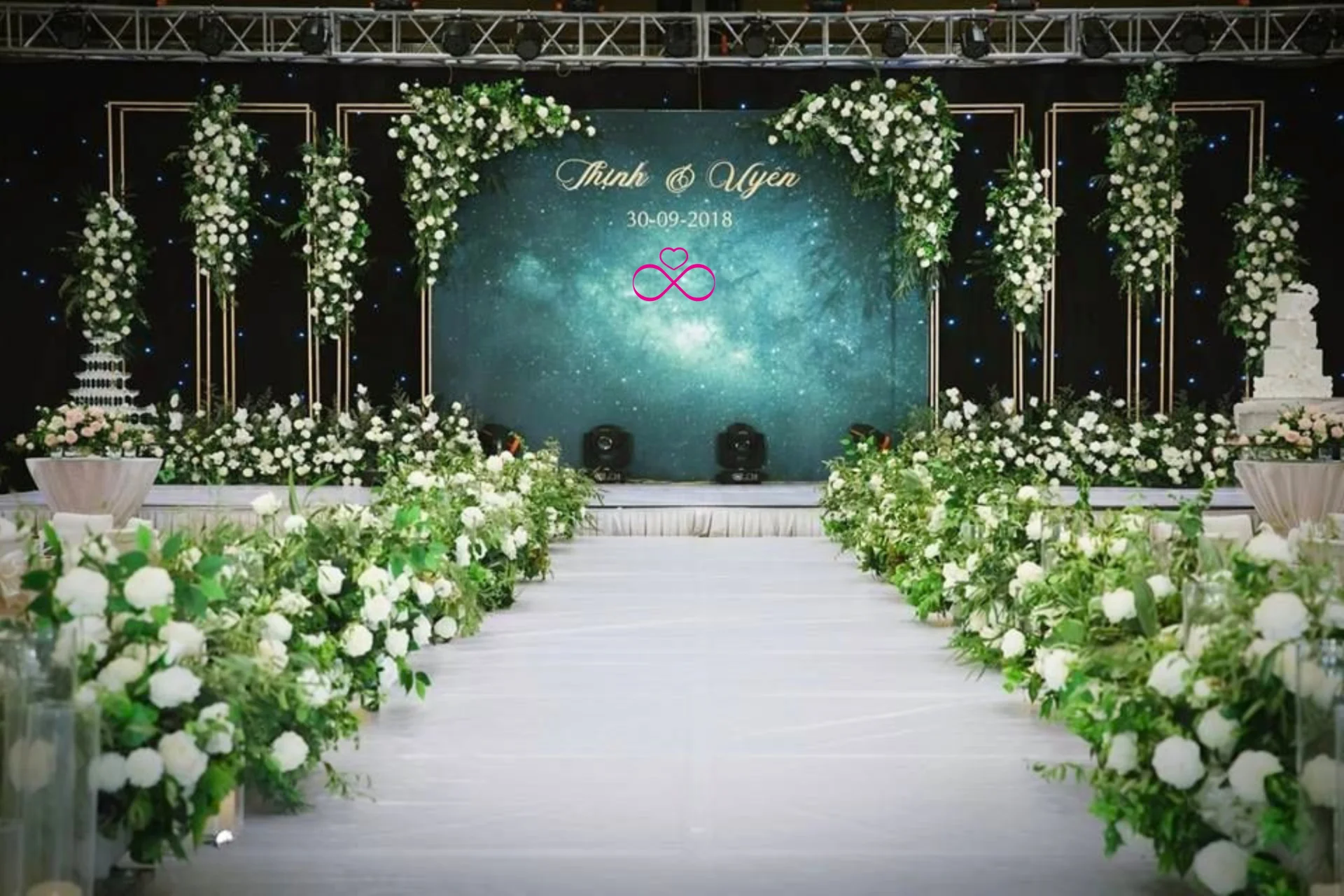
5. Eco-Luxe Wedding Backdrops: Sustainable Designs That Actually Look Good 🌿
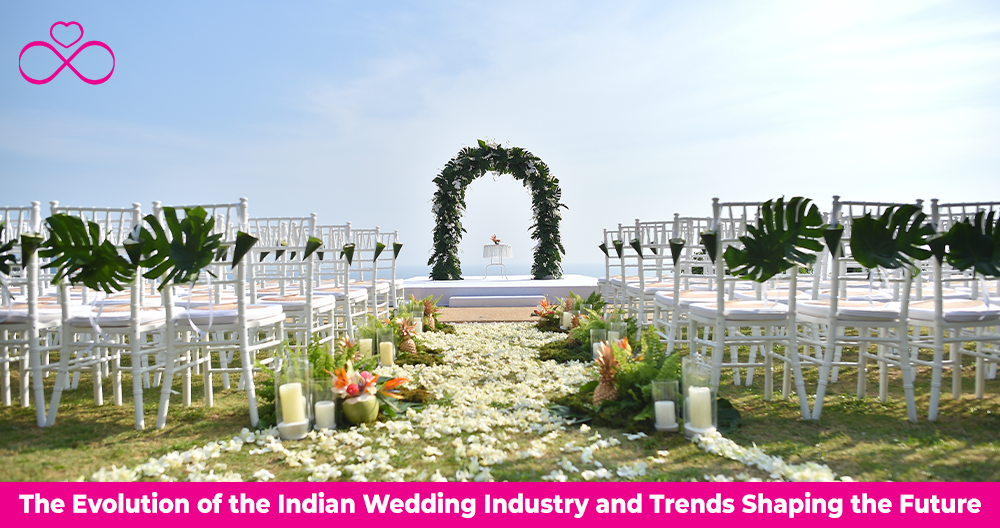
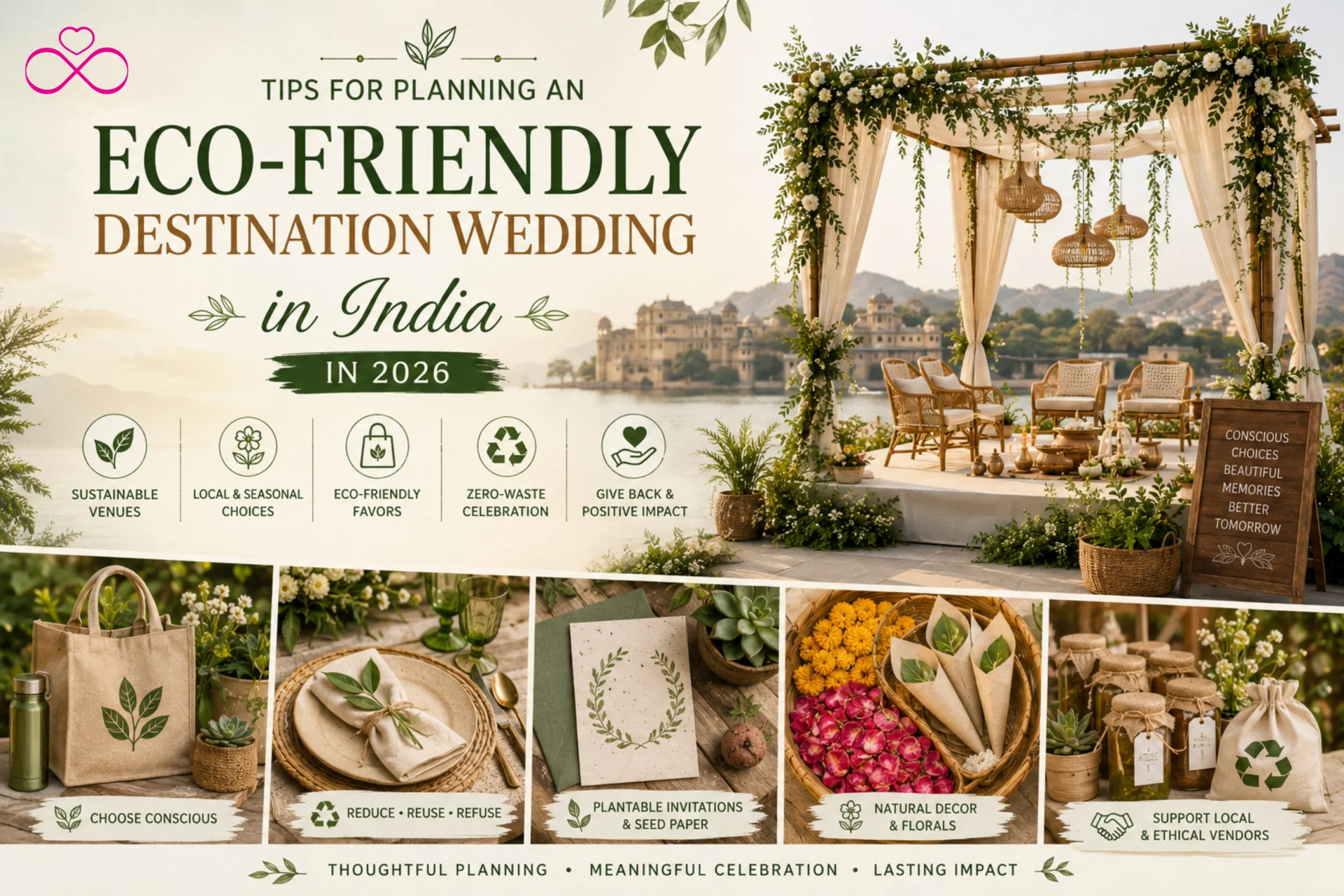
For a few years, "eco-friendly wedding decor" was a category that required couples to accept a visual trade-off. The sustainable option was the responsible option, not necessarily the one that produced a reception stage worth photographing. That has changed. Dried pampas grass, bamboo lattice, preserved eucalyptus, hand-painted linen, and terracotta panel installations are now showing up at premium weddings in Goa and Udaipur not as green credentials but as genuinely preferred design choices — options that produce a visual character that synthetic alternatives cannot replicate.
The reason has something to do with texture. Dried and natural materials have inherent surface variation that catches and scatters even lighting rather than absorbing or reflecting it flat. A pampas grass installation in an outdoor mandap moves gently with the ambient air. Bamboo lattice lets light pass through rather than bouncing it back. According to Pinterest's 2026 wedding data, nature-inspired backdrops and natural landscapes as wedding settings have increased in searches by over 50% as couples move toward quieter, more organic aesthetics. That number reflects something genuine - couples are actively seeking out decor that does not look like decor.
Bamboo, Pampas Grass, Jute & Dried Floral Options:
- Bamboo lattice backdrops: Available from artisan suppliers across Maharashtra, Karnataka, and West Bengal. Can be left natural for a minimal look, painted for a more structured aesthetic, or combined with climbing plants, fresh flower clusters, or hanging dried botanicals. One of the more versatile structural formats available in this category.
- Dried pampas grass installations: Among the most photographically effective materials in 2026 wedding stage decor. Available in natural ivory, dusty rose, or custom dyed in wedding-specific palettes. Long-lasting and reusable across multiple functions — pampas grass does not wilt, sweat, or require refrigeration. Worth the investment because it pays back across a multi-day wedding schedule.
- Preserved eucalyptus and botanical wall panels: Preserved (not dried) eucalyptus holds its green colour and scent for weeks. Combined with preserved ferns, statice, and strawflowers, these panels produce a lush green texture that reads clearly in photographs taken from varying distances.
- Hand-painted linen panels: Commissioned from textile artists, these panels are made to the wedding's specific colour palette and can incorporate motifs — the couple's initials, a location reference, a cultural symbol. Unique per wedding by definition, and they can be kept as a physical keepsake. Several Mumbai and Bengaluru-based studios now specialise in this format for intimate reception and engagement backdrops.
- Terracotta disc and clay installation panels: Growing steadily in South India particularly. Terracotta brings a strongly regional visual character that distinguishes a wedding stage from generic hotel-package decor immediately. Works well against stone or bare wall venues where the material makes architectural sense.
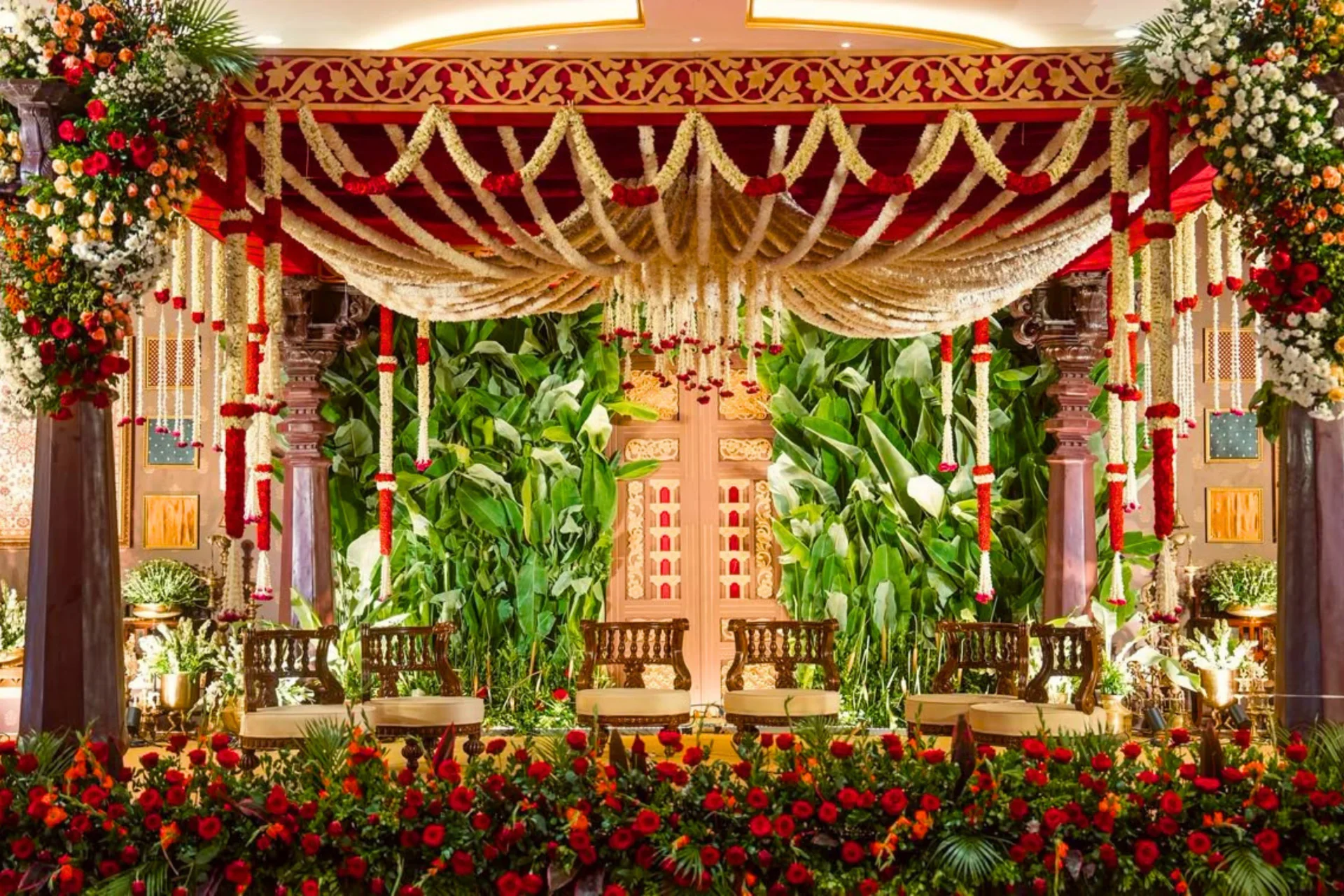
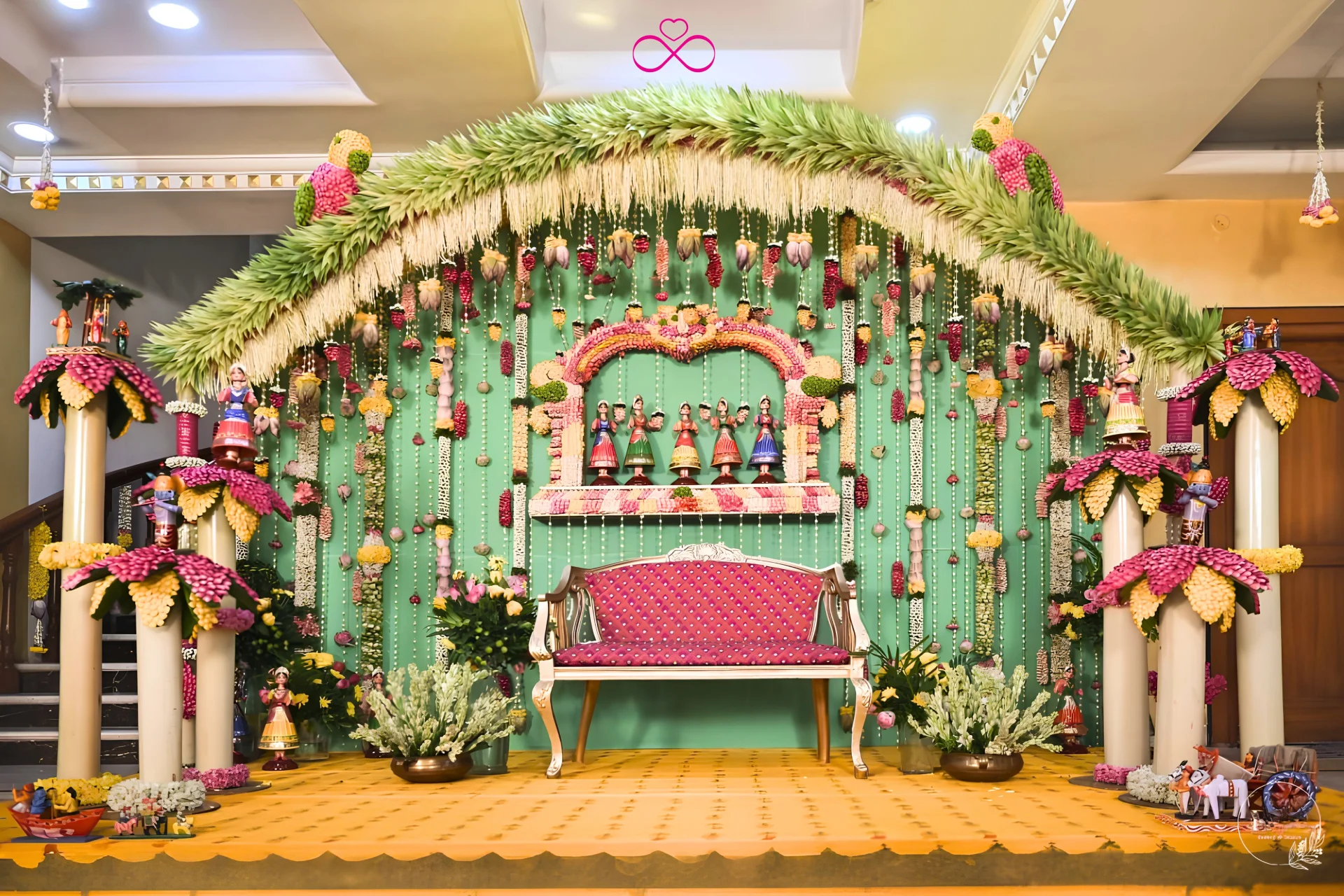
6. Fabric & Handloom Backdrop Designs — The Trend Decorators Are Talking About 🧵
Fabric backdrops at Indian weddings have historically meant one thing: metres of generic ivory or champagne chiffon draped behind the couple's stage. It is not that this looked bad. It is that it looked like nothing in particular. The chiffon was filler — something to put on the wall so the wall was not bare, while the real design attention went elsewhere. In 2026, fabric is no longer filler. Block-printed textiles, regional Indian weaves, and handloom fabrics are now being used as key design statements, with ikat drapes, ajrakh-printed panels, and handwoven silks showing up as primary backdrop material at luxury Indian weddings. The fabric is the design.
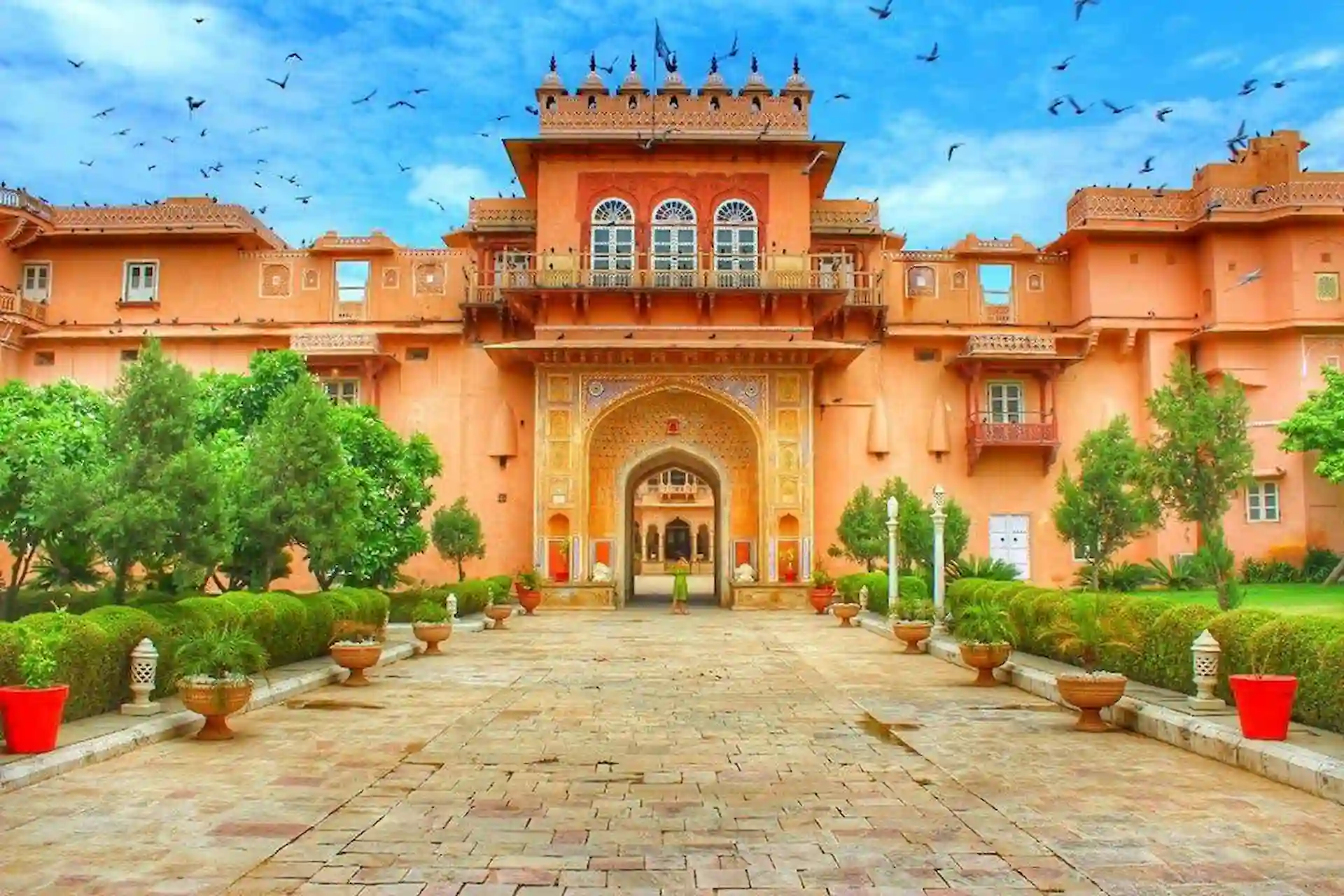
The logic behind this is partly about differentiation. A wedding photographer who has shot three hundred Indian receptions has seen the chiffon drape in all of them. They have not seen a custom-commissioned ajrakh block-print panel in indigo and rust behind a couple at a Jodhpur haveli. That backdrop produces images that are immediately identifiable as belonging to a specific wedding, in a specific place, made by people who thought about the space they were getting married in. For destination weddings at heritage properties, particularly, a handloom textile backdrop is the single most efficient way to create visual coherence between the couple's stage and the surrounding architecture.
Ajrakh, Ikat, Chanderi & Block Print Backdrop Ideas:
- Ajrakh block print panels: Deep indigo and rust on cotton or silk, geometric repeat patterns sourced from Kutch or Barmer artisan cooperatives. Can be ordered in custom colourways to match the wedding's specific palette. Works well against sandstone, exposed brick, or terracotta venue walls where the warm tones are mutually supportive.
- Ikat weave drapes: Available in silk or cotton, with the signature warp-dyed blurred pattern that gives ikat its impressionistic quality. The pattern dissolves softly under event lighting rather than competing with it. Pairs with warm amber and soft gold lighting without washing out.
- Chanderi silk panels: Lightweight with a subtle natural sheen, Chanderi has enough body to drape cleanly and enough translucency to layer with LED backlighting effectively. Less formal than heavy silk, more structured than chiffon. A good middle-ground fabric for reception and engagement backdrops that want a dressed quality without heaviness.
- Macramé and knotted textile installations: Particularly suited to haldi and mehendi functions, where the aesthetic brief is relaxed and tactile. Natural cotton or jute macramé panels hang well, add significant texture, and photograph clearly in the bright natural light that characterises daytime pre-wedding functions.
- Hand-painted cotton or linen backdrops: Commissioned from individual artists, not sourced from wholesale suppliers. The specific advantage is uniqueness — no other wedding will have the same piece. After the event, the panel is a functional piece of art that the couple can display. Several textile artists in Mumbai, Bengaluru, and Jaipur now take wedding commissions specifically for this use.
7. Haldi, Mehendi & Sangeet Backdrop Ideas — By Function.
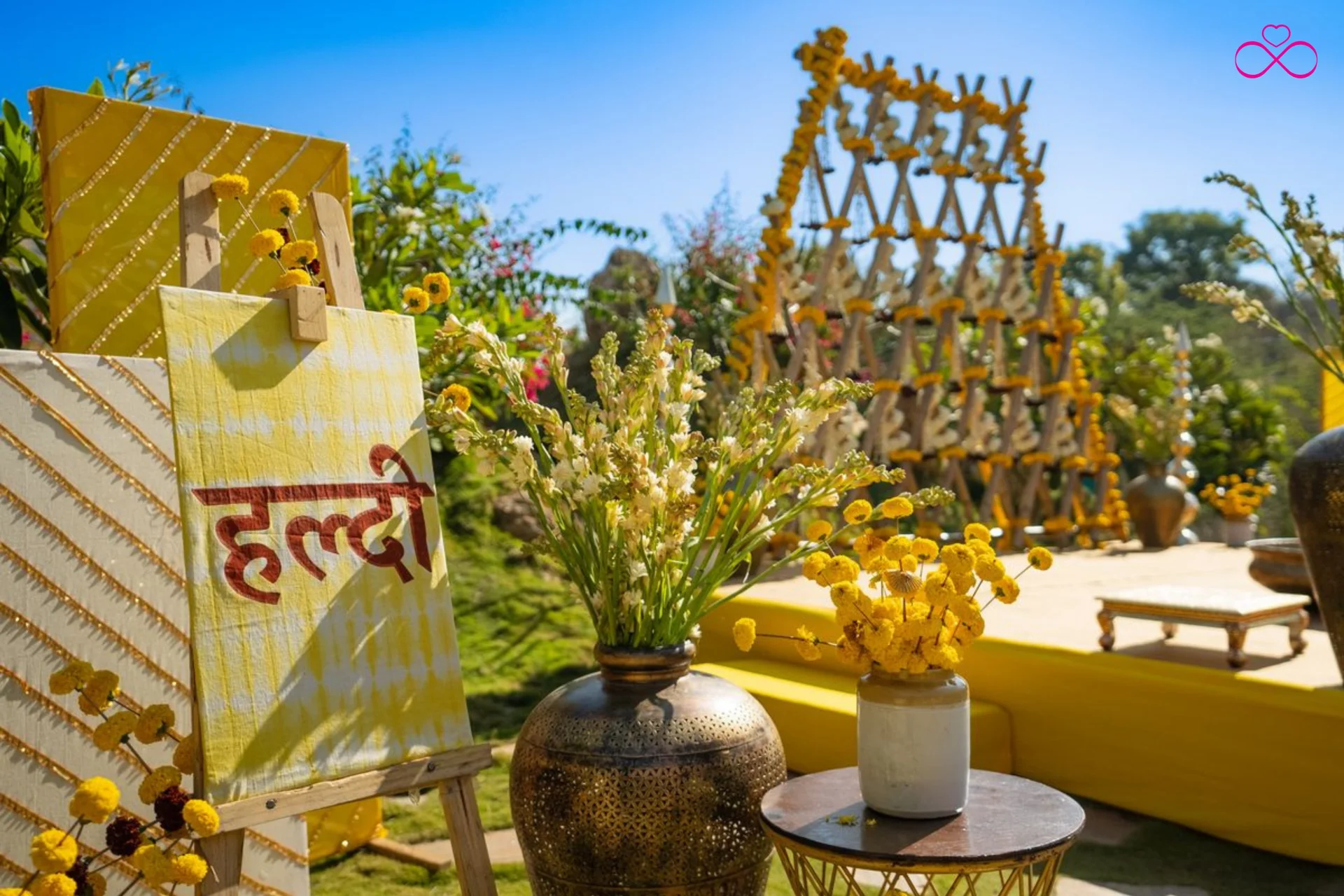
The reception stage absorbs most of the backdrop budget and most of the planning attention. Which is understandable — it is the most photographed moment and the largest audience. But the pre-wedding functions are where couples have the most creative freedom and where the decor brief is most distinct from the reception's. A Haldi backdrop has a completely different job from a sangeet backdrop. Treating them as variations on the same problem produces results that look vaguely off at both functions.
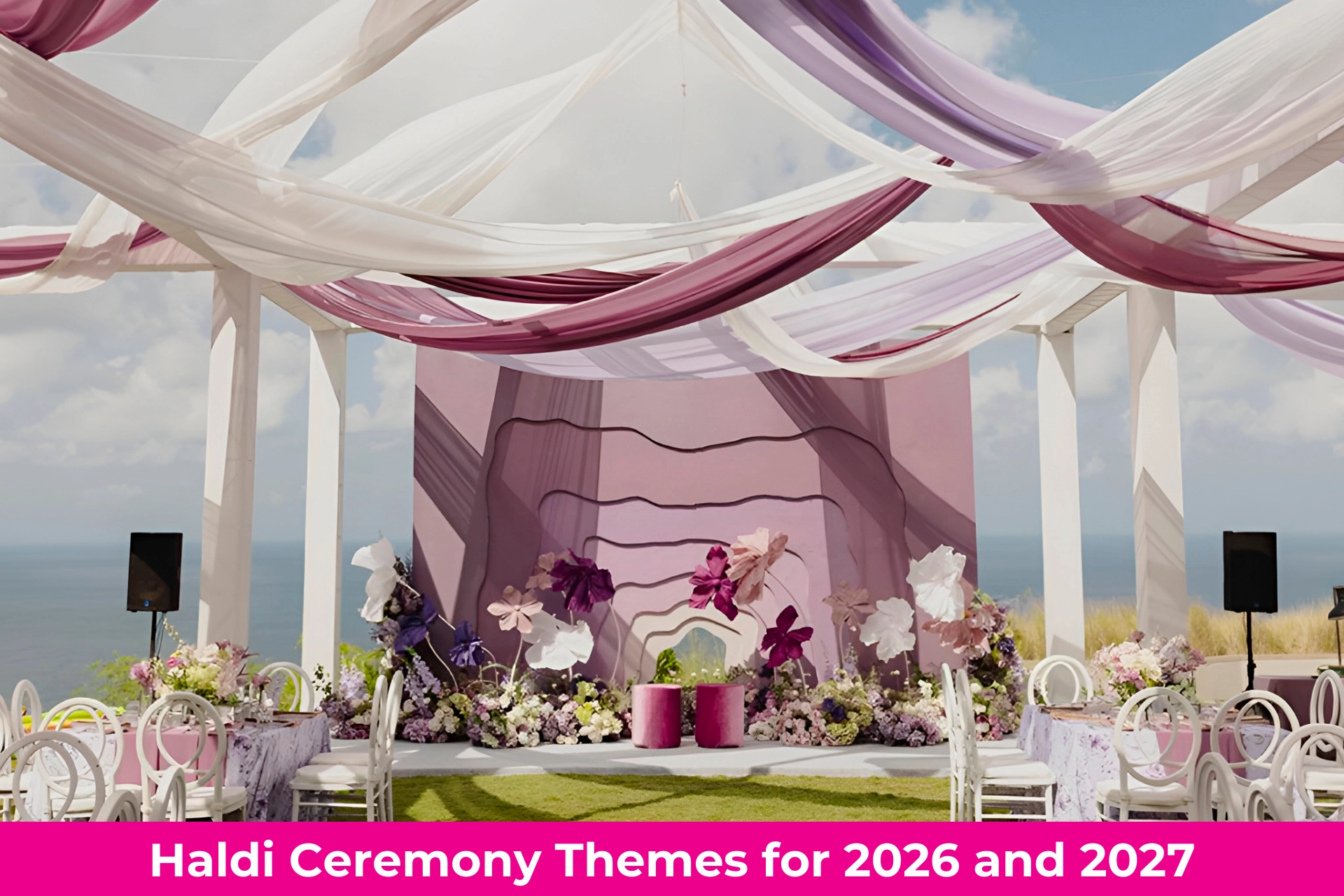
A haldi or mehendi function is typically daytime, often outdoor or semi-outdoor, and photographed in natural light. The backdrop needs to work in full daylight without any event lighting to compensate for poor colour choices. It also needs to tolerate proximity — guests at a haldi get close, sometimes physically, and a fragile flower wall or complex fabric installation does not survive that well. The sangeet brief is the opposite end of the spectrum: evening, high-energy, performance-centric, with lighting that shifts throughout the night. One brief asks for something simple and durable. The other asks for something dramatic and responsive to dynamic lighting. They need to be planned separately.
What Works for Each Pre-Wedding Event in 2026:
- Haldi backdrop ideas: Marigold garland panels on bamboo frames, banana leaf curtains, terracotta pot arrangements, or sunflower clusters against a white cotton backdrop. Sunflower haldi setups have seen a 62% increase in searches on Pinterest for 2026, which tracks with the broader shift toward warm yellows and natural materials for daytime functions. Simple, daylight-friendly, and cost-efficient.
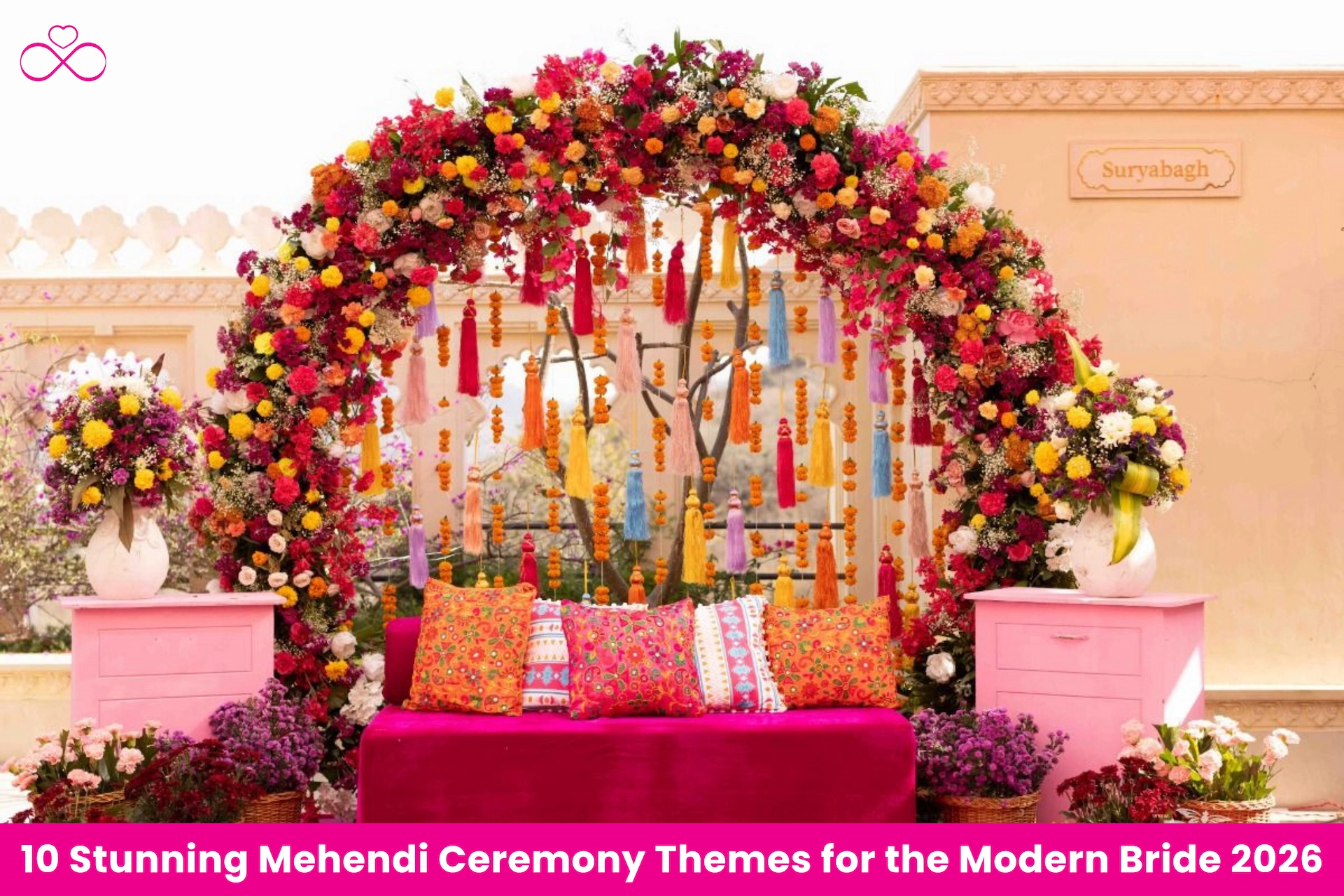
- Mehendi backdrop ideas: Jharokha-style carved wood panels, macramé and jute installations, hanging potted plants, or coloured fabric drapes in warm green and orange tones. The Rajasthani influence is pronounced in 2026 mehendi decor, particularly with mirror-framed arch panels and block-printed textile walls appearing frequently at destination wedding mehendi functions in Udaipur and Jodhpur.
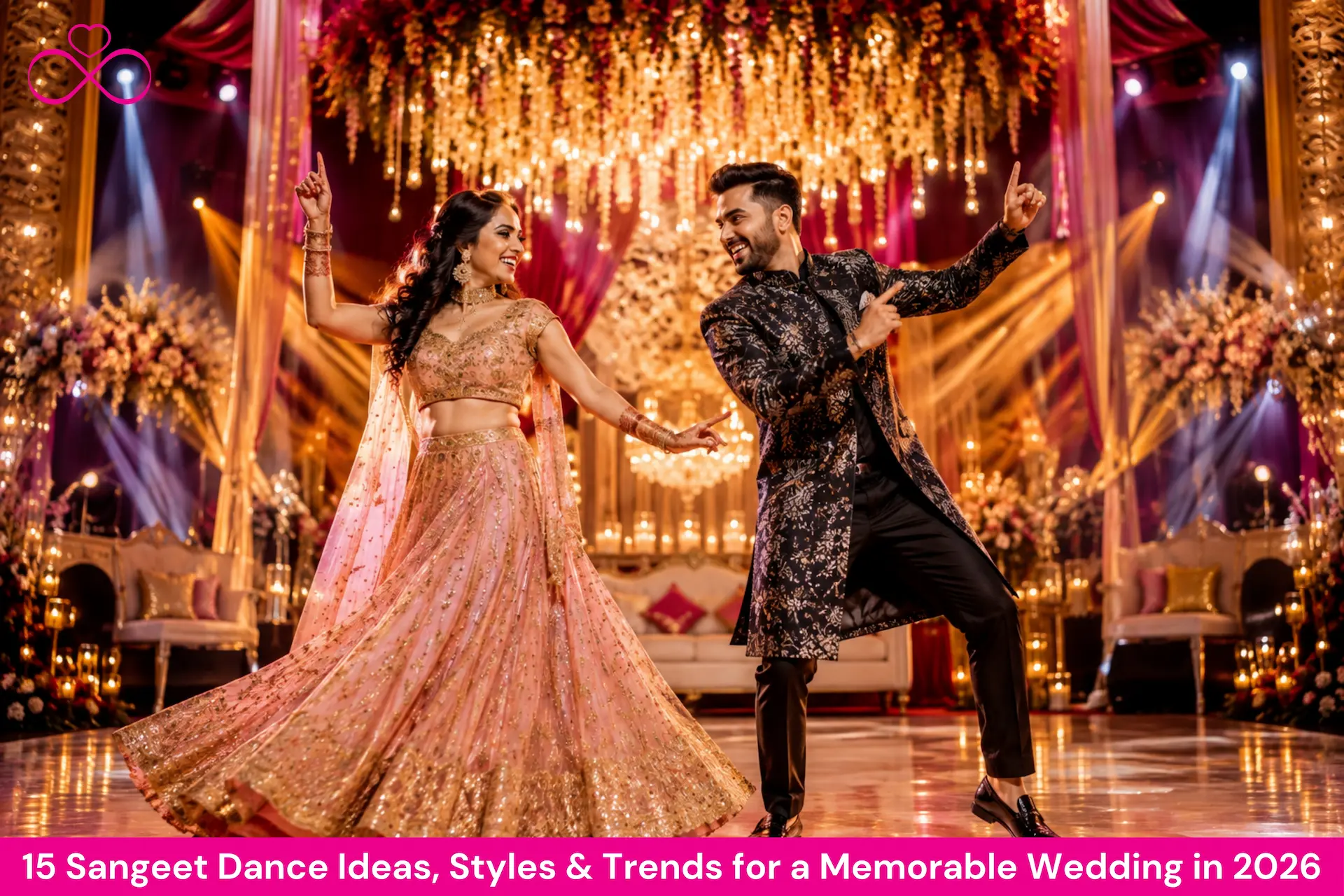
- Sangeet stage decoration ideas: Backlit metallic jali panels, sequin fabric drapes that respond to moving stage lights, or LED panel configurations with custom animated content synced to the music program. The sangeet backdrop needs to work with colour-changing lighting — something that reads well under warm white at 7 PM and equally well under cool blue at 10 PM. Materials that perform in only one lighting condition create visible dead spots when the mood shifts.
- Engagement ceremony backdrop ideas: More personal and smaller in scale than reception backdrops. Hand-lettered or calligraphed name boards, small fresh flower arches in a single colour, or framed photo installation walls that tell the couple's story tend to work better than full-scale stage backdrops at engagement functions where intimacy is the point.
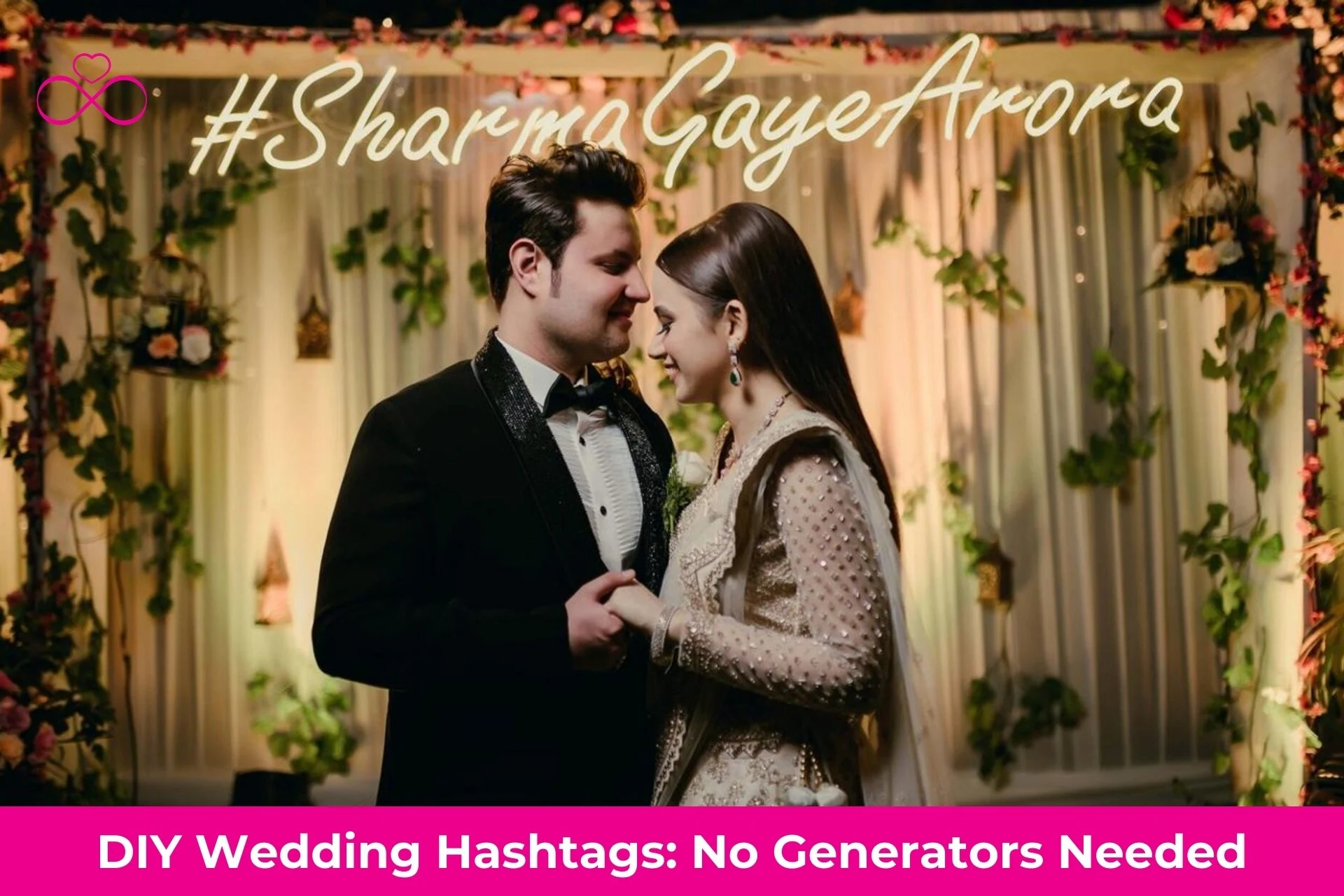
- Cocktail reception backdrop ideas: Lounge-format backdrops — neon sign installations, overhead fairy light canopies, or hanging lantern arrangements — work well for cocktail functions where guests move freely and photographs are taken informally. The backdrop for a cocktail function does not need to support a fixed stage composition. It needs to look good in candid shots taken from multiple angles at varying distances.
8. Cost Discussion For Wedding Backdrops in India.
Wedding backdrop pricing in India is among the least standardised numbers in the entire event budget. The same format - a fresh flower wall, a metallic arch arrangement, a fabric drape - can be quoted at wildly different numbers by different decorators in the same city, and both quotes can be defensible depending on the specific flowers, the panel size, the fabrication quality, and whether the decorator is pricing to hire or to build custom. The items discussed in this blog are honest opinions drawn from real wedding backdrops across Maharashtra, Rajasthan, Hyderabad, Madhya Pradesh, and Goa.
The best cost-management move couples can make is arriving at the decorator meeting and using the existing elements that the decorator has, while making tweaks in the decoration as per the customizations required by the couple, keeping the fundamental setup the same. When the decorator controls the recommendation, the proposal will naturally lean toward what is most profitable and easiest to execute. When the couple brings a clear brief - this material, this function - the quotes become genuinely comparable across vendors, and the negotiation is more productive.
The Backdrop Is Not the Last Decision. It Should Be One of the First.
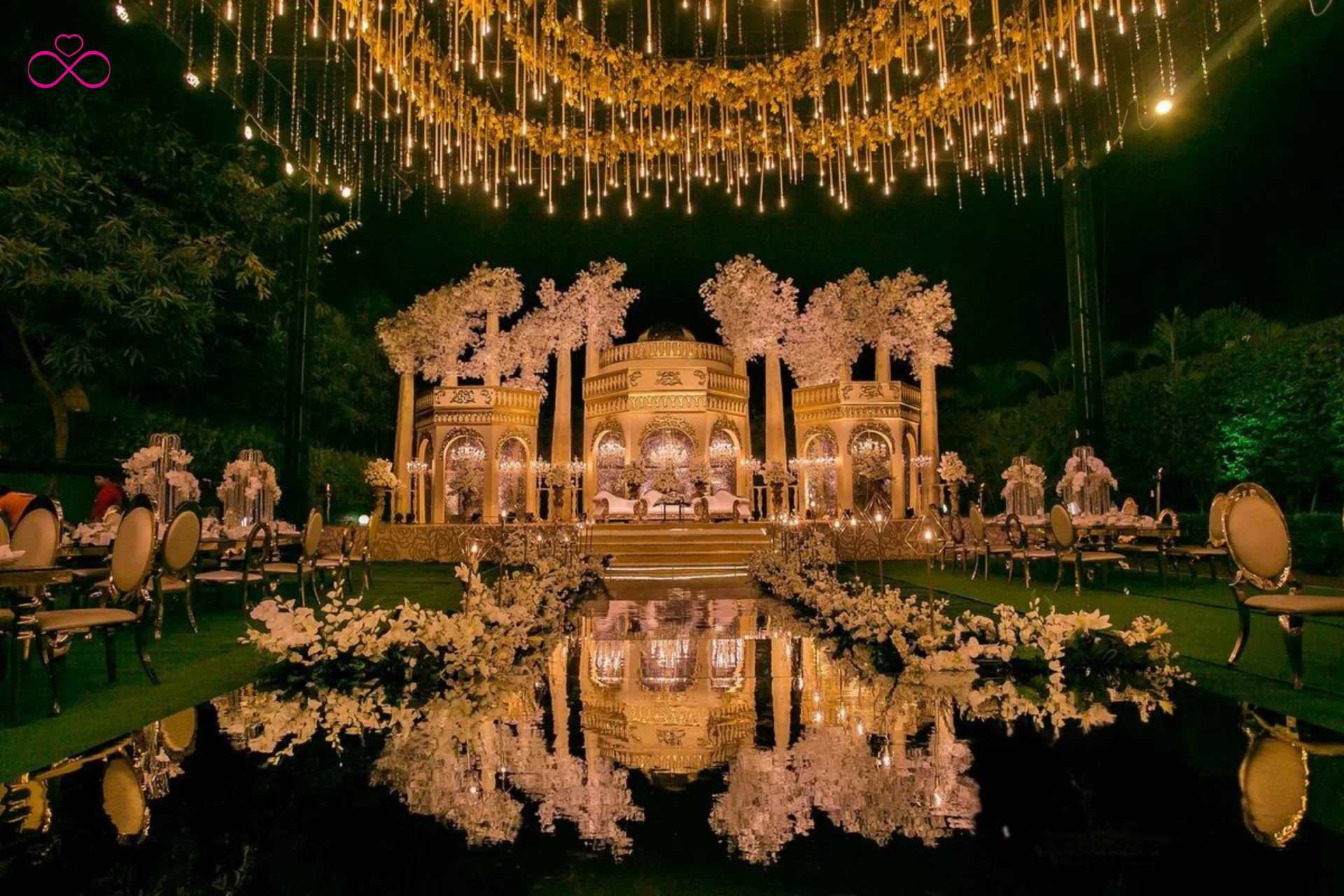
Couples who get their wedding stage backdrop right — and who get it right early, before the lighting plan and the floral brief and the photographer walkthrough — end up with a reception that looks like it was designed, not assembled. That is a genuine distinction, and it shows in every photograph from the evening. The backdrop does not need to be the most expensive element of the decor. Several of the best-looking wedding backdrops from Indian weddings in early 2026 were handloom fabric panels that cost under fifty thousand rupees. What they had in common was that someone made a considered decision about them before the week of the event.
If the options above cover more ground than expected for what felt like a single decor decision, that reaction is fair. Wedding backdrops in 2026 involve material choices, compliance considerations, venue access requirements, and lighting compatibility that most couples have not had cause to think about before. The team at Eternal Weddingz works across India's major wedding markets and can help narrow down backdrop formats to what will actually work for a specific venue, function, and budget — not a mood board of options, but a specific recommendation for a specific wedding.