







10 Stunning Mehendi Ceremony Themes for the Modern Bride 2026
Introduction:
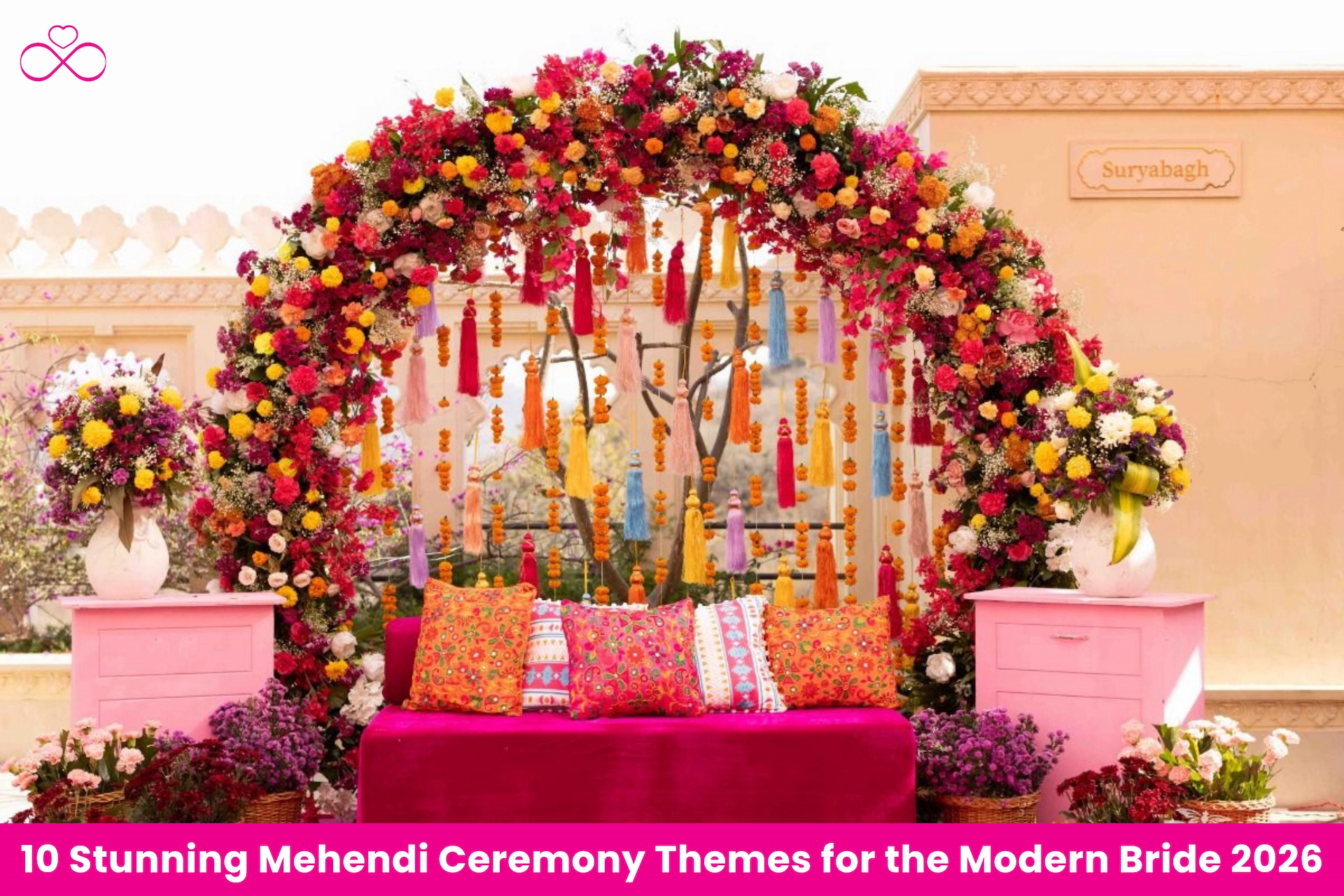
The mehendi ceremony used to be a relatively low-key affair — a few close women, a courtyard, an artist with a cone of henna, some snacks. That still happens, and there is nothing wrong with it. But a lot of brides now want the mehendi function to feel like its own event, not just a prelude to the wedding. That shift has created an interesting design challenge: how do you build a theme around a ceremony that has traditionally been more about intimacy than spectacle? The answer, as it turns out, is more varied than you would expect.
A mehendi theme is not just a colour palette and some marigold strings. It is a decision about the kind of afternoon you want to have — relaxed and garden-adjacent, or more formal and photographed; rooted in a specific regional tradition, or deliberately contemporary. Each theme on this list creates a genuinely different atmosphere. Some work in a home courtyard. Others need a venue. Most fall somewhere in between and are adaptable depending on your guest count and budget.
The team at Eternal Weddingz has put together ten mehendi ceremony themes that are actually distinct from each other — not ten variations of the same yellow-and-orange setup with slightly different centrepieces. Read through all of them before you decide. The one that matches your instincts is usually not the first one you see.
One practical note before the list: mehendi ceremonies are typically daytime events, which affects every theme decision. Natural light is your best friend here — it makes henna look richer, skin look warmer, and photographs look less worked. Whatever theme you choose, prioritise an open or well-lit space. Dark venues that need artificial lighting for a wedding reception do not serve a mehendi well.
1. Marigold Garden Mehendi
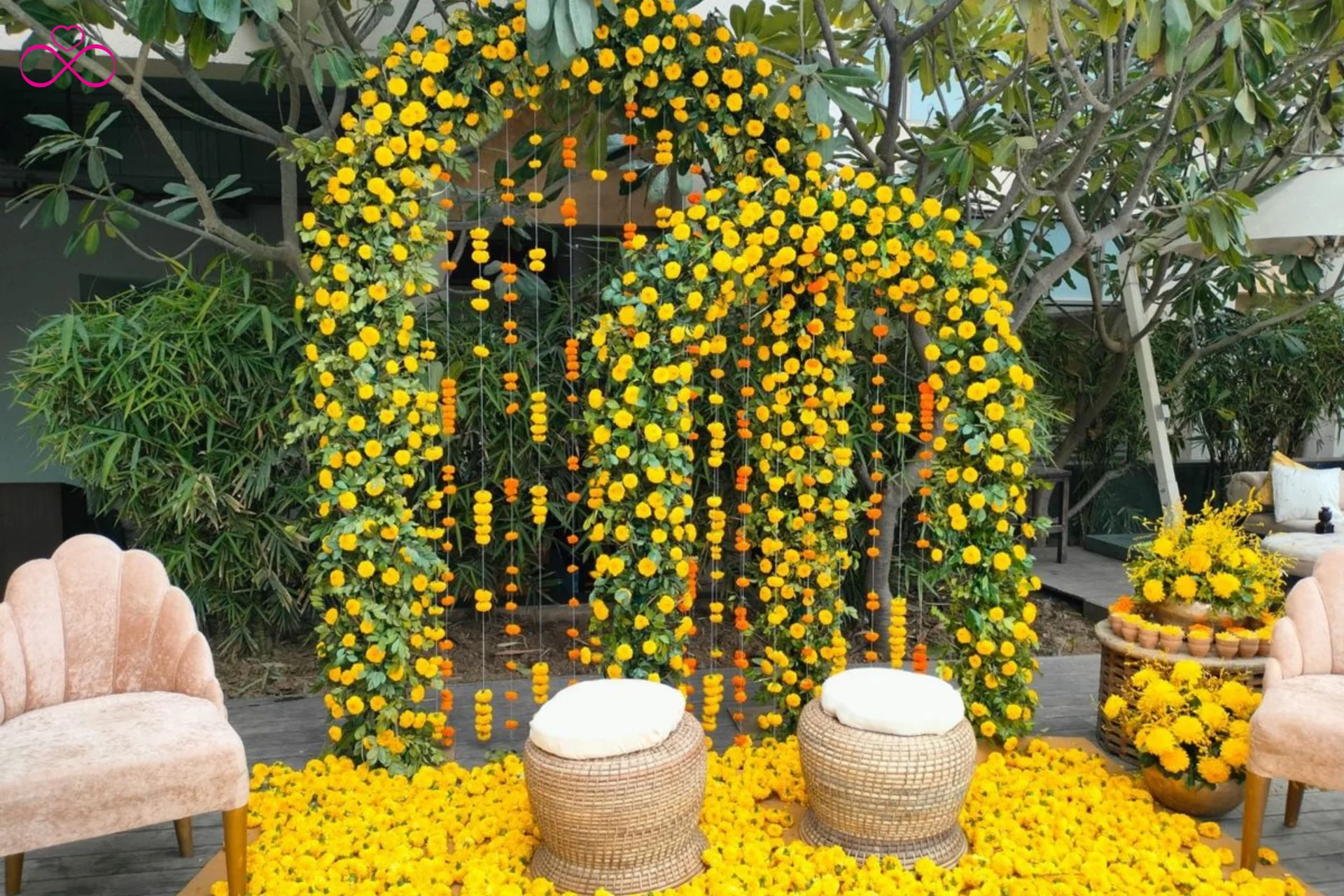
Marigold is the default flower of Indian weddings for good reason — it is cheap, abundantly available across India year-round, holds its shape for hours in the heat, and photographs in a warm golden-orange that no filter needs to improve. For a mehendi ceremony, it also makes practical sense: marigold strings can go up fast, come down without fuss, and scale to almost any space from a home terrace to a farmhouse lawn.
The marigold garden theme takes those basics and makes deliberate choices around them. This is not a randomly strung-together marigold setup — it is a colour-controlled scheme using marigold yellow and deep orange as the primary palette, with accents in turmeric yellow, green banana leaf, and occasional red. The seating is low — floor cushions, mattresses with block-print covers, or low wooden chowkis — which keeps the ceremony grounded and intimate even with a larger guest count.
Key Decor Elements:
- Marigold curtains or chandelier installations overhead — let them hang at different lengths for depth.
- Banana leaf table runners under the henna trays and snack spreads.
- Clay diyas and terracotta pots planted with jasmine or champa.
- Bride's seating on a low wooden swing or a decorated floor gaddi with a marigold canopy above.
Colour palette: Marigold yellow, deep orange, turmeric, banana leaf green, raw terracotta.
Best suited for: Morning or afternoon ceremonies, outdoor or semi-outdoor venues, brides wearing yellow or orange mehendi outfits.
2. Rajasthani Block Print Mehendi
This theme pulls from Rajasthan's textile tradition rather than its architecture, which gives it a different texture from the more commonly seen palace-inspired setups. Block print fabric — the kind with repeating geometric or floral stamps in indigo, rust, or black on natural cotton — has a specific warmth that synthetic printed alternatives cannot replicate. When you cover a ceremony space in real block print, the effect is quiet and considered. It looks like someone chose it, not like someone ordered a backdrop online.
The palette for this theme is earthier than the typical mehendi setup. Indigo, brick red, ochre, sand, and natural white. No neons, no metallics as the primary accent — if gold comes in, it is muted, like antique brass rather than polished yellow gold. The mehendi artist's henna cone tray, the snack spread, the cushion covers, and even the bride's gifted dupatta can all carry the same block print pattern, which creates a visual coherence that is satisfying to photograph.
Key Decor Elements:
- Block print fabric canopy as the main ceiling element — a shamiana-style frame with draped cotton works well outdoors.
- Mismatched block print floor cushions and bolsters in coordinated colorways.
- Clay pots with dried flowers or pampas grass as table centrepieces.
- Hand-lettered signs or menus on thick handmade paper, tied with jute.
- Camel cart or bullock cart prop as a photo corner, if space allows.
Colour palette: Indigo, brick red, ochre, sand, antique brass.
Best suited for: Heritage properties, open courtyards, or any bride whose personal style leans toward craft and artisanal over decorative and ornate.
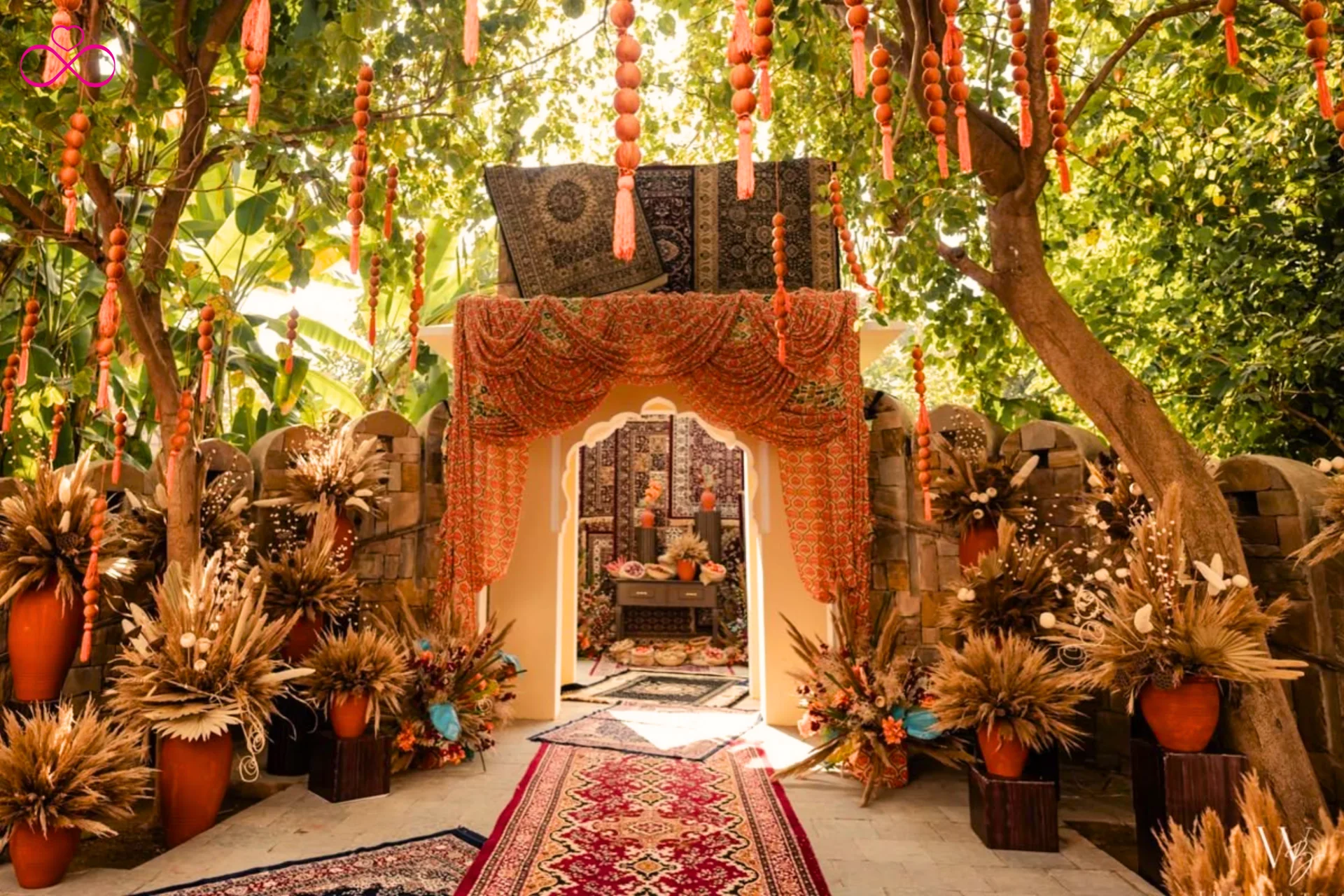
3. Pastel Boho Mehendi
The boho mehendi aesthetic has been around long enough that some brides are already tired of it, and that is fair. There is a version of this theme that is all dream catchers and macramé and pale pink pampas grass that looks like it was assembled from Pinterest in twenty minutes. But when it is done with actual restraint and some material quality, a pastel boho mehendi ceremony is genuinely one of the most relaxed and photogenic formats available.
The key distinction is in the flowers. Cheap boho uses dried flowers that are dusty and colourless. Good boho uses a mix of fresh garden flowers — sweet peas, ranunculus, cosmos, dried bunny tail grass, and eucalyptus — arranged loosely, as if someone walked in from a garden with an armful and put them down. The seating is either low floor setups with linen throws and rope-edged cushions, or mismatched rattan and cane chairs that look like they came from different decades.
Key Decor Elements:
- Linen or cotton canopy in off-white or blush, draped loosely rather than pulled tight.
- Fresh flowers in mismatched ceramic jugs and clay pots, not formal arrangements.
- Rattan chairs or floor pouffes with linen cushions in blush, sage, and dusty lavender.
- Wooden crates or vintage trunks as props and food display surfaces.
- Fairy lights strung low between poles or trees — not the small blinking variety, the warm steady kind.
Colour palette: Blush, sage green, dusty lavender, off-white, warm sand.
Best suited for: Brides in pastel or ivory mehendi outfits, garden venues, afternoon ceremonies with a relaxed dress code for guests.
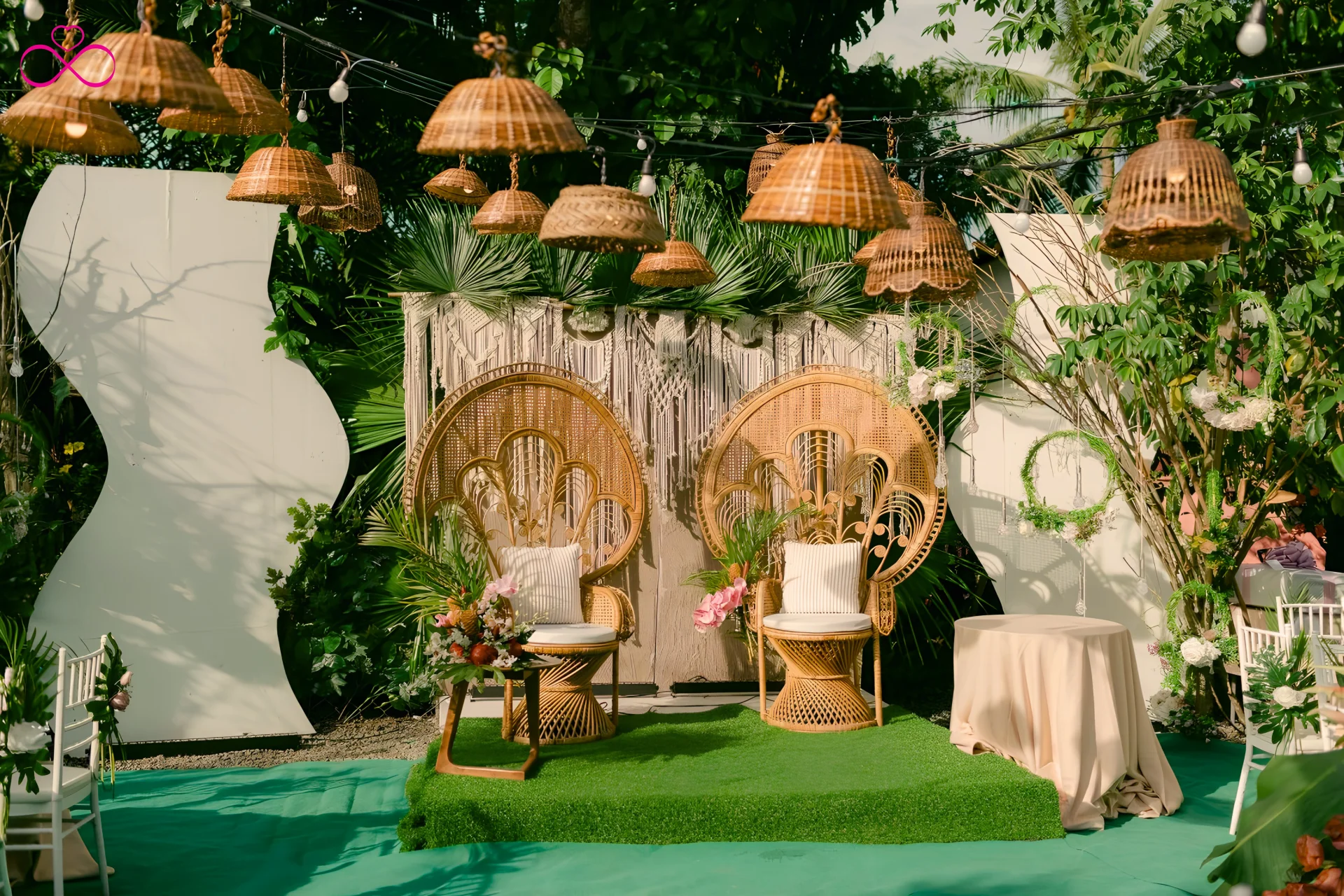
4. Mughal Garden Mehendi
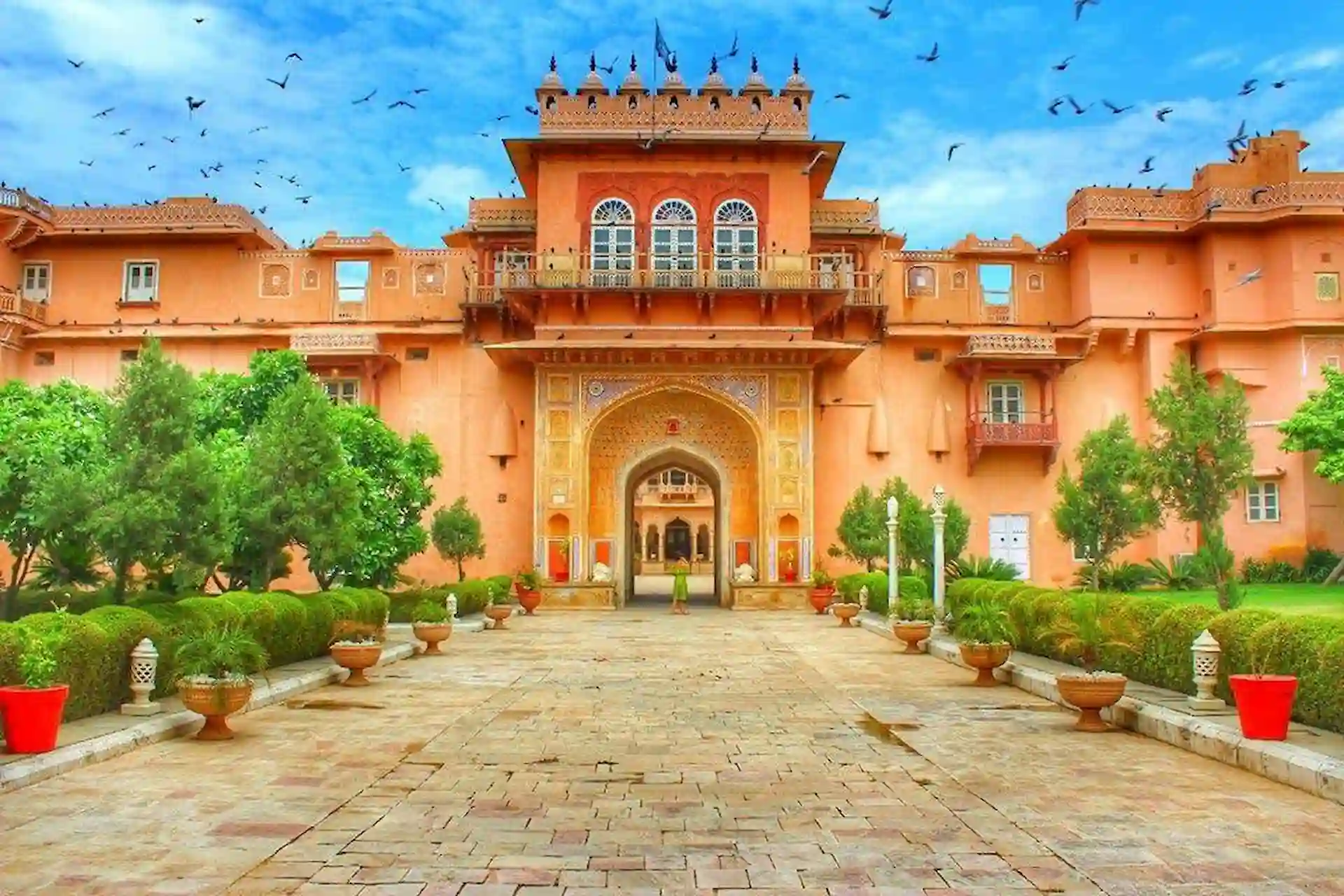
Mughal garden design follows specific rules: geometric symmetry, water features or their suggestion, repeating arch motifs, and a colour palette that runs from deep jewel tones to soft whites and greens. For a mehendi ceremony, you obviously cannot build a full Mughal garden, but you can borrow the logic of it — symmetrical layout, arched backdrops, water element if the venue allows, and a colour scheme that reads rich without being garish.
This theme works particularly well in spaces that already have architecture to support it — a heritage hotel with carved archways, a haveli with a central courtyard, or any venue with stone or marble underfoot. The decor does not need to work as hard when the space itself contributes. If you are setting this up in a more neutral venue, the arch backdrop, a tiled or printed floor covering, and potted topiaries can do most of the work.
Key Decor Elements:
- A large arched backdrop in white or ivory behind the bride's seating, with trailing roses or jasmine.
- Symmetrically placed potted topiaries or banana plants flanking the main seating area.
- Brass urns and copper water vessels as decorative props.
- Rose petals scattered on the floor in a geometric pattern around the seating.
- Lanterns in brass or antique gold for ambient lighting.
Colour palette: Ivory, deep green, burgundy, antique gold, blush rose.
Best suited for: Heritage hotels, havelis, brides in traditional silk or tissue silk mehendi outfits.
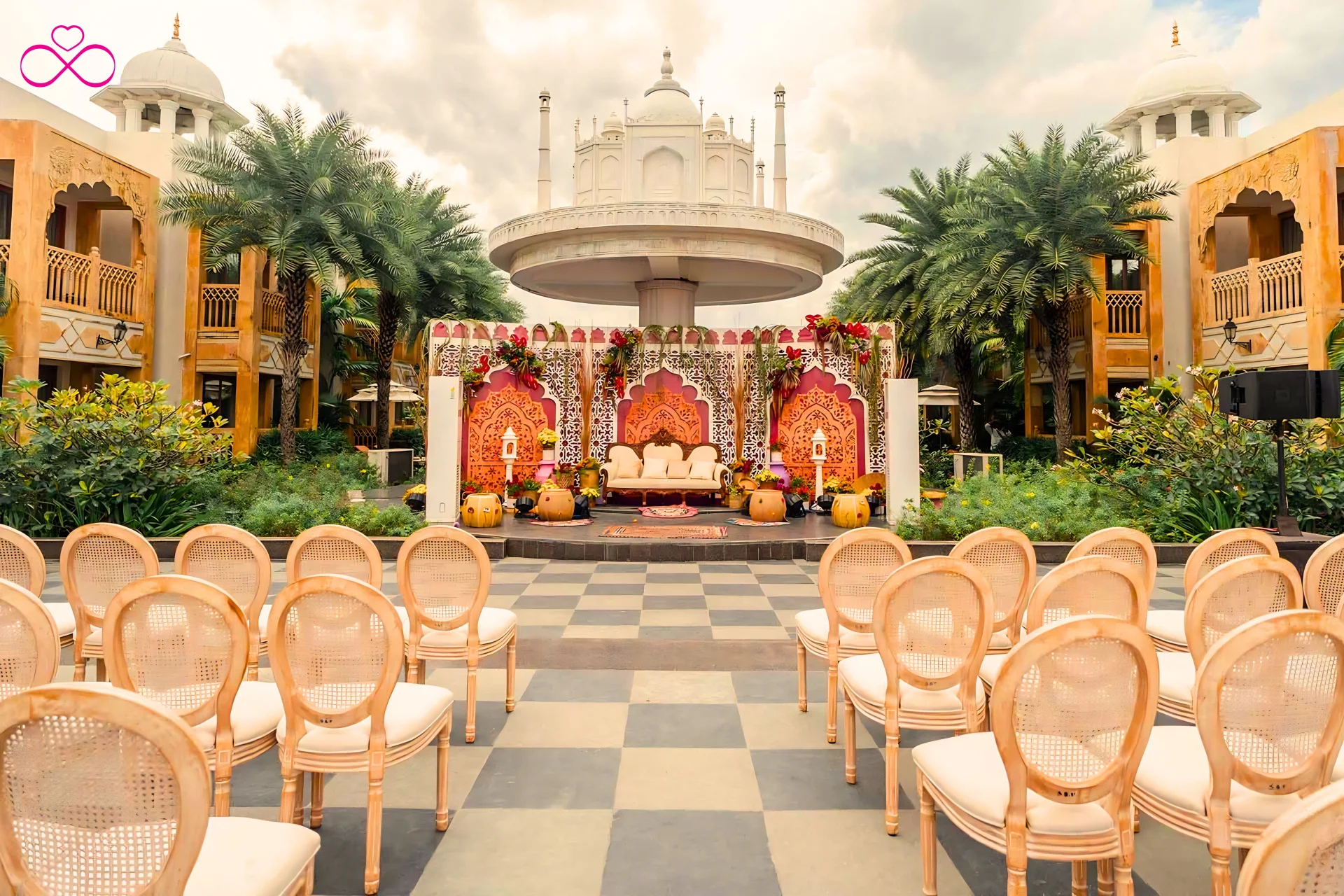
5. Tropical Leaf and Bloom Mehendi
This theme gets a lot more right than its Instagram reputation suggests. Yes, it has been popular. Yes, there are many versions of it that lean too hard on bird-of-paradise flowers and nothing else. But the tropical leaf and bloom concept is genuinely good for a mehendi ceremony in India — particularly in coastal cities or southern regions where the plant material is locally available and naturally lush, rather than imported and slightly desperate-looking.
The backbone of this theme is large-leaf foliage: monstera, banana leaf, palms, birds of paradise, and heliconia. These are used generously — overhead, on the ground, in large floor urns flanking the entrance — and the flowers fill in between them rather than taking the lead. Hibiscus, plumeria, and anthurium work well. The mood is outdoorsy and slightly lush without being over-arranged.
Key Decor Elements:
- A canopy or overhead installation of monstera and banana leaves mixed with hanging plumeria strings.
- Large palm or areca fronds as floor-level framing on either side of the bride's seating.
- Banana leaf placemats under henna trays and food spreads.
- Wicker or rattan seating with cushions in coral, burnt orange, or deep yellow.
- Coconut shell or terracotta bowls for serving.
Colour palette: Deep green, coral, burnt orange, warm yellow, off-white.
Best suited for: Coastal venues, outdoor pool areas, brides in bright or jewel-toned mehendi outfits.
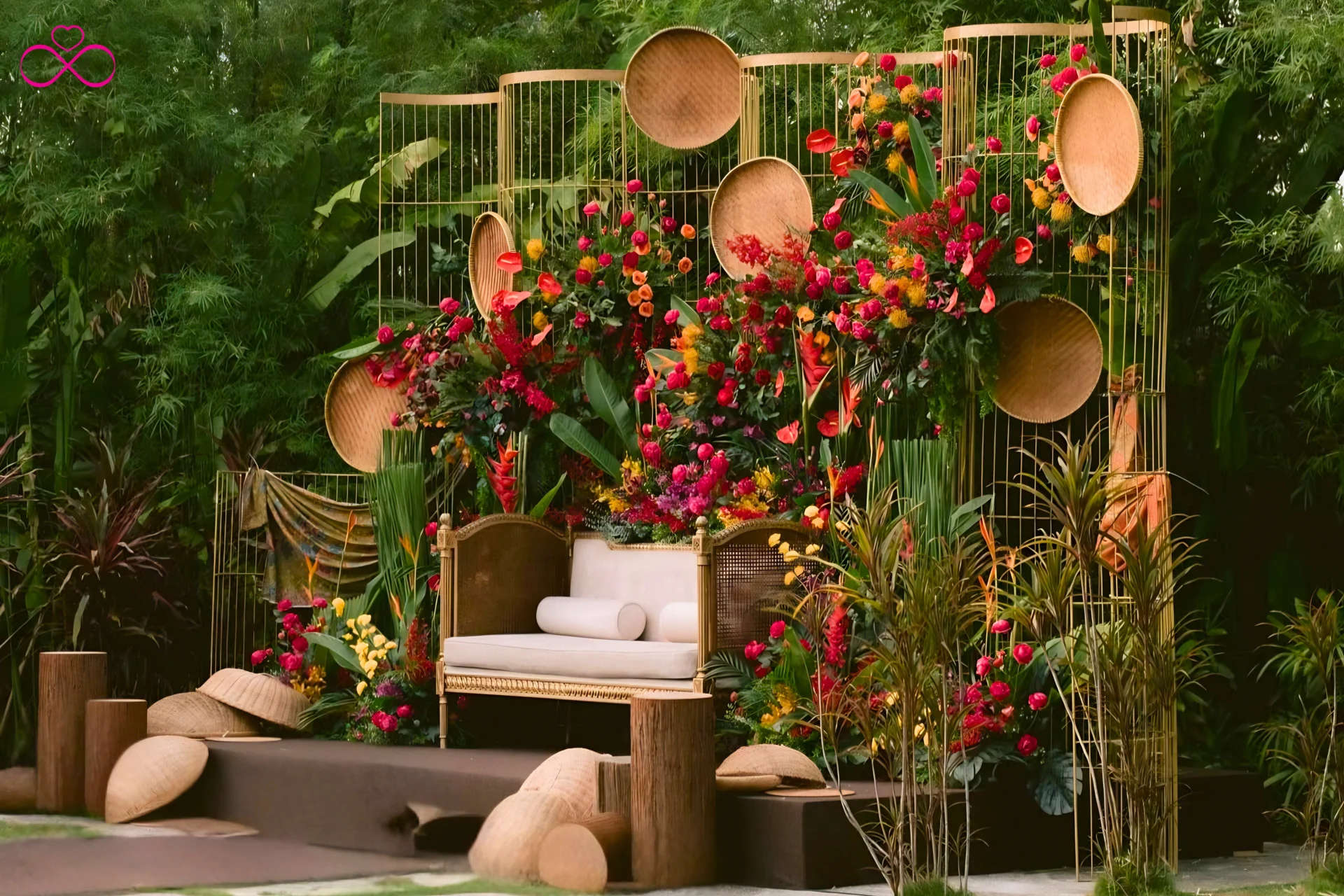
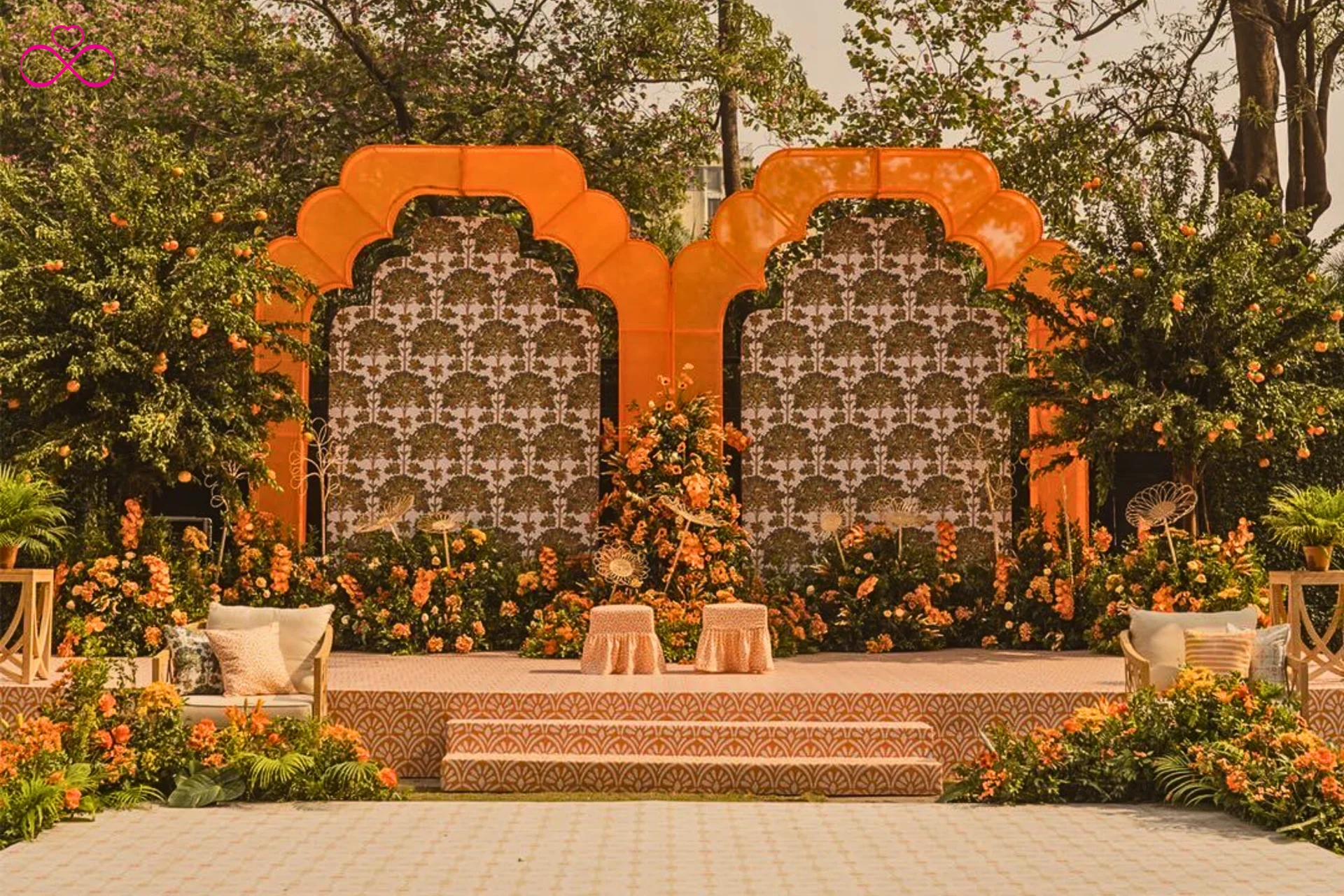
6. Terracotta and Ivory Mehendi
This is the theme for brides who find most Indian wedding colour schemes too loud, but do not want to go so minimal that the ceremony looks like it was designed for a magazine editorial rather than an actual family celebration. Terracotta and ivory sits in the middle — warm enough to feel festive, restrained enough to feel like a considered choice rather than a default.
Terracotta as a colour in event design is clay-brown-red, the colour of an unglazed pot. It is earthy and warm, and it works against ivory and off-white in a way that feels complete without needing a third colour to fill the gap. The textures in this theme do a lot of heavy lifting: linen fabric, actual terracotta pots, jute rope detailing, handmade paper, and rough-edged wood. Smooth and shiny materials undercut the aesthetic.
Key Decor Elements:
- Terracotta pots in various sizes, grouped and planted with white flowers — tuberose, champa, or jasmine.
- Ivory linen canopy with jute rope tie-backs or tassel details.
- Low wooden seating with natural linen cushions in terracotta, sand, and ivory.
- Dried botanicals — grasses, seed pods, cotton stems — arranged in tall terracotta vases.
- Handmade paper name cards and table tags for the henna station.
Colour palette: Terracotta, ivory, warm sand, deep ochre, off-white.
Best suited for: Brides in earthy or neutral mehendi outfits, open courtyards, rustic or minimalist venues.
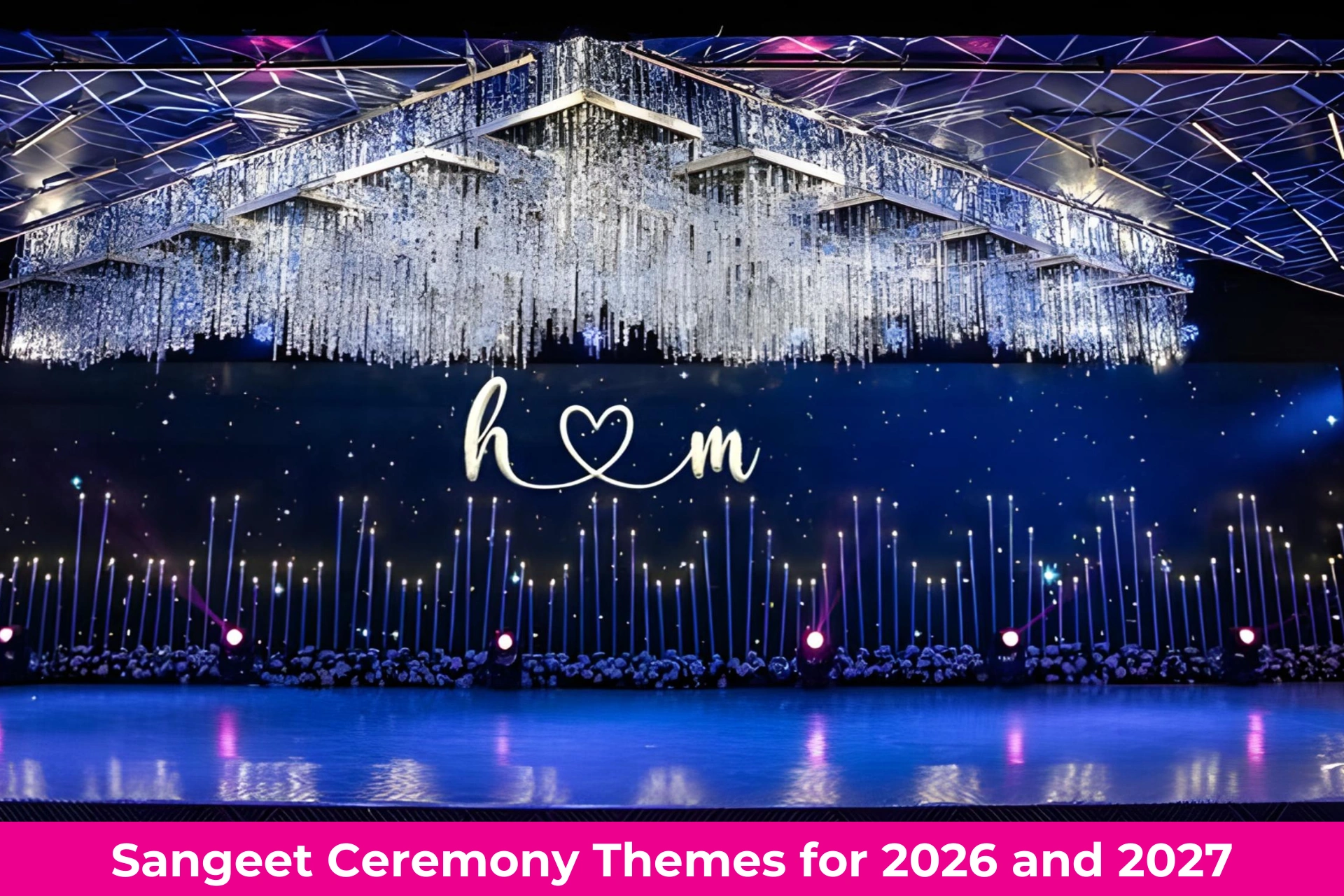
7. Midnight Blue Festive Mehendi
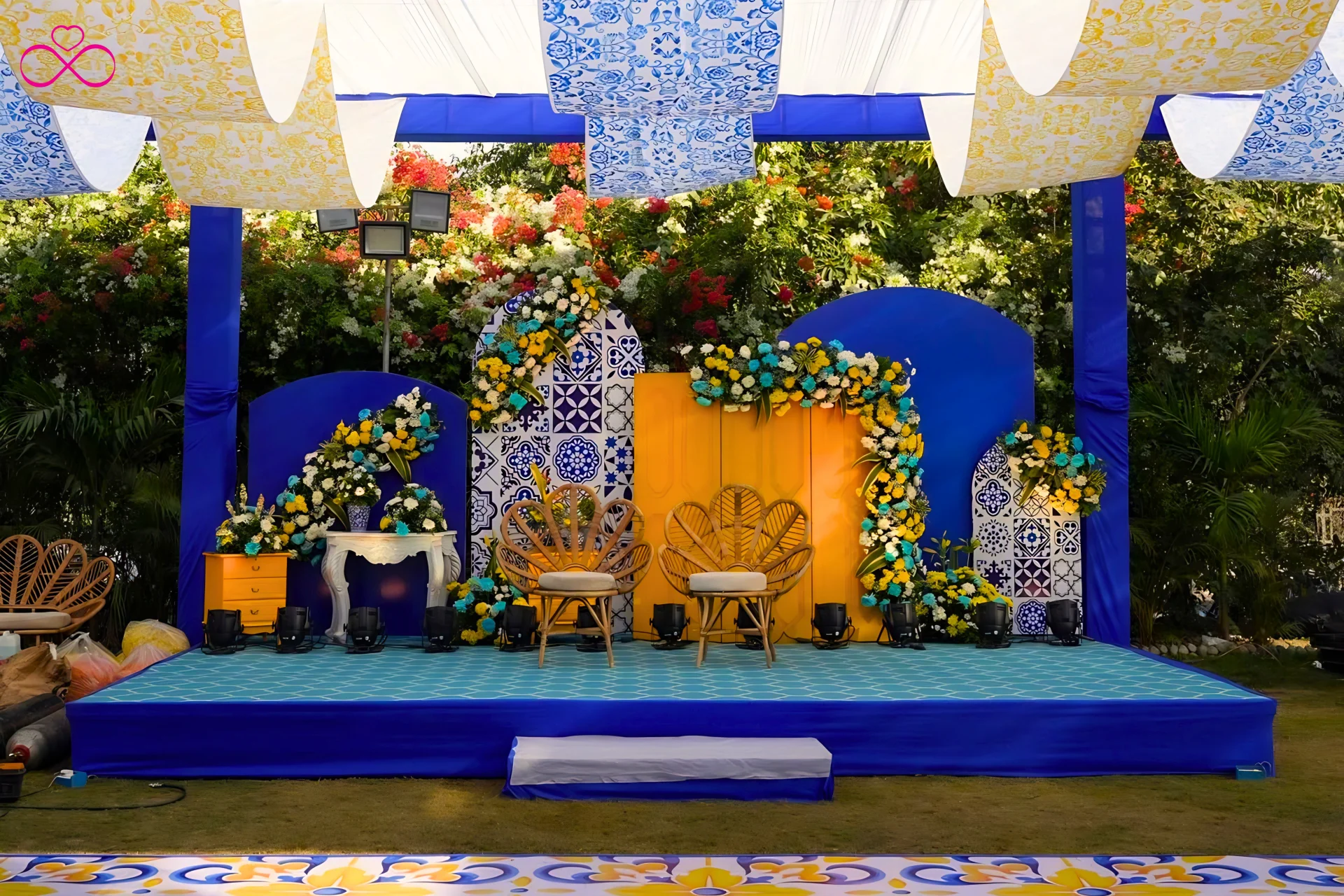
Most mehendi ceremonies happen in the afternoon and are decorated in daylight colours — yellow, peach, green. The midnight blue theme is a deliberate departure from that assumption. It works for evening or late-afternoon ceremonies, or for any bride who wants her mehendi function to feel a little more like a party and a little less like a picnic.
Deep navy or midnight blue as the backdrop colour changes how everything else in the space reads. Gold becomes more pronounced. White flowers look almost luminous. And the henna on skin — which is typically photographed against light or neutral backgrounds — gets a dramatic quality against dark fabric that is genuinely striking. This theme is not restrained; it is intentionally festive and somewhat theatrical. If that matches your energy, go for it without hesitation.
Key Decor Elements:
- Deep navy or midnight blue velvet or silk backdrop behind the bride's seating.
- Gold lanterns, brass candlestick holders, and antique gold string lights.
- White tuberose and jasmine garlands as the primary flower element — the contrast against the navy is striking.
- Deep blue cushions with gold embroidery or mirror work.
- Star-shaped fairy lights or moon phase decorations for the ceiling, if the event runs into early evening.
Colour palette: Midnight blue, antique gold, white, deep teal, ivory.
Best suited for: Evening mehendi ceremonies, brides in deep blue or teal outfits, indoor venues with controllable lighting.
8. Rustic Haveli Mehendi
The haveli aesthetic is one of those things that works best when there is an actual haveli involved — an old property with lime-washed walls, carved wood details, stone flooring, and a courtyard with a tulsi plant at the centre. But even in the absence of the real thing, the rustic haveli theme can be assembled convincingly if the material choices are right.
The key to getting this theme right is restraint with ornamentation and generosity with texture. Old brass, rough iron, kantha stitch fabric, wooden furniture that shows its age — these materials do the work. Avoid plastic, chrome, and synthetic flower materials, which immediately break the atmosphere. If the venue has a courtyard or open space, use it. The haveli theme depends on the feeling of being in a private space that has accumulated objects and stories over time, not on being in a purpose-decorated event hall.
Key Decor Elements:
- Antique or distressed wooden furniture — a carved wooden swing, low chowkis, old almirahs as display props.
- Kantha or phulkari embroidered fabric as table covers and backdrop panels.
- Old brass utensils — urns, thalis, lotah — used as flower vessels and centrepieces.
- Marigold torans at the entrance and along the ceremony perimeter.
- Oil lamps and diyas as the primary light source, supplemented with warm-toned bulb strings if the event runs late.
Colour palette: Turmeric yellow, brick red, antique brass, warm white, deep brown wood tones.
Best suited for: Actual havelis, old bungalows, family homes with character, brides drawn to vintage and heritage aesthetics.
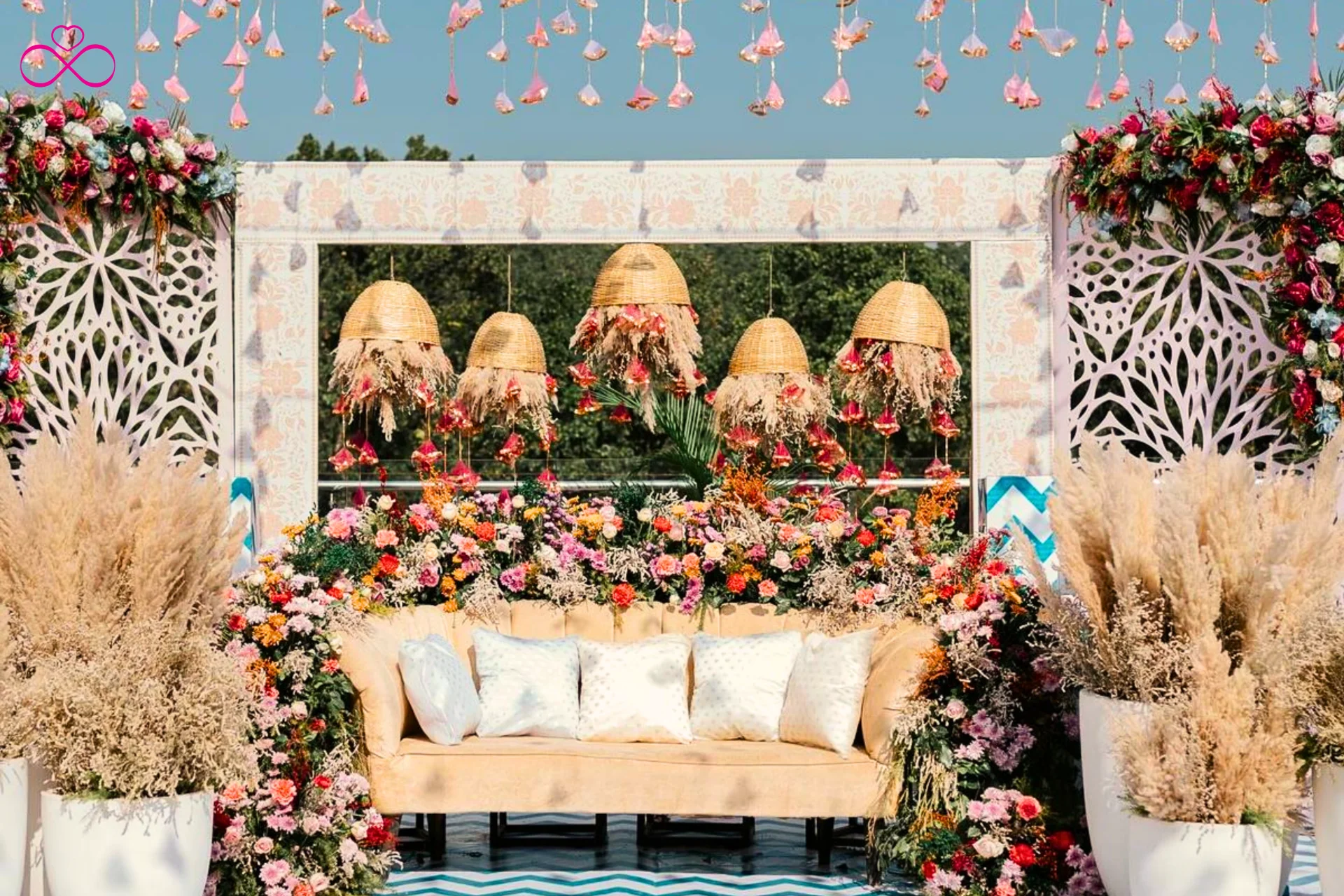
9. Minimalist White and Gold Mehendi
This theme asks you to do less and trust it more. White and gold is a combination that looks intentional almost regardless of what you put together, which makes it both forgiving and easy to get slightly wrong — the wrong gold (too yellow, too shiny) or the wrong white (too stark, too cold) and the whole thing falls apart. The version that works uses warm white and antique or matte gold, not bright yellow gold and brilliant white.
The minimalist white and gold mehendi ceremony is essentially a European-influenced aesthetic applied to an Indian ritual, and the result is contemporary in a way that photographs well for couples who want their wedding visuals to look less traditionally Indian and more globally styled. There is no judgement in either direction — it is simply a different choice, and this theme executes it cleanly.
Key Decor Elements:
- White chiffon or muslin canopy with minimal folds — not draped elaborately, just clean and covering.
- White flowers only — gardenias, tuberose, white roses, white orchids — in antique gold vases.
- Gold Chiavari chairs or white upholstered seating with slim gold frames.
- Matte gold geometric candle holders as table accents.
- Calligraphed signage on white boards with gold lettering for the henna station and food spread.
Colour palette: Warm white, antique gold, champagne, very soft blush as a secondary.
Best suited for: Indoor venues with good natural light, brides in white, gold, or champagne mehendi outfits, couples with a contemporary or destination-wedding aesthetic.
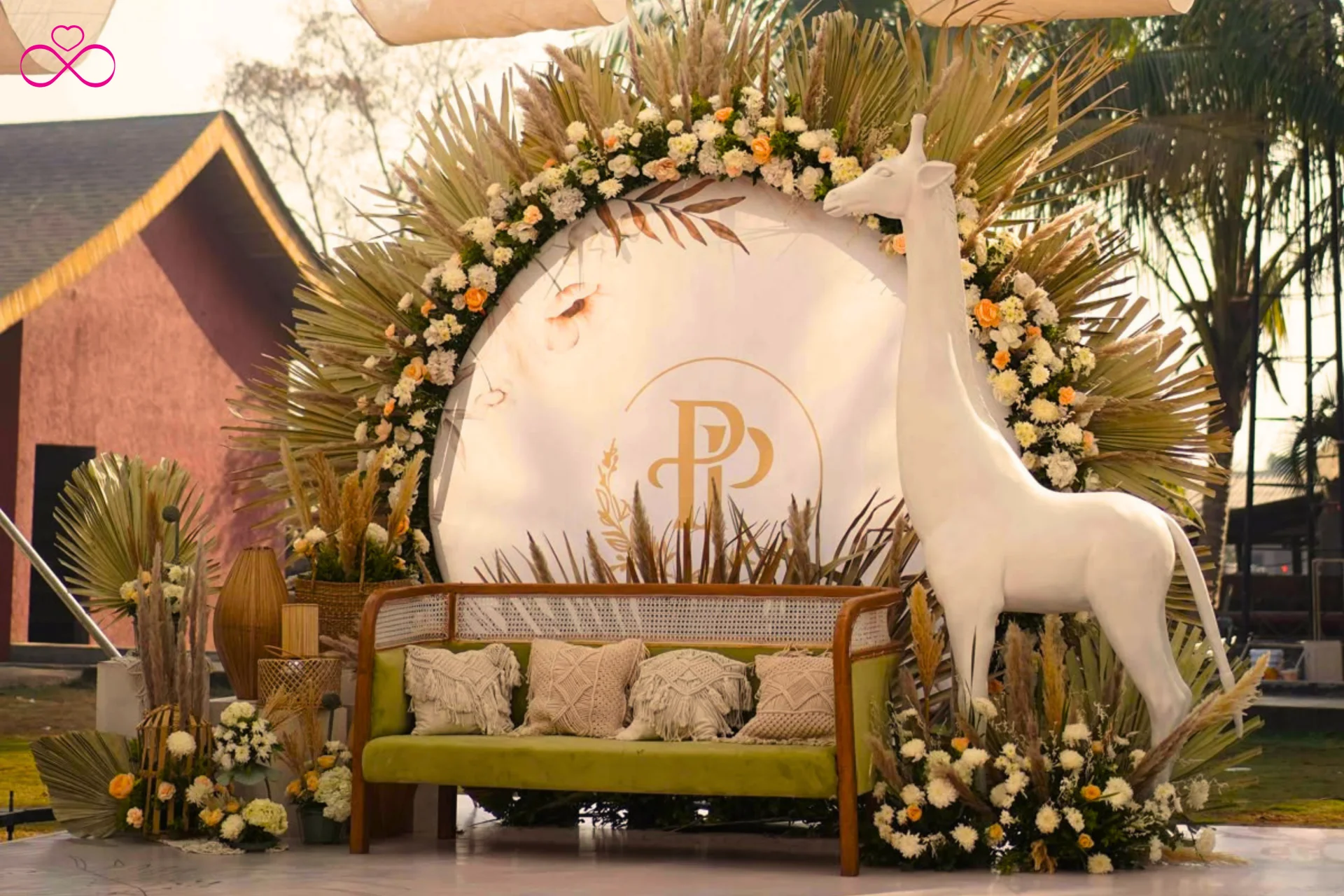
10. Maximalist Bollywood Mehendi
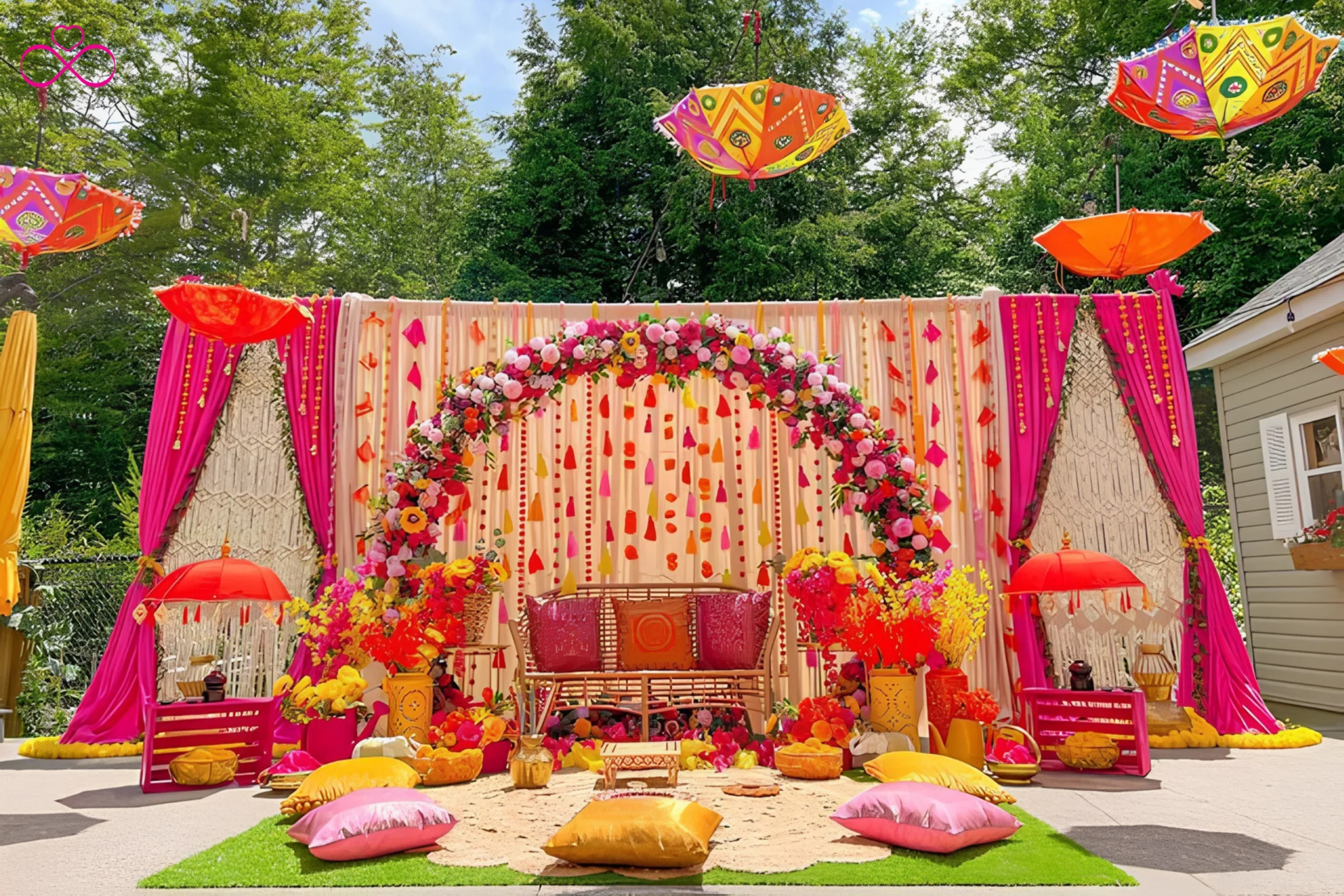
After nine themes that have been, to varying degrees, considered and measured, this one goes the other direction entirely. The maximalist Bollywood mehendi does not care about restraint. It cares about colour, movement, noise (in the design sense), and the feeling that something celebratory is happening and you are in the middle of it. It is the theme for brides who find understatement exhausting and want their mehendi to feel like the opening of a film.
The palette is whatever you want — there is no single colour rule for this theme — but the colours should be bold, saturated, and multiple. Fuchsia, electric blue, saffron, lime green, deep red, and bright yellow can all coexist here if they are present in roughly equal weight. The flowers are abundant. The cushions are tasseled. The backdrop is embroidered or mirrored. Basically: if it glitters, it belongs here.
Key Decor Elements:
- A fully embellished backdrop — mirror work, sequin panels, or embroidered fabric in multiple colours — behind the bride.
- Abundant marigold, rose, and mogra garland installations — ceiling, walls, and floor level.
- Tasselled, mirror-work, and heavily embroidered cushions in contrasting bold colours.
- A live dhol player and a playlist that runs from classic Bollywood to recent party tracks.
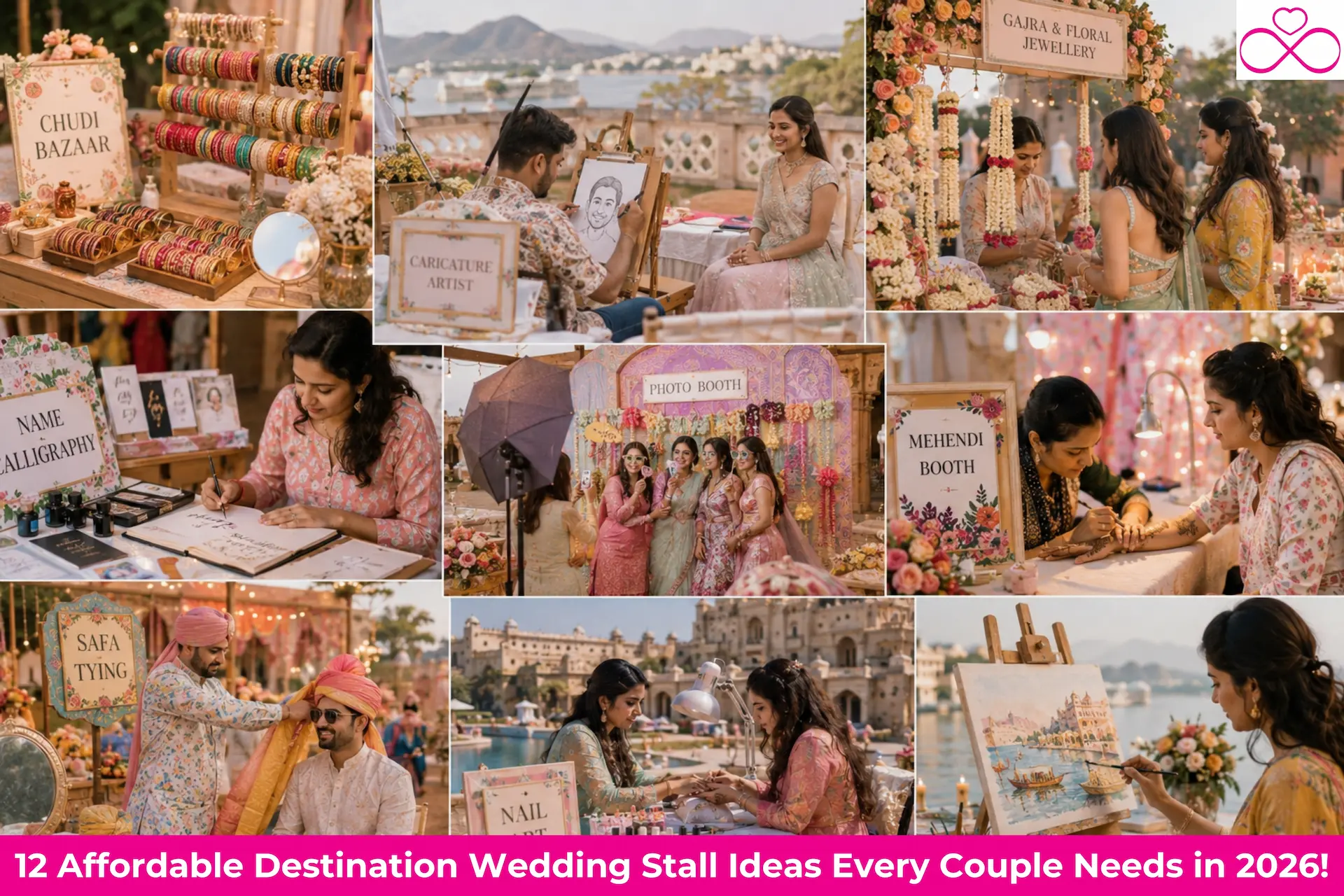
- A photo booth with Bollywood film poster props — director's clapperboard, film reel cutouts, old-style movie title boards.
- A chaat and snack station with hand-painted signage, because this theme requires food that matches its energy.
Colour palette: No single rule — bold, saturated, multiple. Fuchsia, saffron, electric blue, lime, and deep red together are all fair game.
Best suited for: Large guest counts, brides who love colour and are not afraid of spectacle, venues that can handle decor on all surfaces, afternoon ceremonies that will naturally transition into an evening of dancing.
Ten themes, ten genuinely different ways to run a mehendi ceremony. The right one depends on the space you have, the outfit you are wearing, and honestly, what kind of afternoon you want to remember. Some brides know the answer to that immediately. Others need to sit with it for a week. Either is fine — just make sure the decision is yours rather than a compromise between seventeen family opinions.
If you need help taking any of these from concept to an actual executed ceremony — decor vendors, mehendi artists, catering that matches the theme — the team at Eternal Weddingz can connect you with the right people. Visit www.eternalweddingz.in to start planning.