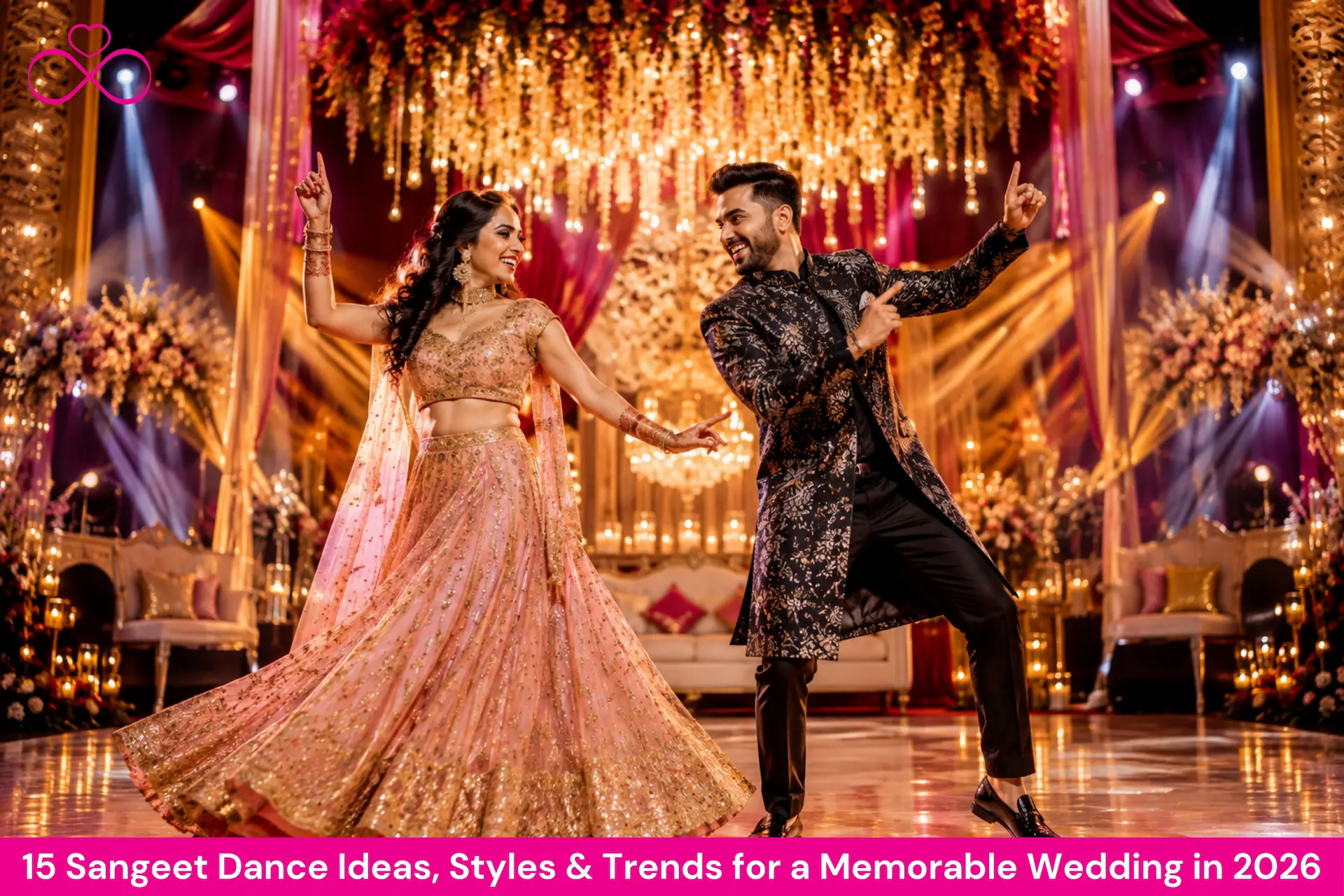












How to Budget for your Wedding Without Overspending

Introduction:
Most wedding budgets don’t go wrong with one big decision—they go wrong one “small” decision at a time. It starts with an extra guest or two, then a better décor package, one more function, an upgraded menu, a vendor add-on, or the classic “we might as well add this too.” None of these choices feels huge on its own, but together, they can quietly take your wedding budget far beyond what you originally planned. That’s why learning how to budget for a wedding isn’t about cutting back on everything you love. It’s about knowing where your money matters most and deciding that before the excitement of wedding planning starts making those decisions for you.
At Eternal Weddingz, we work with couples through exactly this part of wedding planning - turning a long, emotional wish list into a practical wedding budget that can actually be planned, tracked, and managed. In this 2027 Indian wedding budget guide, we’ll break down the major wedding expenses, including the venue, catering, guest list, outfits, jewellery, photography, décor, entertainment, destination logistics, vendor charges, and those easily forgotten costs that often appear at the last minute. You’ll also find a simple wedding budget allocation method, practical ways to save without compromising on what matters to you, a planning framework, and FAQs around the questions couples commonly have about wedding costs.
One important note: The figures and percentages in this guide are planning benchmarks, not fixed market rates. Your final wedding cost will depend on factors such as your city, wedding date, guest count, venue, vendors, and overall wedding style.
Part 1 - Where Your Wedding Budget Actually Goes in 2027?
Before you can control a wedding budget, you need an honest picture of where the money actually goes - not the estimate you started with, but what real couples end up spending once every vendor and every function is accounted for. Here is the breakdown that keeps showing up, category by category. A useful starting point for a 2027 wedding budget is to think in ranges rather than rigid percentages. Recent Indian wedding budgeting guides commonly place venue and catering at roughly 40 to 55 percent together, décor around 15 to 25 percent, photography and videography around 4 to 8 percent, attire and jewellery around 10 to 20 percent, entertainment around 3 to 7 percent, and a contingency reserve around 5 to 10 percent. Treat these as a starting framework and move money around according to your priorities.
| Budget Category | Planning Range | What It Covers |
|---|---|---|
| Venue + Catering | 40% - 55% | Venue, food, beverages and venue-related charges |
| Décor + Lighting | 15% - 25% | Mandap, stage, flowers, installations and lighting |
| Photography + Videography | 4% - 8% | Photo, film, albums, editing and optional drone coverage |
| Attire + Jewellery | 10% - 20% | Bride, groom, accessories and jewellery purchases or rentals |
| Entertainment | 3% - 7% | DJ, live music, Sangeet choreography and production |
| Contingency | 5% - 10% | Unexpected costs, overruns and last-minute changes |
Planning note - recent Indian wedding budget guides were used as a directional benchmark; always replace ranges with live quotes for your city and wedding date.
1. Venue and Catering - Still the Biggest Line Item
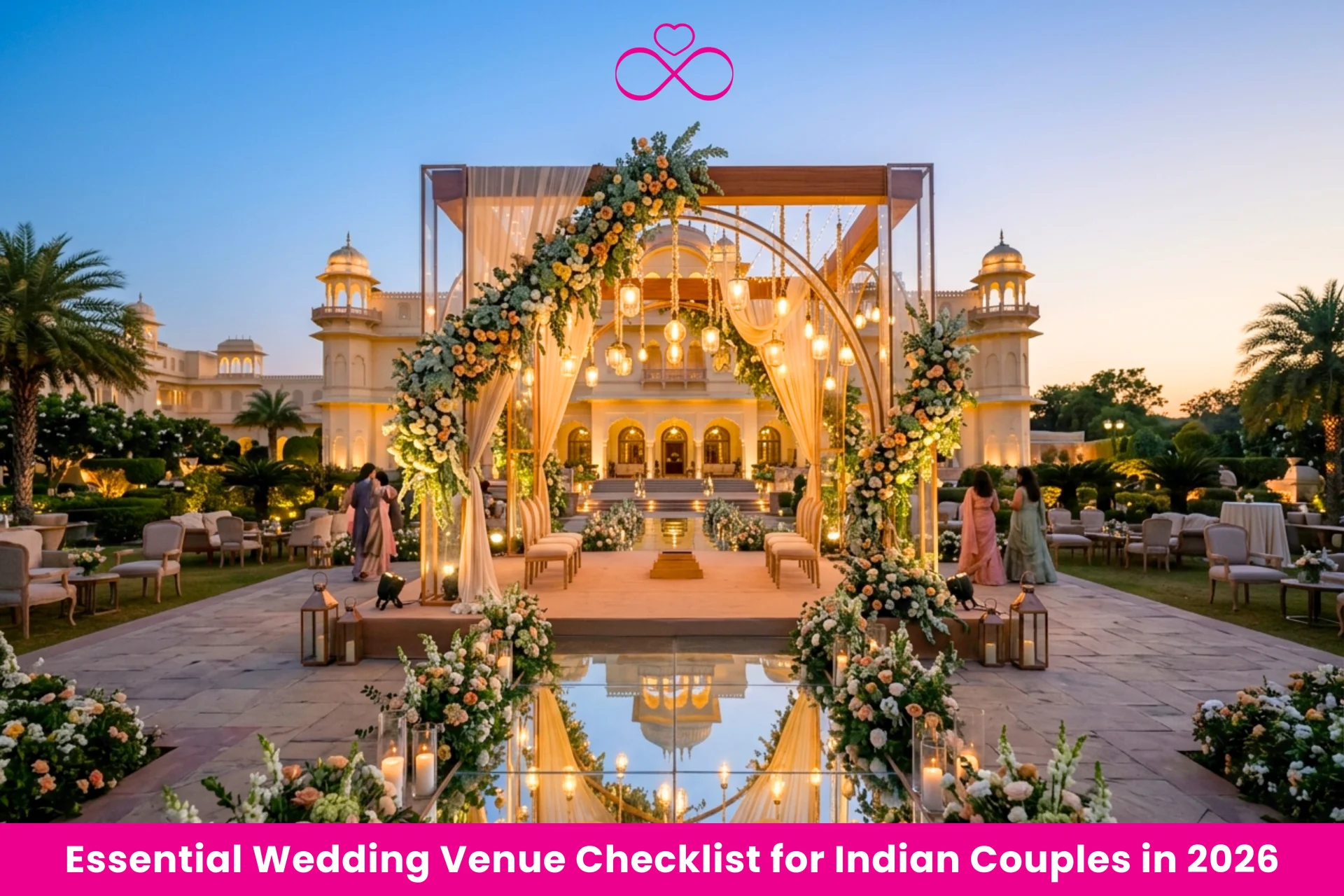
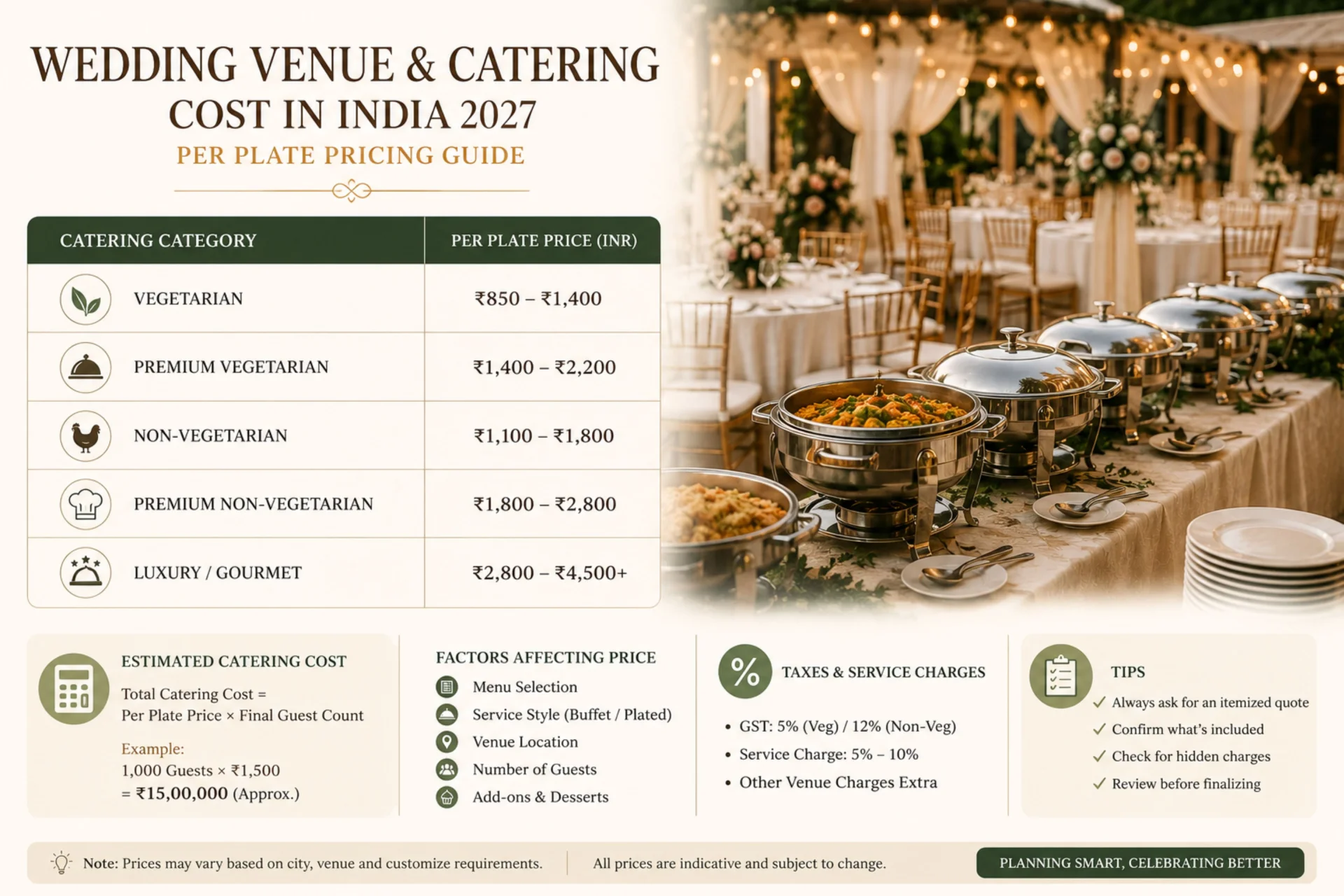
Venue and catering are usually the biggest combined line items in an Indian wedding budget, which is why wedding venue cost, catering cost per plate, and the final guest count should be reviewed together, and this is where the first real shock tends to happen. A venue quote rarely includes everything - decor minimums, power backup charges, valet, security deposits, and overtime fees get added later, and catering is priced per plate but the plate count is almost never fixed until guests actually confirm. Ask for an itemised quote before you fall in love with a property, not after. The per-plate rate quoted on a phone call is almost always the lowest number you will see - taxes, service charges, and any premium menu additions come on top of it, and that gap can run into lakhs on a guest list of 400 or more.
[Image generated using AI]
2. Guest List Inflation - The Silent Budget Killer
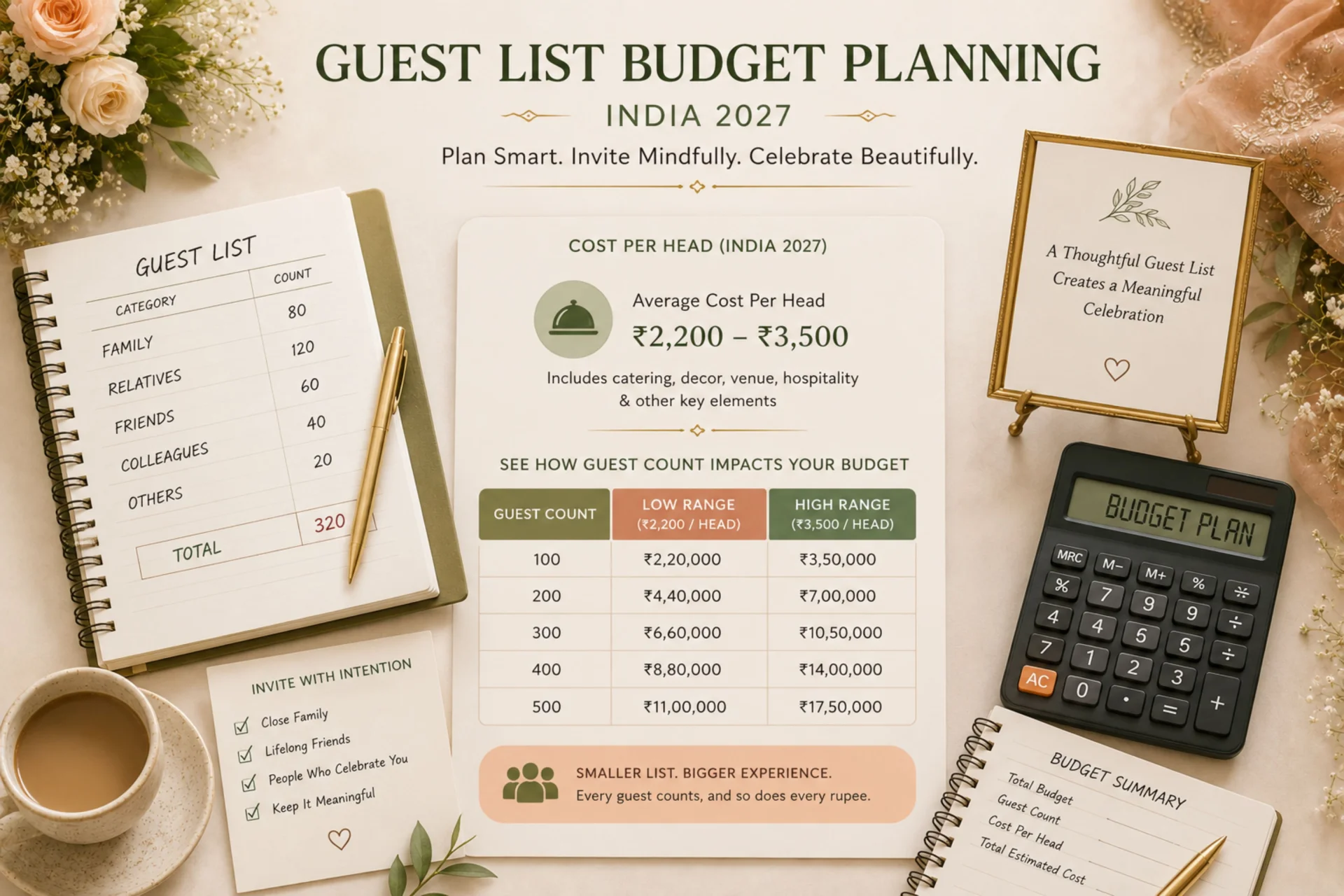
Every rupee in a wedding budget scales with the guest count, which makes guest list management one of the strongest wedding cost-saving strategies, which makes the guest list the single most powerful lever a couple has - and the one that gets out of control the fastest. A list that starts at 200 has a habit of becoming 350 by the time both families finish adding names, and nobody notices until the catering quote comes back nearly double what was budgeted. The fix is not being unkind about who gets invited. It is doing the guest count conversation early, with both families in the room, before any vendor quote is finalized, so the number used for budgeting is the number that actually shows up.
[Image generated using AI]
Common guest list inflation triggers:
- A guest list drafted separately by both families before comparing notes.
- "Plus one" invites extended without confirming actual attendance.
- Extended family and neighbours added out of social obligation rather than closeness.
- Guest counts finalized after the venue and catering contracts are already signed.
3. Outfits and Jewellery Across Multiple Functions
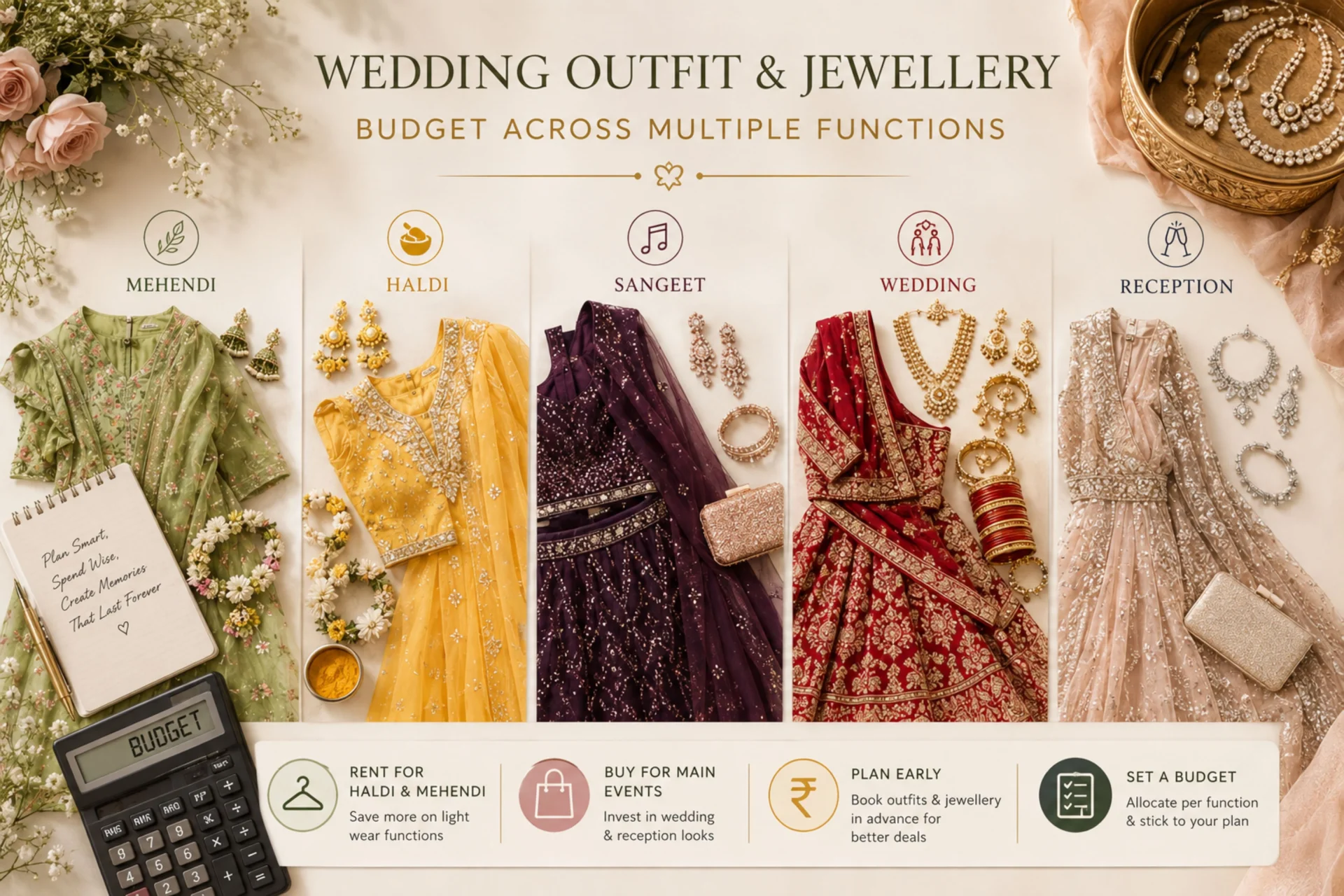
A modern Indian wedding usually runs across four or five functions, and each one comes with its own outfit expectation - for the couple and often for the immediate family too. Multiply that across mehendi, haldi, Sangeet, the wedding ceremony, and the reception, and outfit costs alone can rival the decor budget. Jewellery adds another layer, especially when pieces are bought new for the occasion rather than drawn from what the family already owns. Renting for one or two of the lower-stakes functions - haldi and mehendi are the easiest to rent for - while buying for the main ceremony and reception is where most couples find real savings without the outfits looking any less special in photographs.
[Image generated using AI]
4. Photography and Videography Packages
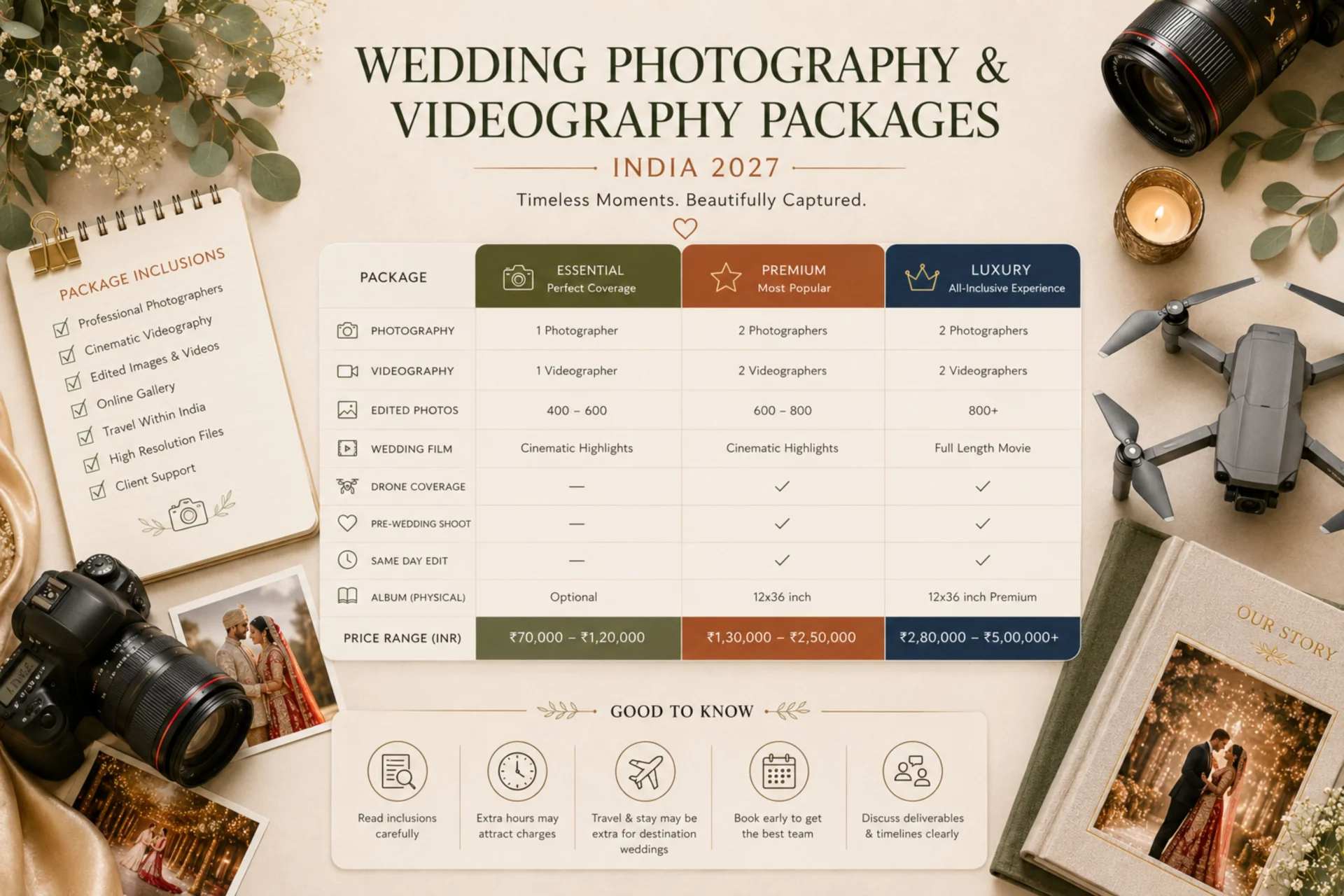
Wedding photography package cost and videography pricing can look simple on a price list and get complicated fast once add-ons come into play. A base package usually covers one or two photographers for the main events, but drone coverage, a second videographer, same-day edits, pre-wedding shoots, and a physical album are frequently priced separately - and couples often assume they are included until the final invoice says otherwise. Read the package inclusions line by line before signing, and ask specifically what happens if an event runs longer than the contracted hours, since overtime charges on photography teams are one of the more common surprise costs on a wedding budget.
[Image generated using AI]
5. Decor and Theming Costs
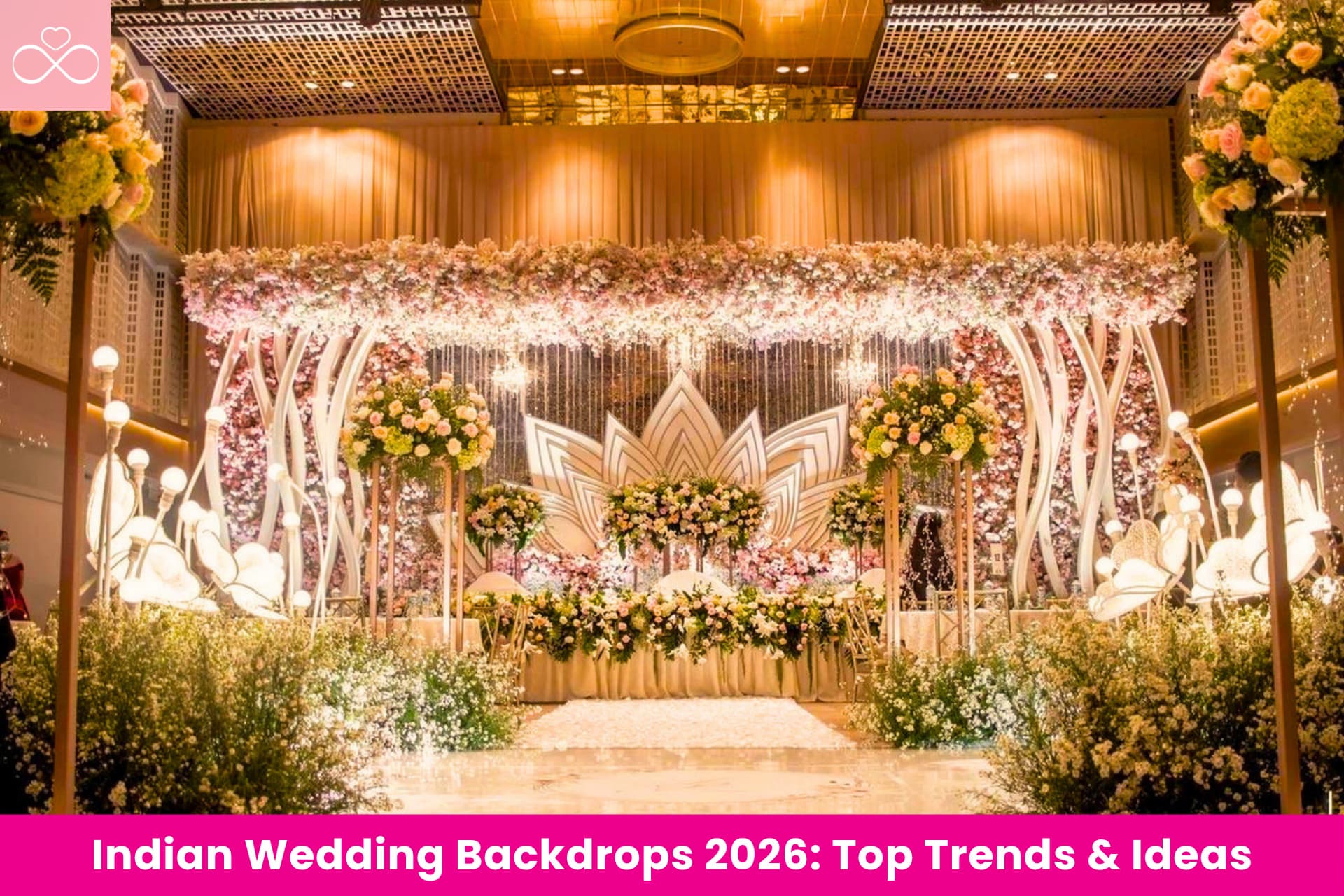
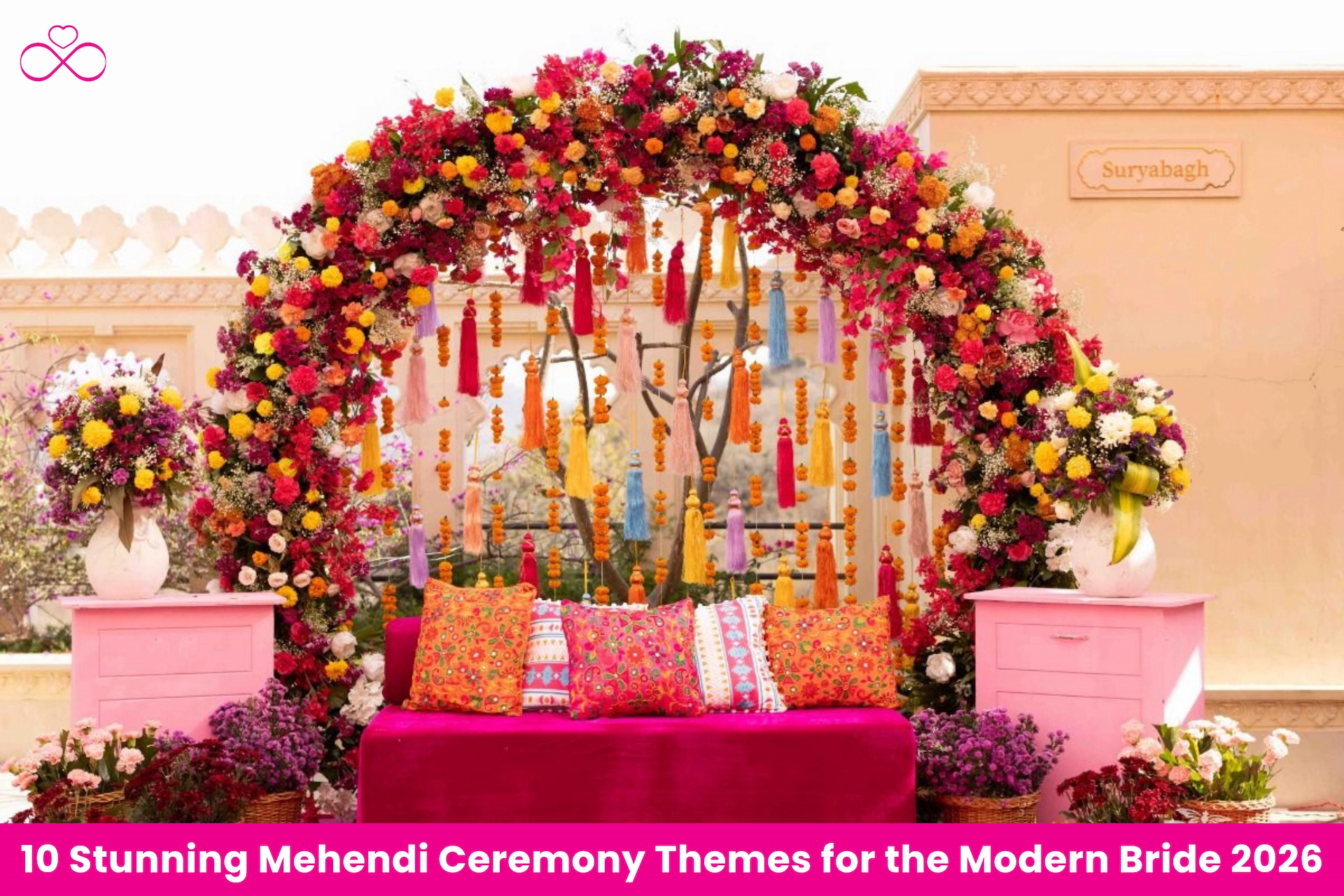
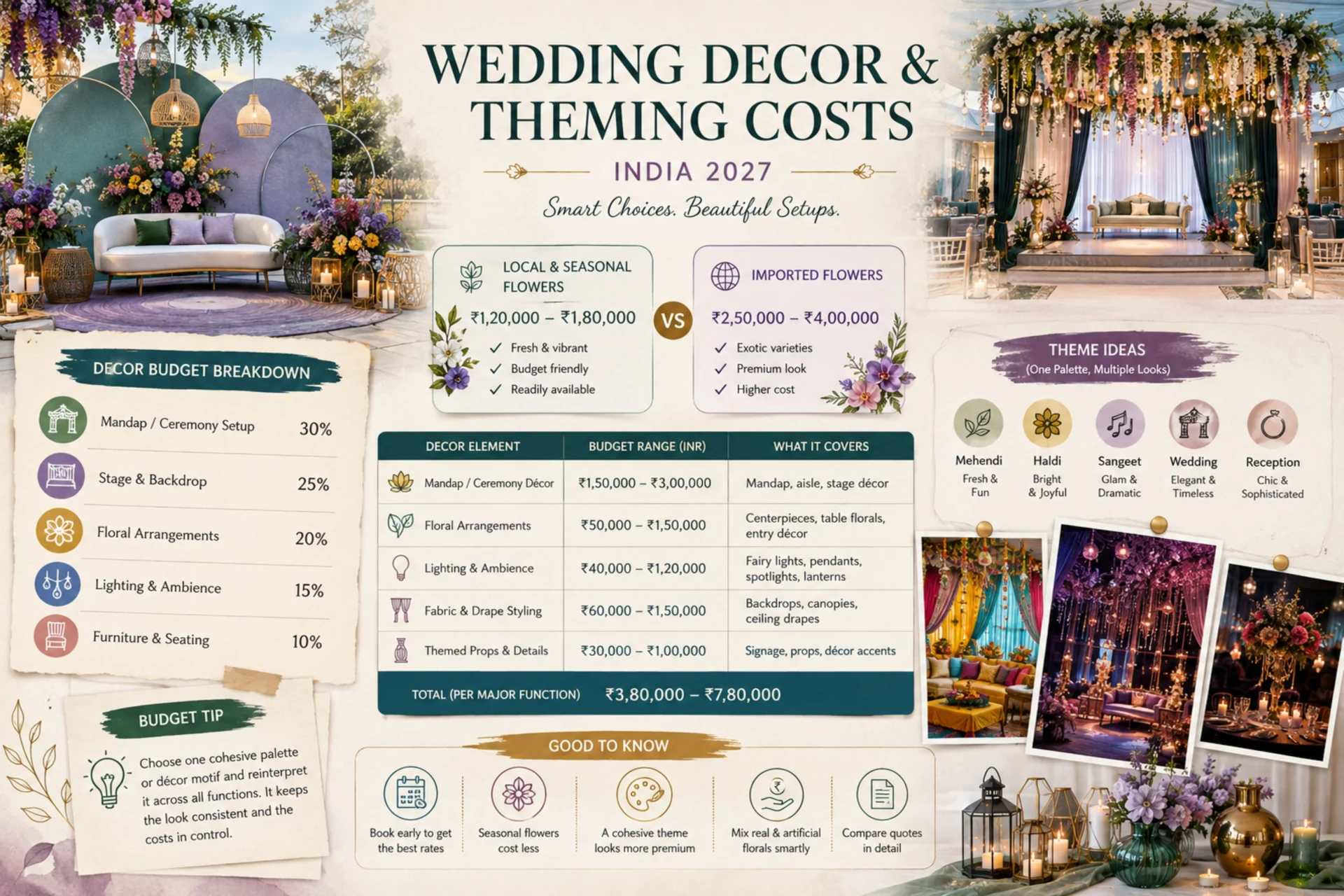
Wedding décor budget is one of the most flexible parts of an Indian wedding, because the same brief - say, a floral mandap with a pastel colour palette - can be executed for a fraction of the cost using local, seasonal flowers instead of imported ones, or artificial florals mixed with real ones for the backdrop shots that matter most. Theming costs also compound quickly across multiple functions if each one gets a completely different look. A more budget-conscious approach is choosing one cohesive palette or motif that gets reinterpreted differently at each function, rather than reinventing the entire design brief for every single event. You can find more about Maayra Themes, Sangeet Themes, 2027 Trends, and generally more about the trends for upcoming wedding season on our Blogs Page.
[Image generated using AI]
6. Entertainment and Sangeet Production
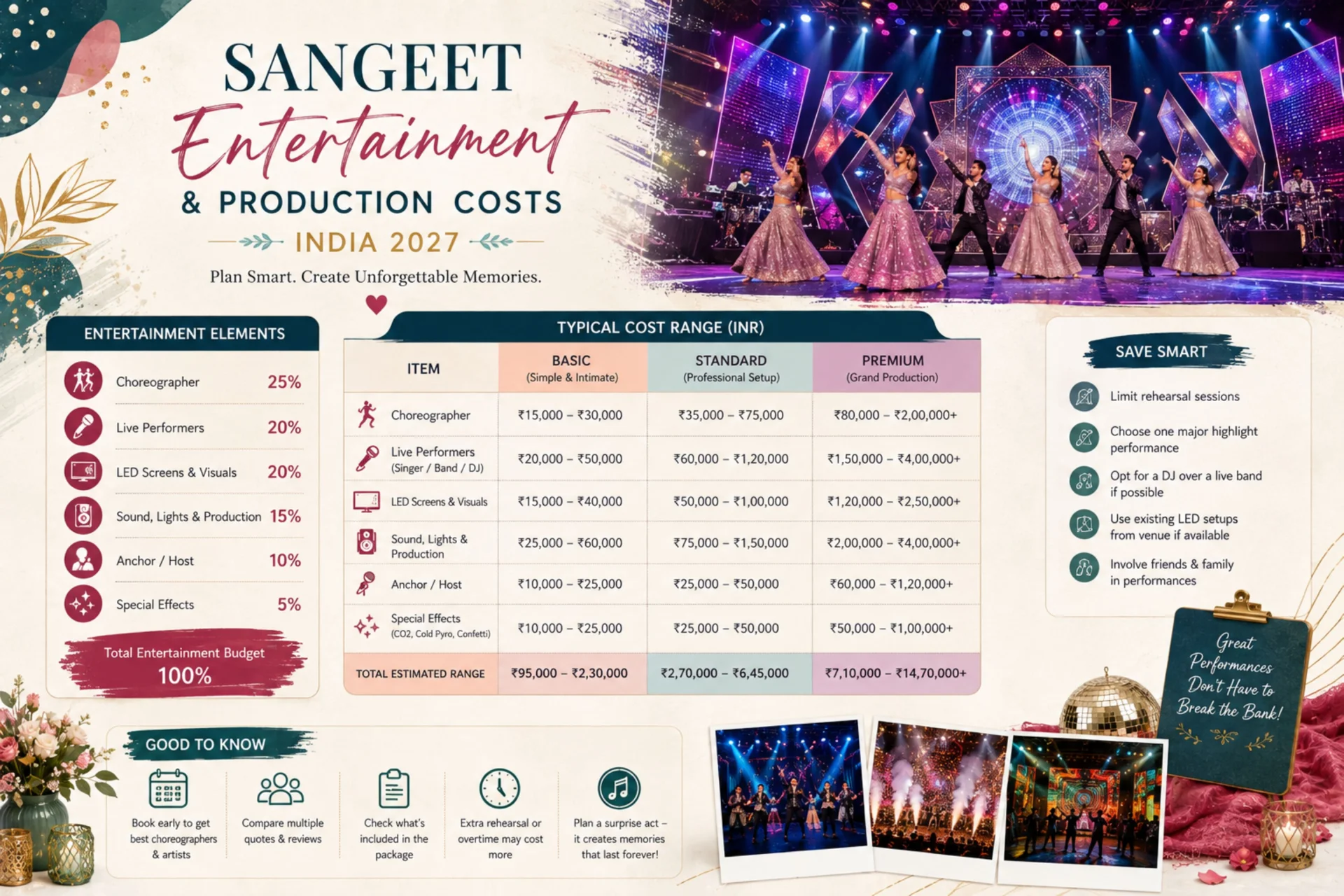
Sangeet entertainment can range from a group of family members rehearsing to a full stage production with choreographers, live musicians, and LED screens - and the cost gap between those two ends is enormous. Choreographer fees are usually charged per session or per performance group, so the more elaborate the programme, the faster this line item grows. A live dhol player, a professional anchor, or a custom soundtrack producer are worth the spend if entertainment is a genuine priority for your Sangeet, but they are also the easiest costs to scale back without anyone noticing if the budget needs trimming elsewhere.
[Image generated using AI]
7. Hidden Vendor and Service Charges
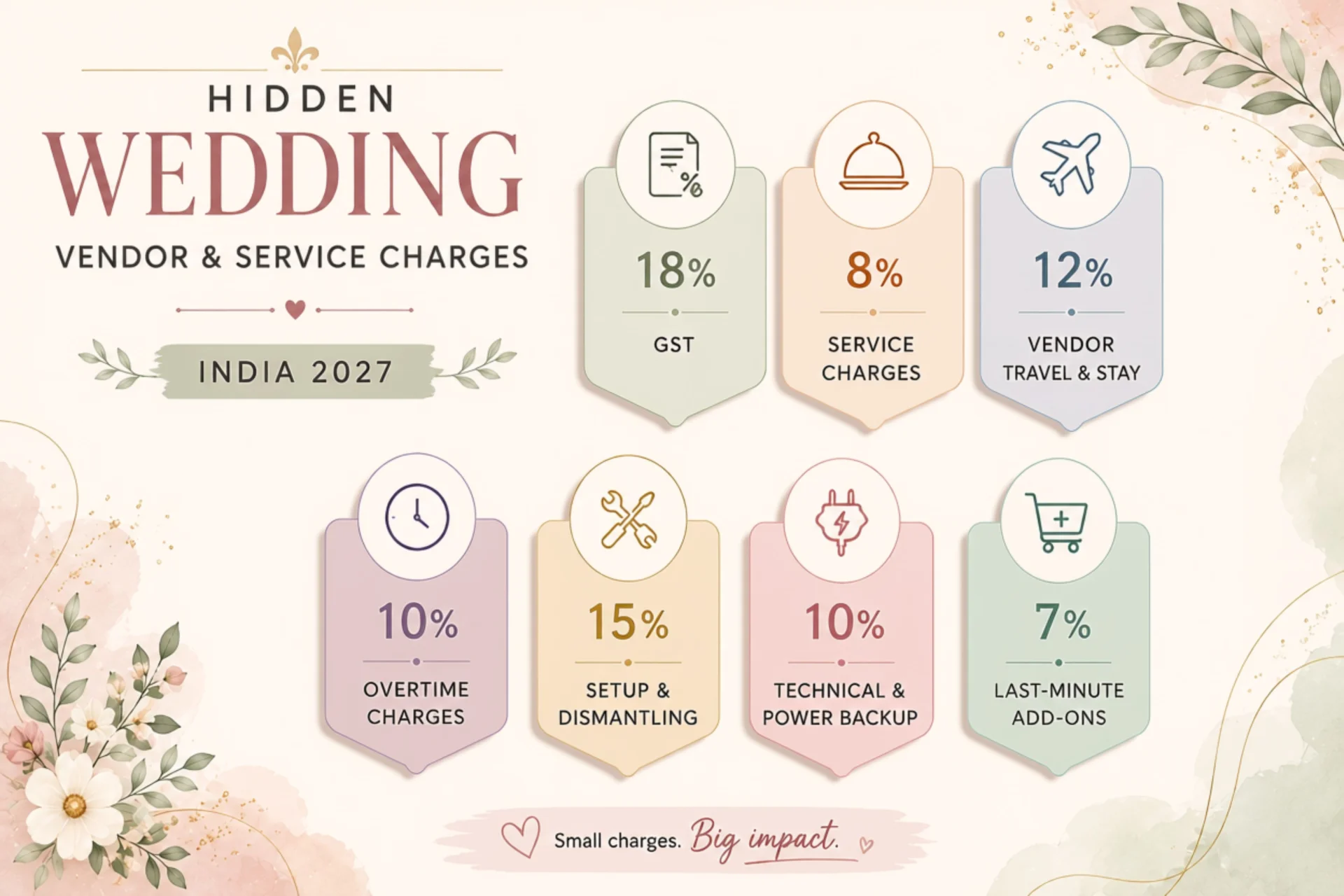
This is the category that blows past the projected total more often than any other. GST, service charges, vendor travel and accommodation for outstation teams, overtime rates, and last-minute add-ons rarely show up in the first quote a couple sees. A photographer's quote might not include their travel if the wedding is outside their home city. A decorator's quote might exclude the cost of dismantling and removal the next morning. None of these are dishonest omissions in most cases - they are simply industry-standard exclusions that couples do not know to ask about. Before signing any vendor contract, ask directly what is not included, not just what is.
[Image generated using AI]
8. Destination Wedding Premiums
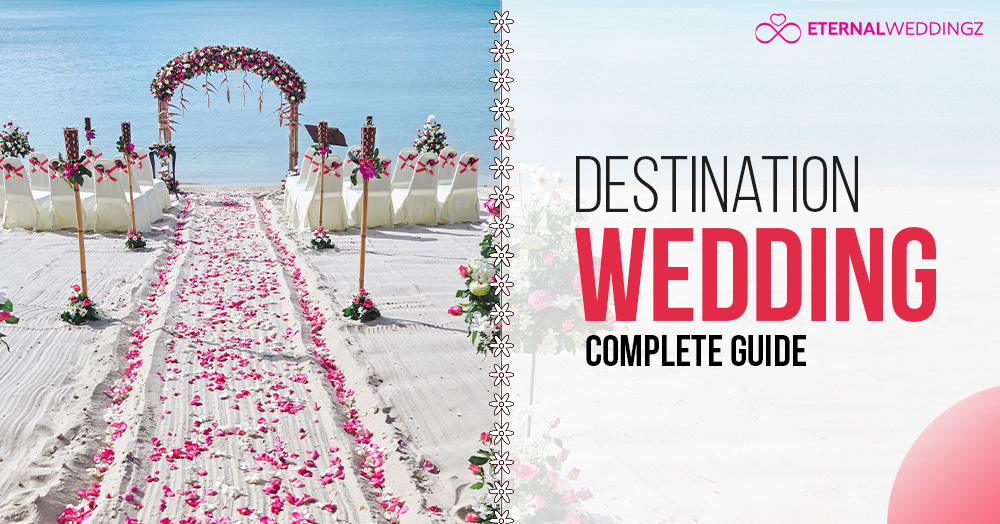
A destination wedding carries costs that a hometown wedding simply does not - guest travel support, multi-day accommodation blocks, vendor travel and stay for outstation teams, and logistics coordination that a local wedding does not require. Even when the venue itself is comparable in price to a city hotel, the total cost of a destination wedding is almost always higher once travel and accommodation for the wedding party and close family are factored in. Booking vendors local to the destination rather than flying an entire team in from your home city is one of the more effective ways to bring a destination wedding budget back under control.
Part 2 - Smart Budgeting Strategies to Consider for 2027
Knowing where the money goes is only useful if you can actually do something about it. These seven strategies are the ones that consistently make the biggest difference to a real wedding budget, without asking you to compromise on the parts of the day that matter most to you.
9. The Percentage Allocation Method
This is the most straightforward way to keep a wedding budget from drifting - decide on a total number first, then split it into fixed percentages across categories before you book a single vendor. A commonly used starting split for an Indian wedding looks something like venue and catering at 40 to 45 percent, attire and jewellery at 15 percent, photography and videography at 10 percent, decor at 10 to 12 percent, entertainment at 8 to 10 percent, and the remainder split between miscellaneous costs and a contingency buffer. The exact percentages should shift based on what matters most to you, but having them fixed in advance stops one category from quietly eating into the budget meant for another.
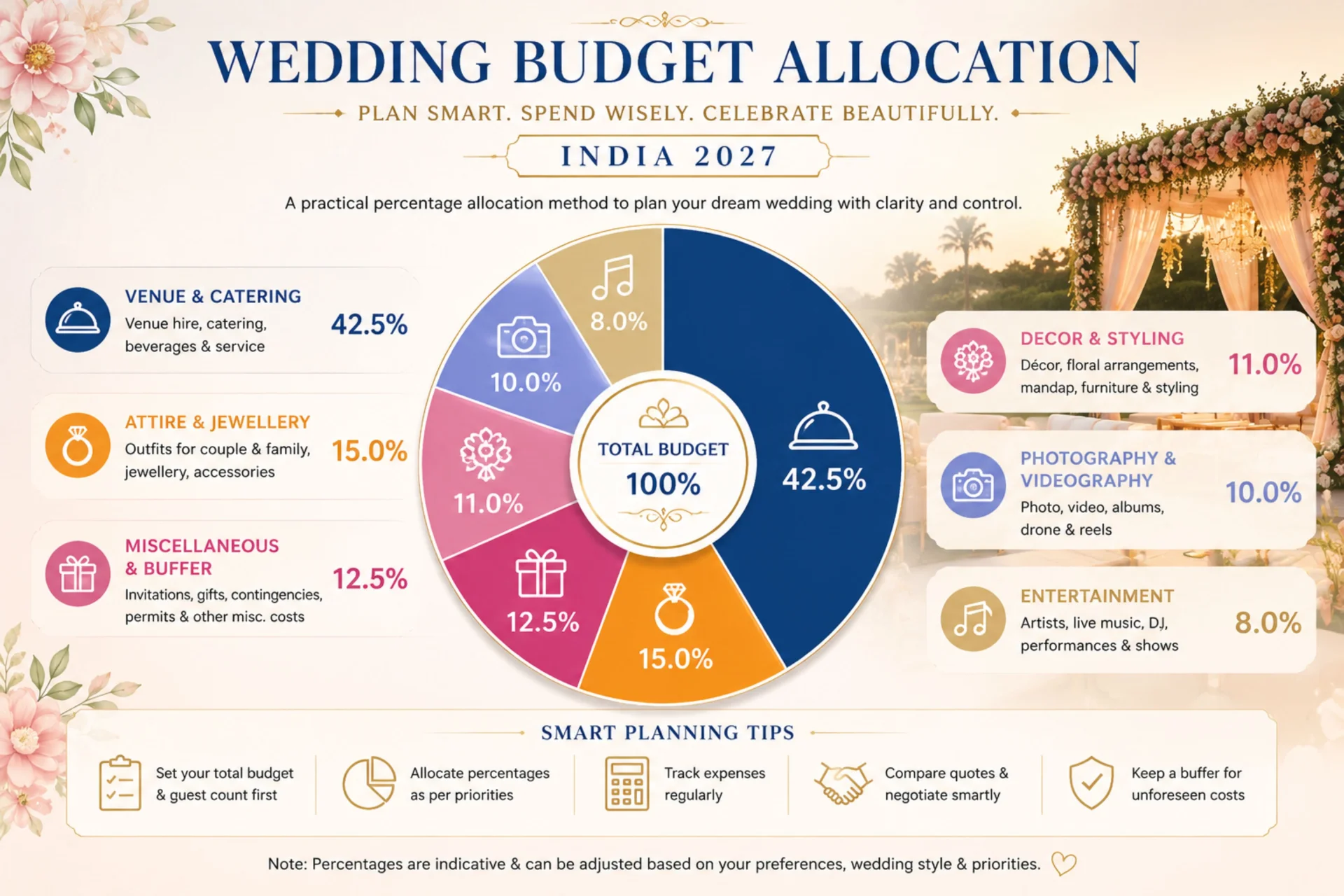
[Image generated using AI]
10. The Must-Have vs Nice-to-Have List
Before any vendor conversations start, sit down separately from the excitement of Pinterest boards and make two lists - what genuinely matters to you as a couple, and what would be nice but is not worth stretching the budget for. This sounds obvious, but very few couples actually do it in writing, which is exactly why budgets creep. When a tempting add-on comes up mid-planning - a more elaborate mandap, an extra photographer, a bigger guest list - the list becomes the reference point for whether it is worth reallocating money from something else to afford it.
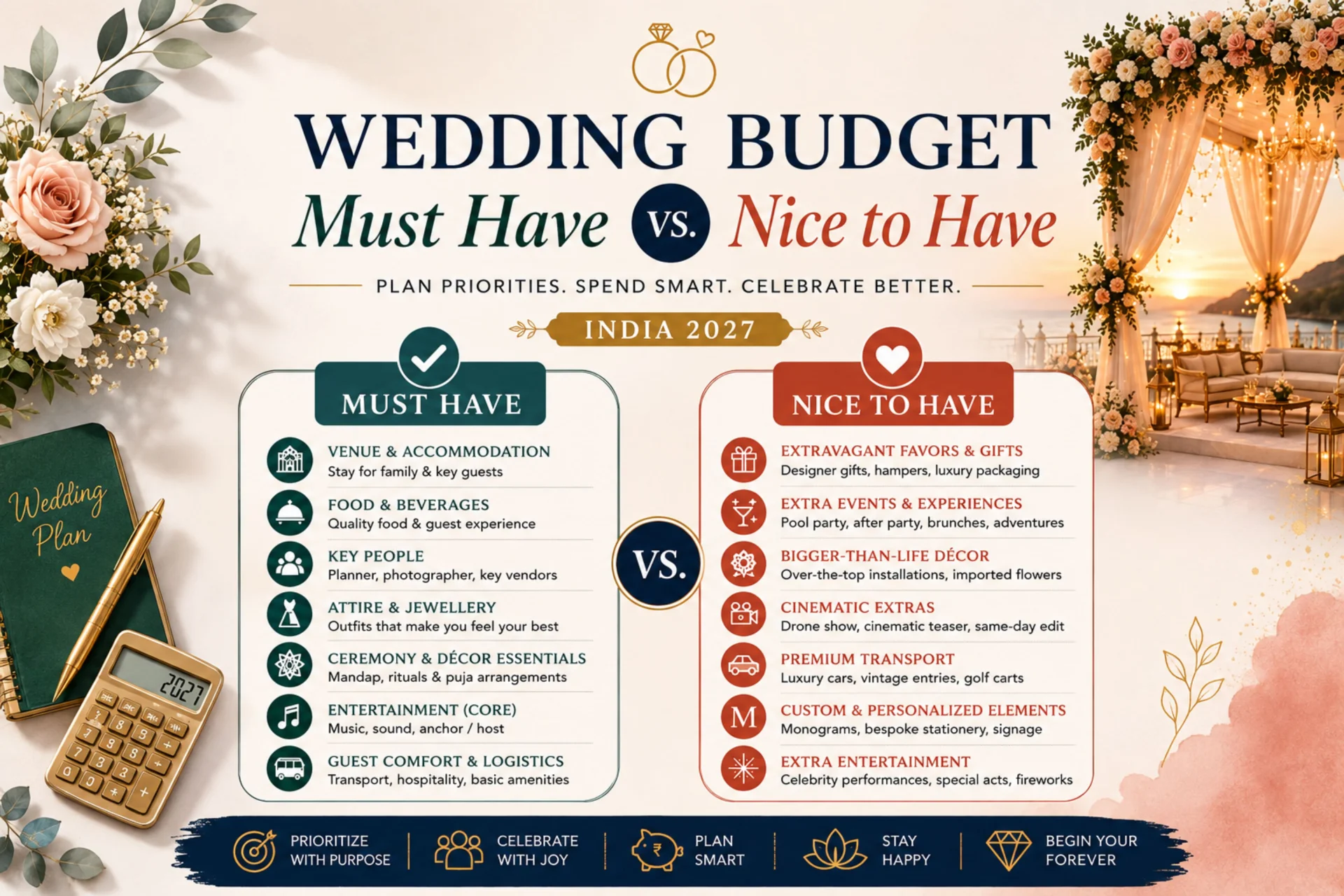
[[Image generated using AI]
Where the two lists usually diverge:
- Must-haves: the venue, the photographer, the outfit for the main ceremony.
- Often nice-to-haves: drone coverage, a second Sangeet outfit change, imported flowers.
- Write both lists before any vendor meetings, not during them.
- Revisit the list whenever a new expense is being considered mid-planning.
11. The Three-Quote Rule
Never book the first vendor quote you receive, even if it feels reasonable - get at least three quotes for every major category before signing anything. Pricing in the wedding industry varies enormously between vendors offering comparable quality, and the only way to know if a number is fair is to have something to compare it against. This is not about squeezing every vendor for the lowest possible price. It is about making an informed decision instead of an emotional one, which is easy to do when you are excited about a venue or a photographer's portfolio and have not paused to check what else is available at a similar standard.

[Image generated using AI]
12. Off-Season and Weekday Date Savings
Wedding dates carry a real price tag of their own. Peak wedding season weekends command premium rates from venues, caterers, and photographers simply because demand is highest, and an auspicious weekday during the same season can cost noticeably less for an identical setup. Off-season dates - outside the traditional wedding months for your region - often bring venue discounts of 15 to 30 percent with no difference in the actual experience for your guests. This is one of the few budget decisions that requires zero compromise on quality, only flexibility on timing, which makes it worth seriously considering before locking in a date purely because it feels traditional.
13. Combining Functions to Cut Venue Costs
Every separate function - mehendi, haldi, Sangeet, wedding, reception - typically means a separate venue booking, separate decor setup, and separate catering order, and each of those carries its own fixed costs regardless of guest count. Combining two lower-stakes functions into a single evening at one venue, such as a joint haldi and mehendi or a Sangeet that flows straight into a cocktail evening, cuts one full round of venue and setup costs without actually reducing the number of celebrations guests get to experience. This works best when the functions being combined share a similar guest list and mood, rather than forcing together two events with very different tones.
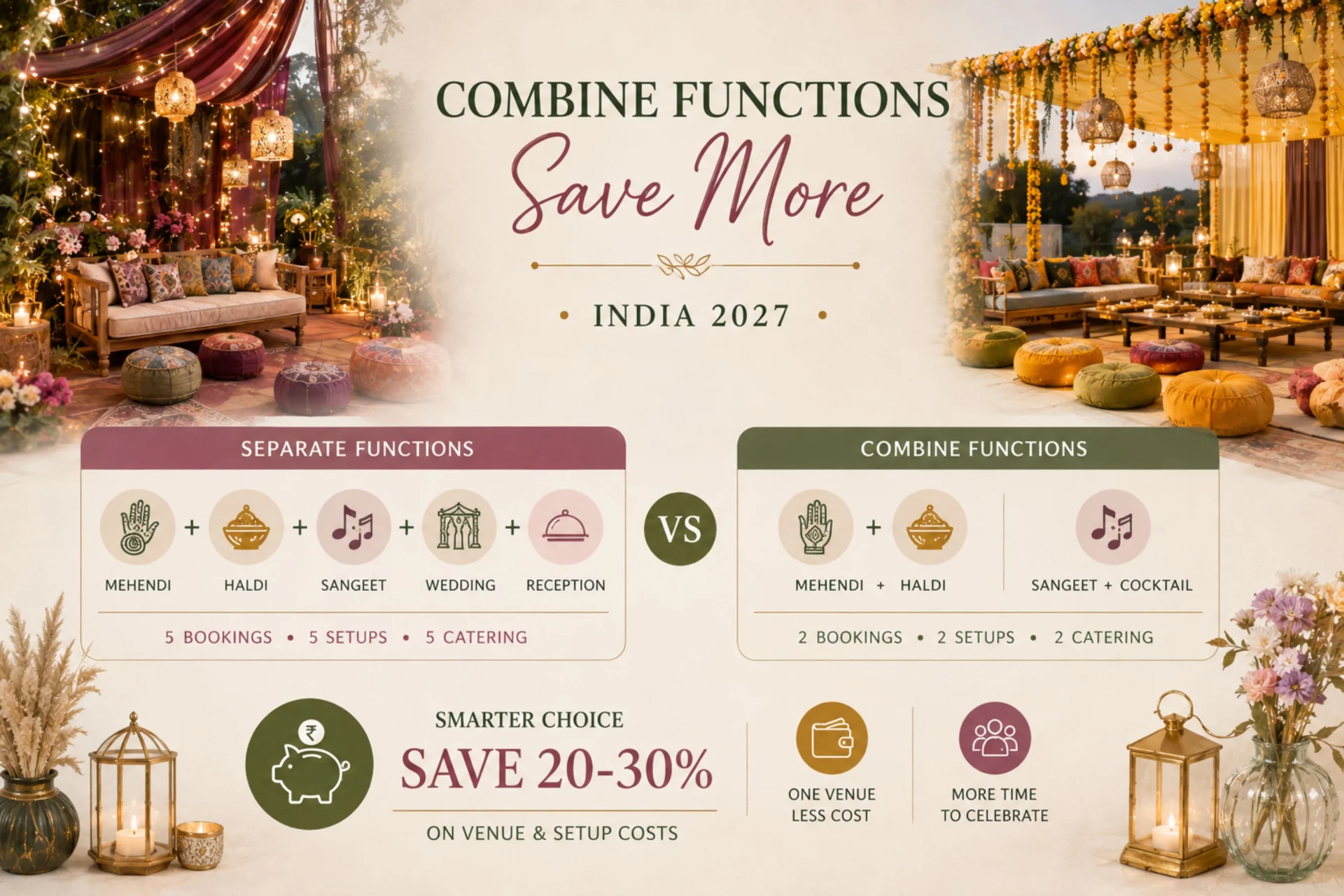
[Image generated using AI]
14. Building In a Contingency Fund
No wedding budget, however carefully planned, comes in exactly on target - which is why a wedding contingency fund is essential - something always costs more than quoted, or a last-minute addition becomes non-negotiable once planning is underway. Setting aside 10 to 15 percent of the total budget as a dedicated contingency fund, untouched until it is actually needed, is the difference between absorbing a surprise cost calmly and scrambling to find money from a category that was already fully allocated. This fund should be treated as genuinely off-limits during the early planning stages - the moment it gets spent on a non-essential upgrade in month two, it is not there when an actual emergency shows up in month five.
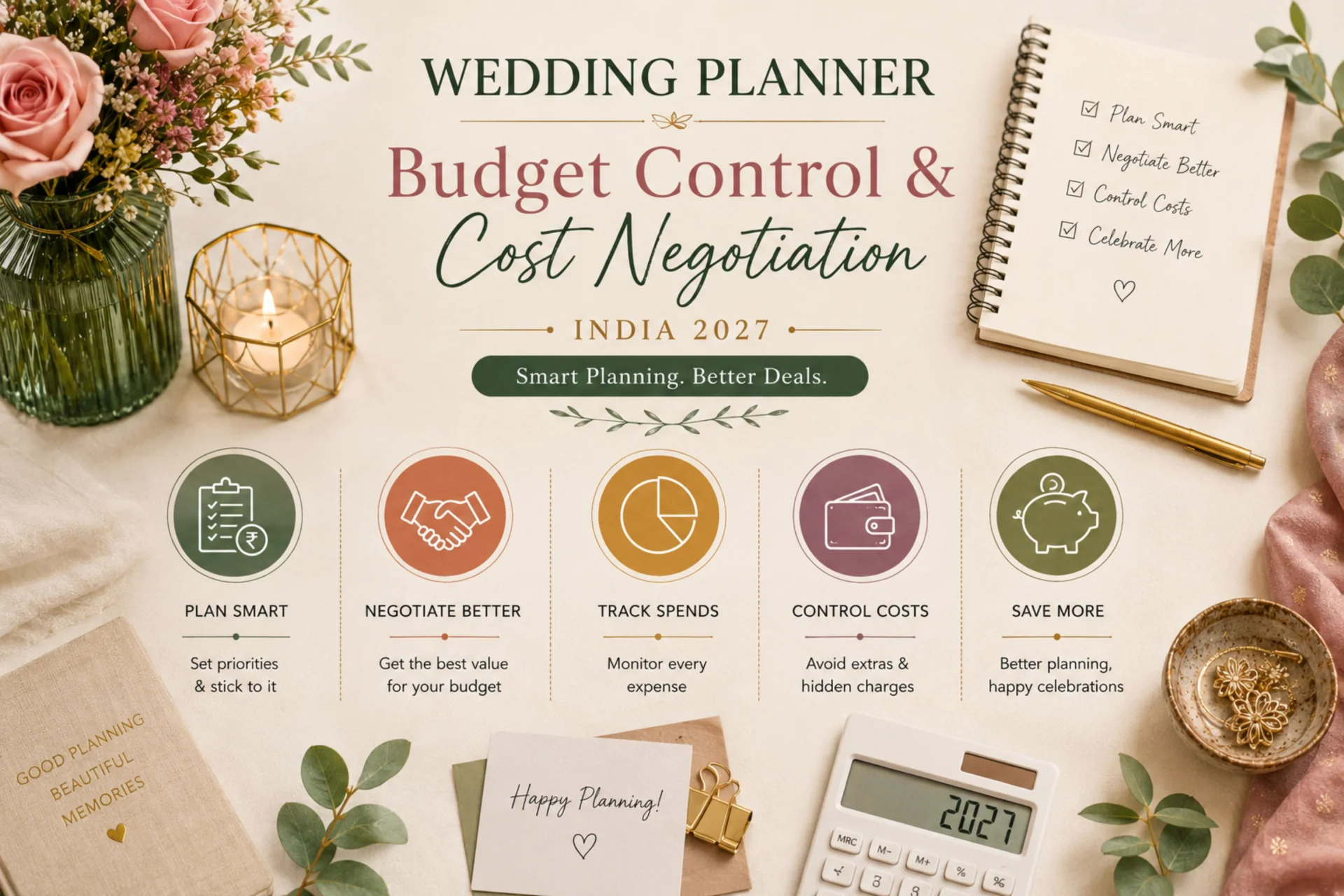
[Image generated using AI]
15. Working With a Wedding Planner to Control Costs
A common assumption is that hiring a wedding planner adds cost rather than controlling it, but for weddings above a certain scale, the opposite is often true. Planners work with vendors repeatedly, which means access to negotiated rates that an individual couple booking a venue for the first time simply cannot get on their own. They also catch the hidden costs and contract clauses - overtime charges, exclusion lists, cancellation terms - that a couple planning their first and only wedding has no reason to know to look for. The planner's fee needs to be weighed against the actual savings and stress reduction it delivers, and for many couples, particularly those juggling full-time jobs alongside planning, that trade-off works out clearly in their favour.
[Image generated using AI]
Part 3 - Which Budgeting Approach Should You Choose?
The right budgeting approach depends on what you are trying to protect - your total number, your guest experience, or your peace of mind. Here is a quick reference to match your goal to the strategy:
| You Want... | Consider... |
|---|---|
| Clear day-to-day spending control | The percentage allocation method |
| Clarity on what truly matters to you | The must-have vs nice-to-have list |
| The best price without lowering quality | The three-quote rule on every major vendor |
| A big, guaranteed venue saving | An off-season or weekday wedding date |
| Fewer separate venue and setup costs | Combining two lower-stakes functions into one evening |
| Protection against last-minute costs | A dedicated 10 to 15 percent contingency fund |
| Help managing multiple vendors and contracts | Working with a professional wedding planner |
| Lower per-guest costs across the board | An early, honest guest list audit before quotes are locked |
| Lower entertainment and Sangeet costs | A package deal covering choreography, sound, and stage together |
| Destination wedding cost control | Local vendor sourcing over flying a full team outstation |
| Overall budget peace of mind | A planner and a contingency fund, used together |
Part 4 - How to Plan a Wedding Budget Without Stress
Knowing the cost categories and the strategies is only half the job. The other half is a planning process that actually holds up once real vendor conversations start. Here is the framework that keeps a wedding budget under control from the first quote to the final invoice.
- The Total Number: Before any vendor conversation happens, agree on one final figure - not a rough idea, an actual number both families and the couple have signed off on. Every decision after this point should be measured against that number, not against what feels affordable in the moment.
- Who Is Paying: In many Indian weddings, costs are split between both families in ways that are never quite written down, and that ambiguity is where miscommunication and overspending both start. Best way is just create a Google Worksheet and just divide it 50-50. We have seen this work best among couples.
- The Priority List: Once the total number is fixed, rank categories by what matters most to you as a couple. The categories at the top get first claim on the budget. The categories at the bottom are where you look first when something needs to be trimmed.
- Vendor Negotiation: Almost every wedding vendor quote has some room to move, particularly outside peak season or when you are booking multiple services from the same vendor. Ask directly about package discounts, off-peak rates, and what is negotiable before assuming the first number is final.
- Tracking and Contingency: A single shared spreadsheet, updated every time a payment is made or a quote is finalised, is worth more than any budgeting app. Keep the contingency fund visible on the same sheet so everyone involved can see exactly how much buffer is left as planning progresses.
- The Final Reconciliation: After the wedding, sit down and compare what was actually spent against what was planned, category by category. This is not about regret - it is the single most useful exercise for understanding where your particular wedding budget behaved differently from the plan, which is genuinely useful information if there is a next big life event to budget for.
Your Wedding Budget Should Reflect Your Priorities, Not Your Pressure
A wedding budget is not a limitation on the day you want. It is the tool that makes sure the money goes where it will actually be felt - by you, and by the people you love who are in the room. A couple who spent carefully on a smaller guest list and a photographer they trusted completely will remember their wedding just as vividly as a couple who spent three times as much on a much larger one. What both of them have in common, when the planning goes well, is that the spending matched what actually mattered to them - not what they felt pressured into, and not what the budget quietly slipped into without anyone noticing. At Eternal Weddingz, the team works with couples on the full budgeting process - from the first realistic number through vendor negotiation, category-by-category tracking, and contingency planning, right through to the final reconciliation. Because a wedding you can afford calmly is always a better wedding than one you paid for anxiously.