









Essential Wedding Venue Checklist for Indian Couples in 2026
Introduction:
Most couples spend more time choosing their wedding lehenga than their wedding venue. Which is understandable — the lehenga is exciting, the venue is a spreadsheet. But here's the problem: the venue is the one decision that every other decision bends around. The caterer you love, the décor mood you've saved 200 Pinterest pins for, the guest list you've been negotiating for months — all of it either works within the venue or doesn't.
This is not a list of things to Google. This is a working checklist — the kind you take to a site visit, read before signing a contract, and reference when a venue coordinator gives you an answer that sounds fine but feels off. Eternal Weddingz pulls together verified data from wedding finance and planning sources, so every number you see here has a reference behind it. Whether you're booking a palace hotel in Udaipur, a beachfront property in Goa, or a well-run banquet hall in South Delhi — this checklist covers what actually matters, in the order it actually needs to be addressed.
1. Set Your Venue Budget First — Before You Visit Anything 💰
Walking into a venue without a number in mind is exactly how couples end up spending 40% of their entire wedding budget on a single hall. The venue looks incredible, the coordinator is charming, the chai is good — and by the time the quote lands in the inbox, the decision is emotionally made. The quote is just a formality at that point. Lock in a budget range before you book a single site visit. Not a rough idea — an actual number, complete with a buffer for the things venues don't mention in the brochure.
A reasonable starting point for most Indian weddings is allocating between 25 and 35 percent of the total wedding budget to the venue — including all associated costs like catering minimums, décor charges, and accommodation blocks. That percentage shifts significantly based on destination. A Goa beachfront resort and a Lucknow banquet hall for the same 300-person wedding will come in at very different price points — and neither is wrong, depending on what the couple actually needs from the day.
[Source: The Wedding Ties — Wedding Budget Breakdown for Indian Weddings]
Venue Budget Checklist — What to Include Beyond the Rental Fee:
- Catering minimums: Many venues require a per-plate minimum spend. Ask for this in writing before the first site visit.
- Décor restrictions: Some properties require you to use their in-house decorator team, often at a premium. Factor this in early.
- Generator & electricity: Outdoor venues and farmhouses often charge separately for power infrastructure — ask upfront.
- Security deposit: Typically refundable, but can range from ₹50,000 to ₹3 lakh depending on the property.
- Parking and valet: Urban venues may charge guests or require a paid third-party arrangement.
- GST: Venue rentals in India attract 18% GST — factor this into every quoted figure.
[Source: Coohom — Marriage Hall GST Rate: Your Complete Guide]
2. Guest Count: The Number That Changes Everything 👥
The guest list and the venue are in a constant negotiation — and one of them will have to give. Most couples start with a dream venue and then try to squeeze or stretch their guest list around it. That usually ends in either a venue that feels half-empty, or guests sitting uncomfortably close to each other through a four-hour dinner. Have a realistic guest count — at least 80% confirmed — before viewing any venue. Not the aspirational "we might invite everyone" number. The realistic one.
Venue capacities are typically listed for theatre-style seating; for a sit-down dinner with a dance floor, factor in roughly 25–30% less usable space than the maximum listed capacity. A hall listed for 400 in its brochure may comfortably seat 280 for a full sit-down dinner with a dance floor, a stage, and a photographer moving through the space. Ask for the round-table dining capacity specifically — not the max capacity.
[Source: WeddingBudgetCalc — Wedding Seating Calculator 2026]
Guest Count Checklist:
- Seated dinner capacity: Always ask for this number — round-table dining, not theatre layout.
- Overflow areas: Is there a secondary space for cocktail hour or children without eating into the main hall?
- Accessibility: Check for ramps, elevators, and accessible restrooms for elderly and mobility-impaired guests.
- Multi-day functions: For a mehendi, sangeet, and reception spanning two to three days, confirm the venue has distinct spaces or clear scheduling for each.
- Outdoor overspill: For larger families who gather in groups between events, is there usable outdoor space that doesn't disrupt the ceremony?
3. Picking the Right Type of Venue for Your Wedding 🏰
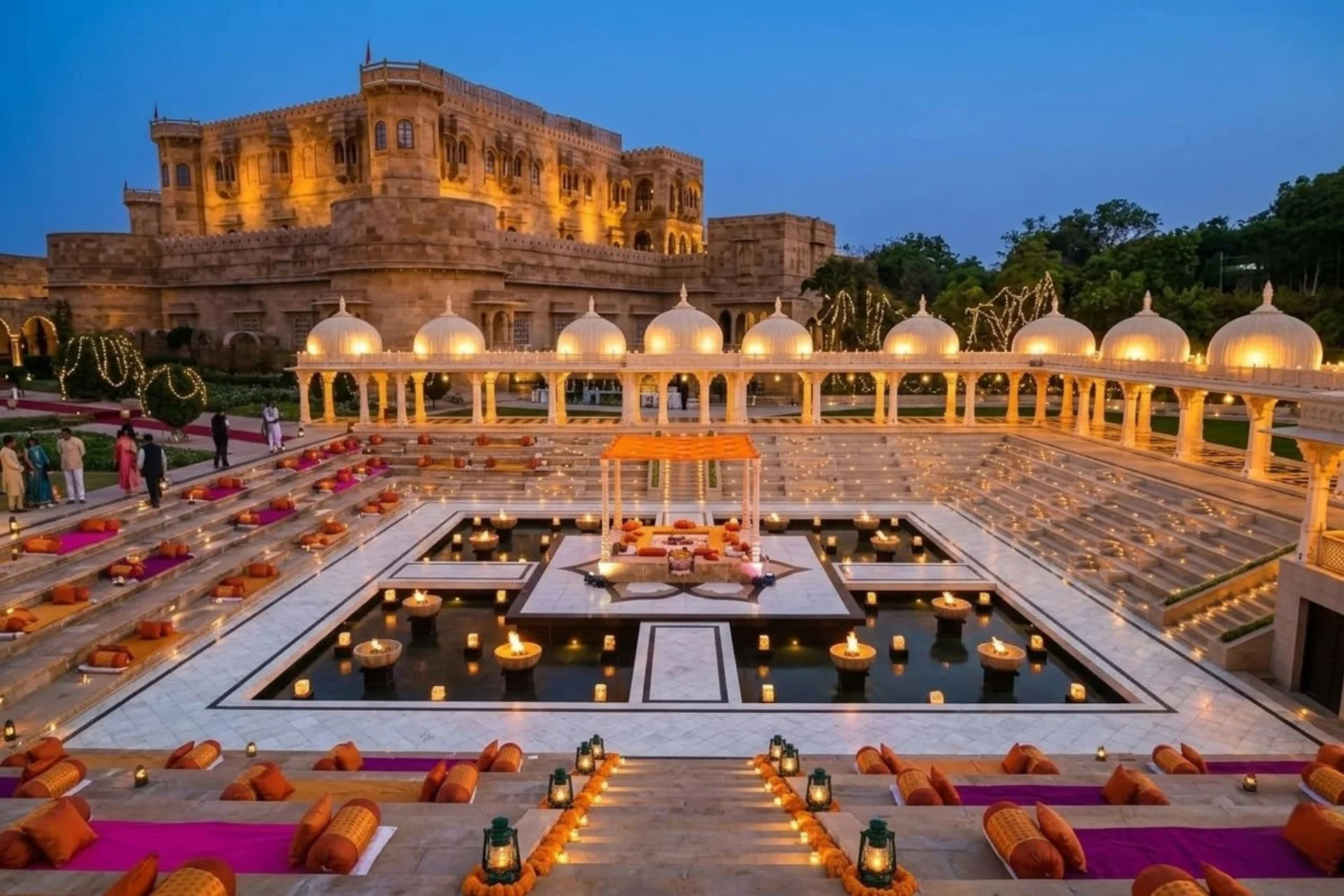
India has a genuinely wide range of wedding venue types — and each comes with trade-offs worth thinking through before falling in love with the aesthetics. A palace in Udaipur is not the same experience as a farmhouse in Gurugram, even if both hold 300 guests and quote similar totals.
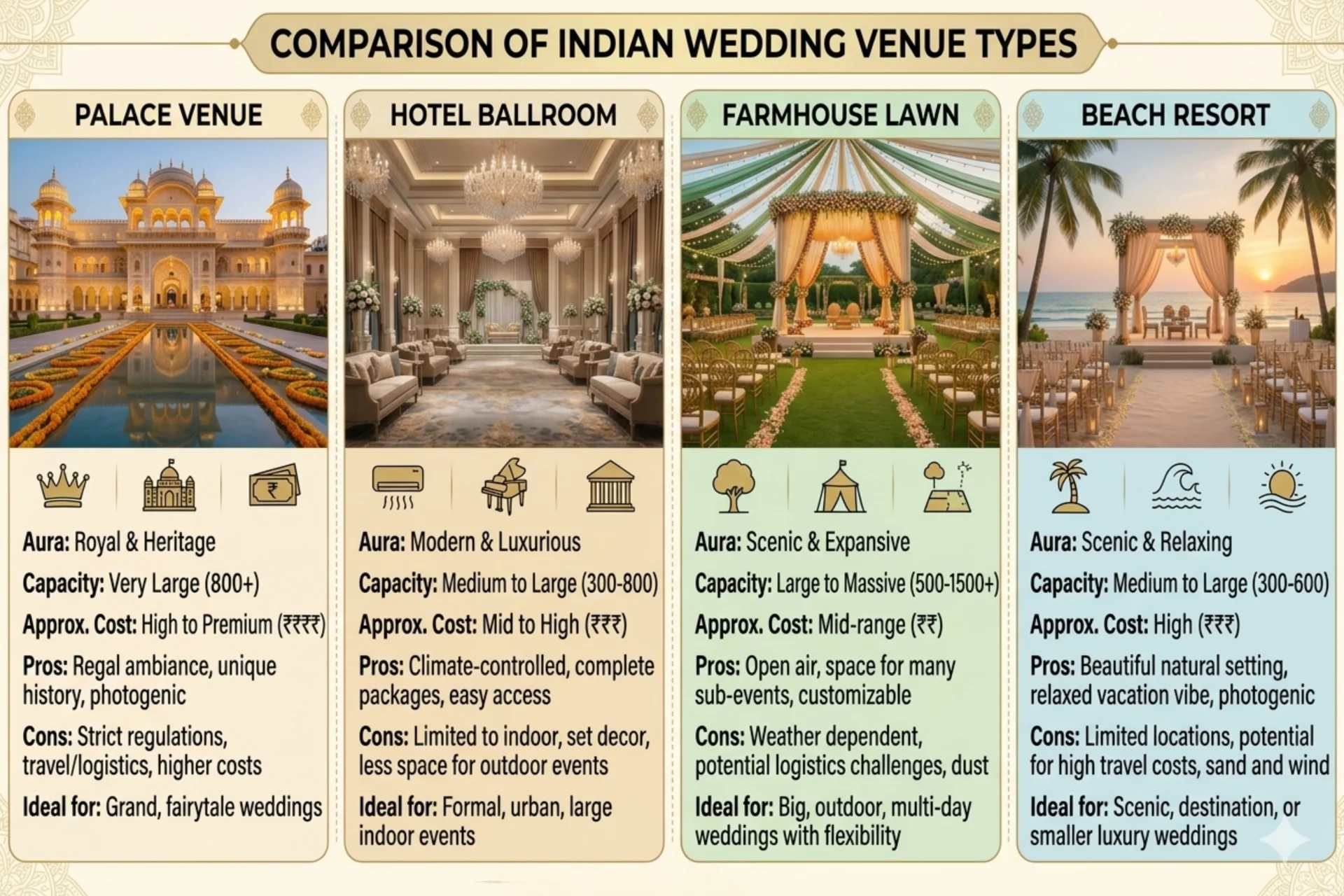
Hotel properties offer logistical convenience: in-house catering, on-site accommodation, dedicated event coordinators. The downside is less flexibility on outside vendors and a more standardized event format. Standalone venues — farmhouses, heritage havelis, outdoor lawns — give more creative freedom but require heavier coordination from the couple's side. Neither is better. The right answer depends on how much hands-on management the couple can take on.
Venue Type Comparison — Real Trade-offs:
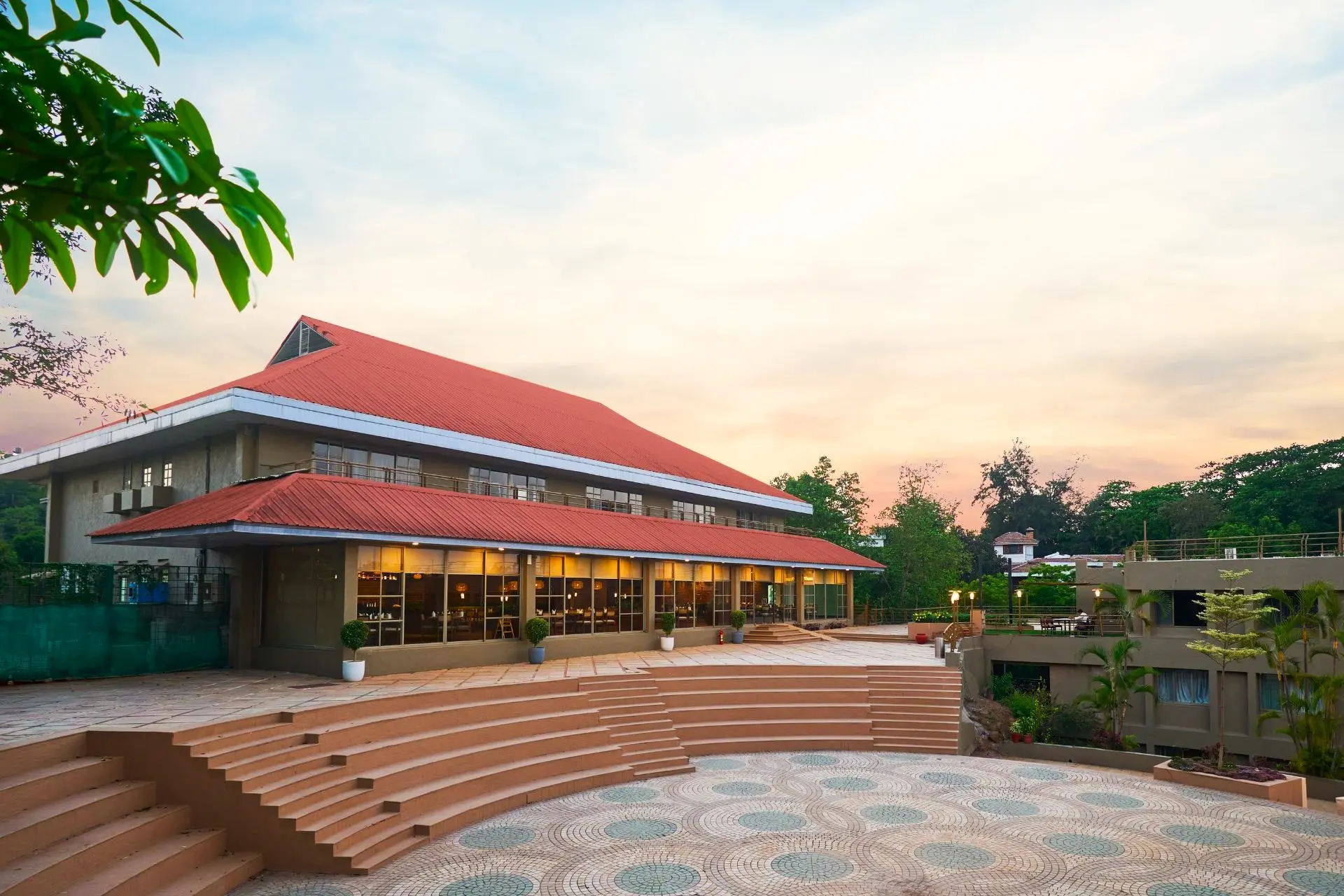
- Five-star hotel ballrooms: Reliable infrastructure, experienced event staff, attached guest accommodation. Limited outside vendor flexibility; premium pricing throughout.
- Heritage properties and palaces: Strong visual character; ideal for destination weddings in Rajasthan. Remote locations require thorough guest logistics planning.
- Banquet halls: Practical and underrated. Good climate control, familiar vendor networks, flexible date options. Rarely exciting to photograph.
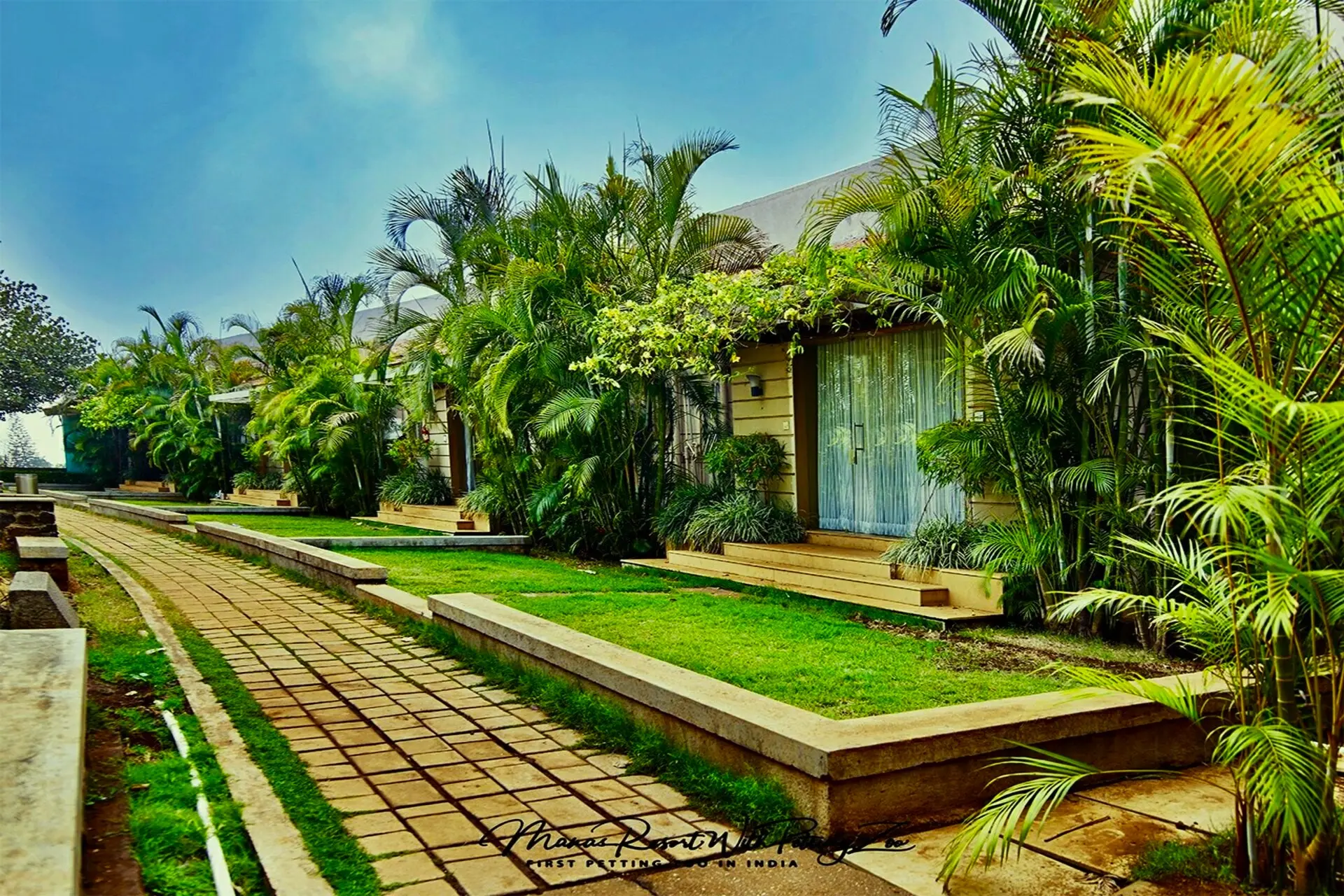
- Farmhouses and outdoor lawns: Great for intimate or unconventional weddings. Highly weather-dependent and seasonal — backup planning is non-negotiable.
- Beach and resort venues: Well suited for Goa and Kerala destination weddings. Note: noise ordinances near the shoreline often affect music cutoff times.
4. Location, Access, and Guest Travel Logistics 🗺️
A venue that's difficult to reach will affect attendance, mood, and timing — even if nobody says so. Guests who fought Mumbai traffic for 45 minutes before a 7 PM ceremony will arrive irritable. Relatives who circled the parking lot for 20 minutes won't be in the frame of mind to enjoy the baraat. These things matter, and they happen at otherwise well-planned weddings all the time.
For city weddings, proximity to the guest base and access from major transit hubs should be real criteria, not an afterthought. For destination weddings, the bar shifts — guests expect to travel — but the arrival experience needs to be seamless: clear directions, transport tie-ups, and a confirmed accommodation block within reach.
Location & Logistics Checklist:
- Distance from airport or railway station: For outstation guests, 30 minutes is manageable. Over an hour creates friction that affects attendance and start times.
- Parking capacity: In metros, this is consistently the most underestimated logistical problem. Ask for the exact number of cars the venue can accommodate.
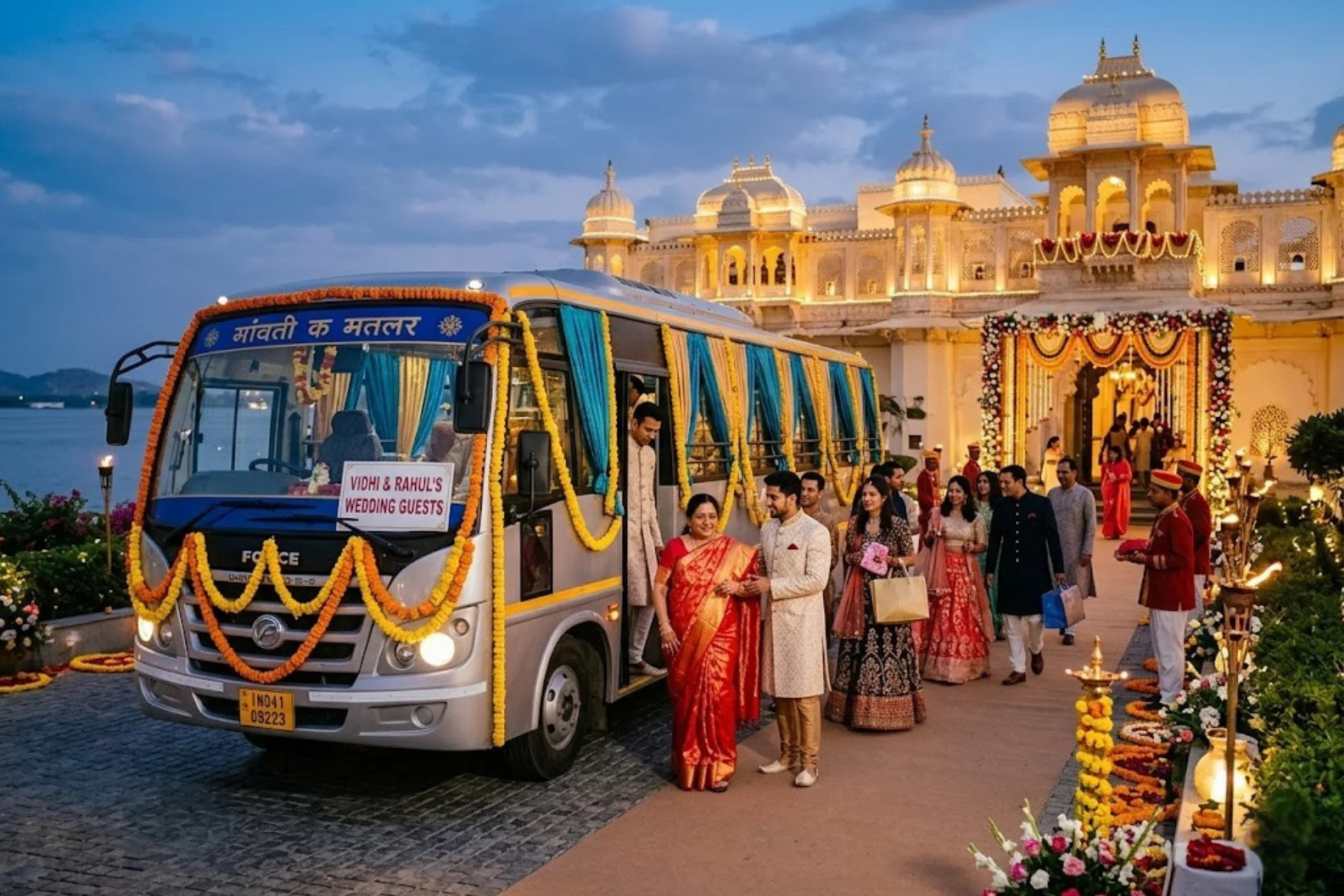
- Shuttle coordination: Some venues have transport tie-ups — find out if this is included or a chargeable add-on.
- Accommodation options nearby: Even if the venue has no rooms, guests need options within a short radius. Budget hotels matter, not just luxury suites.
- Noise ordinances: Municipal rules across many Indian cities require music to stop by 10 PM. Verify the specific rule for that locality before signing.
5. The Outside Vendor Policy — Read Every Word 📋
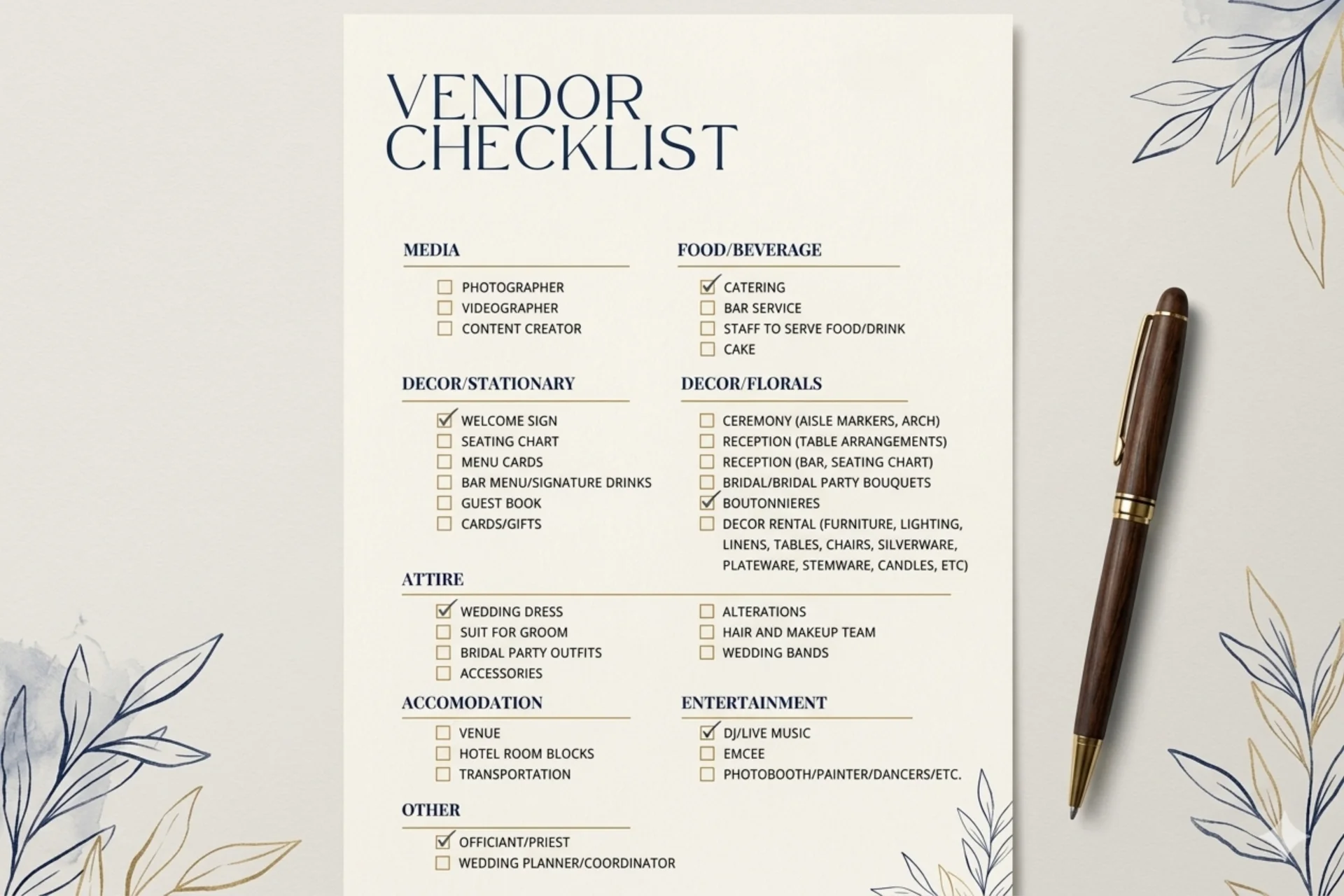
This is the section most couples skip and then regret. Almost every wedding venue in India has some version of a vendor policy — some require exclusive in-house catering, some restrict outside decorators, some charge a corkage fee if you bring your own liquor. Catering alone often accounts for 20–30% of the total Indian wedding budget, and the charges for bringing in an outside caterer at a hotel property can run anywhere from ₹50 to ₹200 per plate on top of what the caterer charges.
The cleaner approach: ask about vendor policy in the very first conversation with the venue coordinator — not after the site visit, not at the second meeting. A venue that restricts outside decorators can still work fine if their in-house team is good and fairly priced. The problem is discovering the restriction after already committing to a favorite decorator.
[Source: Bajaj Finserv — Average Indian Wedding Cost 2025]
Vendor Policy Checklist — Ask These in the First Call:
- Catering: Is an outside caterer permitted? If so, is there a per-head surcharge?
- Decoration: Can any decorator be hired, or does the venue require its empanelled vendors?
- Photography and Videography: Some heritage properties restrict drone use or require prior permission for commercial photography.
- Music and entertainment: Are outside DJs or live bands permitted? Is there an in-house sound system that must be used?
- Liquor policy: Is the venue licensed? Can outside liquor be brought in, and is there a corkage charge?
6. Weather, Season, and the Timing Trap Nobody Warns You About 🌤️
India's wedding season essentially runs from October to March, which means every decent venue in every popular city is competing for the same Saturdays during the same months.
If a couple is fixed on a specific Muhurat or family anniversary date, the venue search needs to begin at least 12 to 18 months in advance. For popular properties in Jaipur, Goa, and South Mumbai — 18 months is not an exaggeration. The best venues on auspicious dates can book out a full year ahead. The off-season is more viable than most couples assume. Hill stations are accessible in April–May, and indoor venues in metros offer real financial benefits.
[Source: EventTube — Wedding Season in India: A Wedding Planner's Guide]
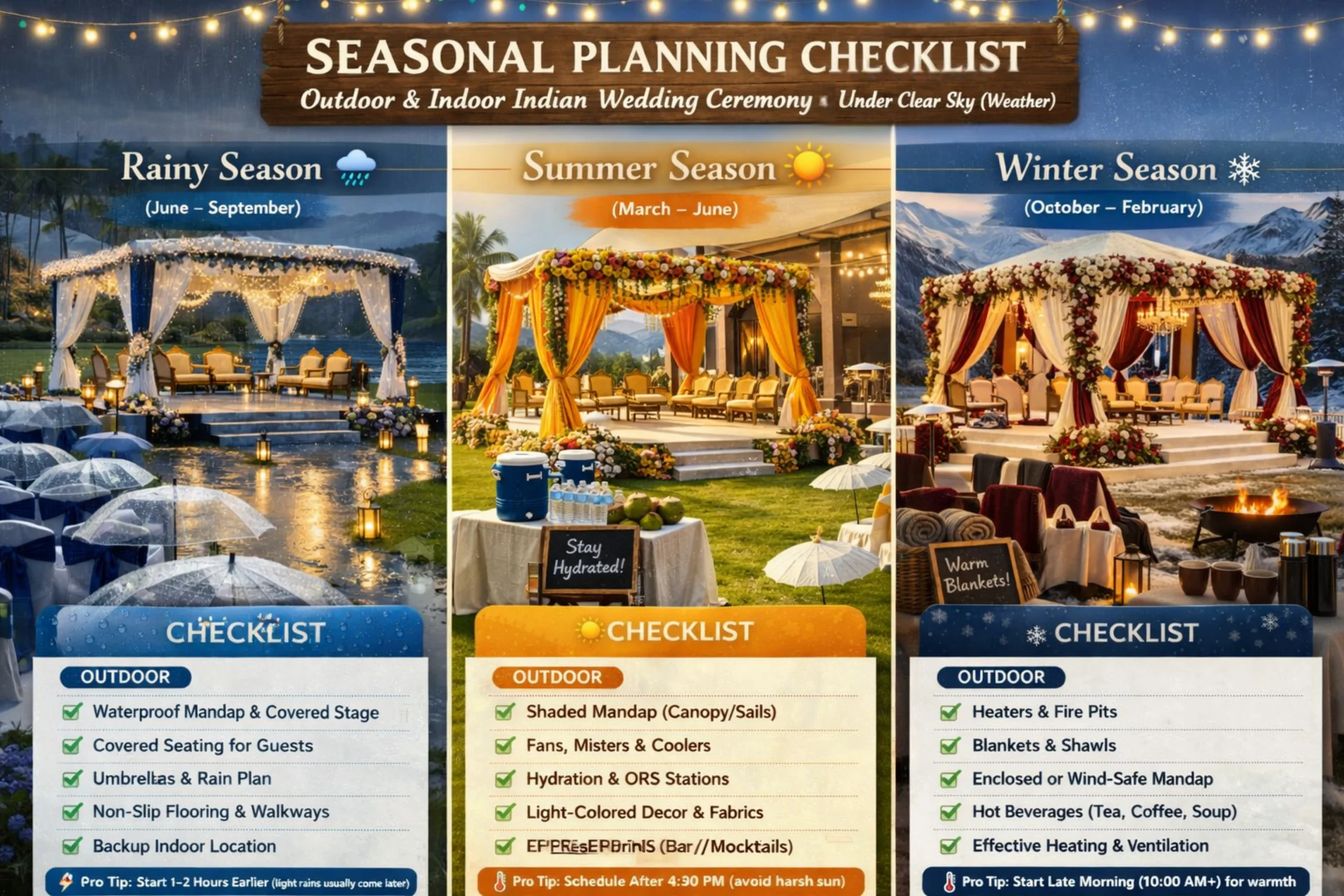
Seasonal Planning Checklist:
- October–March (Peak season): Best outdoor weather across most of India. Highest prices, lowest date availability. Book early — no exceptions.
- Monsoon (June–September): Works well for Kerala (houseboats, riverside venues). Avoid open-air lawns in North India entirely.
- Summer (April–June): Indoor, air-conditioned venues in metro cities can offer 20–30% lower pricing and better date flexibility.
- Auspicious Muhurat dates: Demand is four to five times higher on certain dates. If the date is fixed, the venue search should begin immediately — not after the engagement party settles down.
- Weather contingency: For any outdoor or semi-outdoor venue, confirm in writing what the backup plan is, who manages the transition, and whether there's an extra charge for using it.
[Source: Varniya — Destination Wedding Cost in India 2025]
7. Ambience, Architecture, and Décor Flexibility 🌸
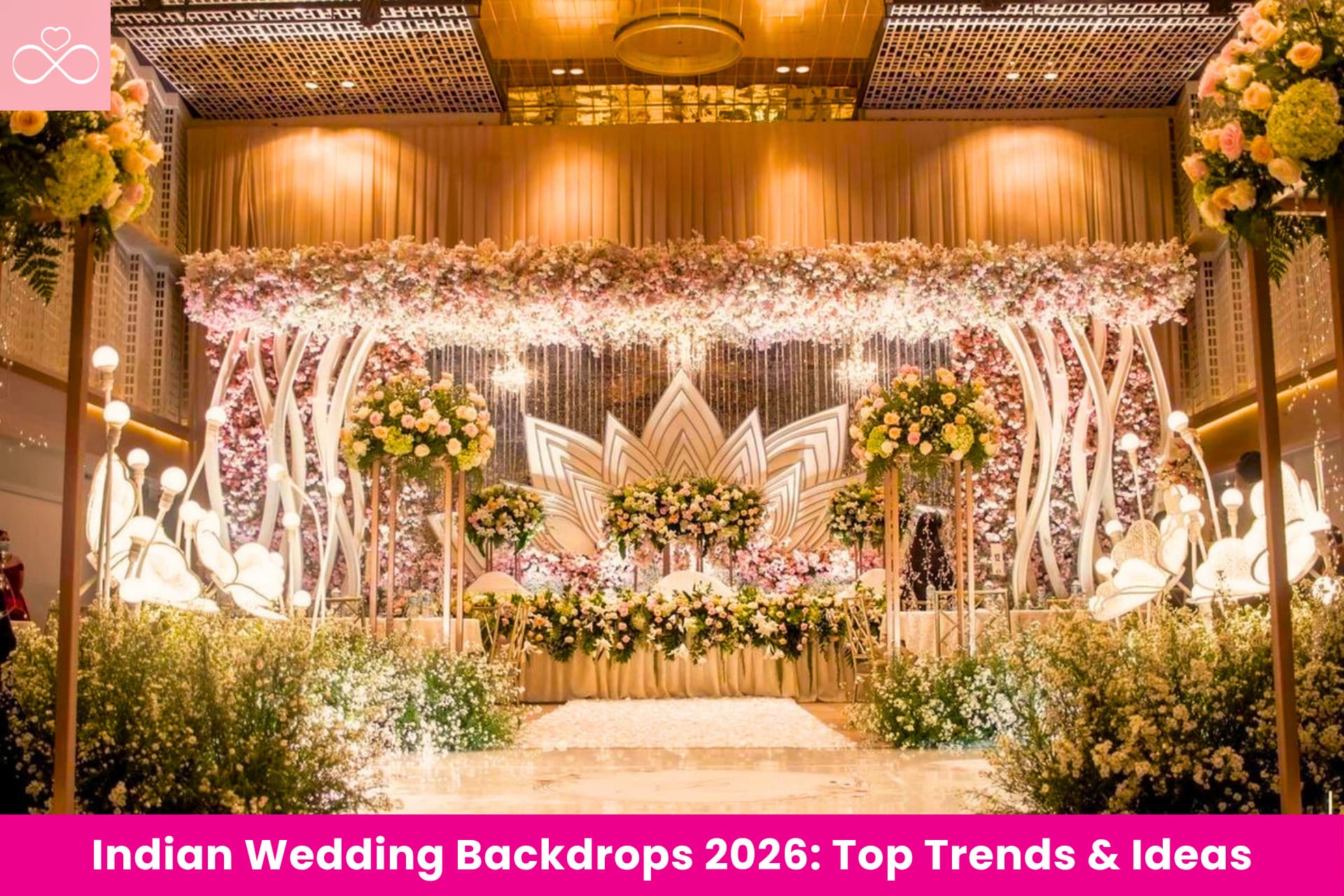
The visual character of a venue shapes what a wedding can look and feel like — and some spaces are genuinely easier to transform than others. A white-walled, neutral-floored banquet hall is a blank canvas. A heritage property with carved stonework and terracotta tiling already has a personality, which is both an asset and a constraint.
Lighting is the single element that changes a space more than anything else. Before visiting a venue during the day, look at photos from events held there at night. A space that reads as warm and intimate under event lighting in photos can feel like a convention centre under its own fluorescent ceiling lights. Also check whether the electrical infrastructure at the venue can support heavy lighting rigs — farmhouse generators often cannot.
Ambience & Décor Checklist — What to Assess on the Site Visit:
- Natural daytime light: Essential for the visual quality of morning or afternoon events — and for guest comfort during long ceremonies.
- Ceiling height: Affects draping, chandelier installations, and floral ceiling work. Low ceilings significantly narrow décor options.
- Floor surface: Marble and stone floors are beautiful but slippery for guests in heels or heavy lehengas. Ask how the venue handles this.
- Wall and floor colours: Strong existing colours will limit décor palette choices unless the budget includes full draping.
- Kitchen access and prep area: For large weddings, the back-of-house setup affects how smoothly food service runs. Ask to see the kitchen.
- Electrical capacity: Confirm the venue can support the decorator's lighting plan — and ask who is responsible if a generator trip affects the ceremony.

8. Contract Review: What to Check Before You Sign?📝
A verbal agreement with a venue coordinator is not an agreement. What matters is what's written in the contract — and wedding venue contracts in India vary from two pages to twelve, with corresponding variation in how protective they are of the couple's interests. Most Indian venues take a token booking amount (typically 10–25% of the total), a second installment closer to the event, and the final balance before or on the day.
What happens if the second installment is delayed? What if the couple needs to reschedule? These are uncomfortable questions to ask when the mood is celebratory — but they're exactly what the contract exists to clarify before they become disputes.
[Source: Festiva Recreations — Indian Wedding Cost Breakdown: A Complete Budget Guide]
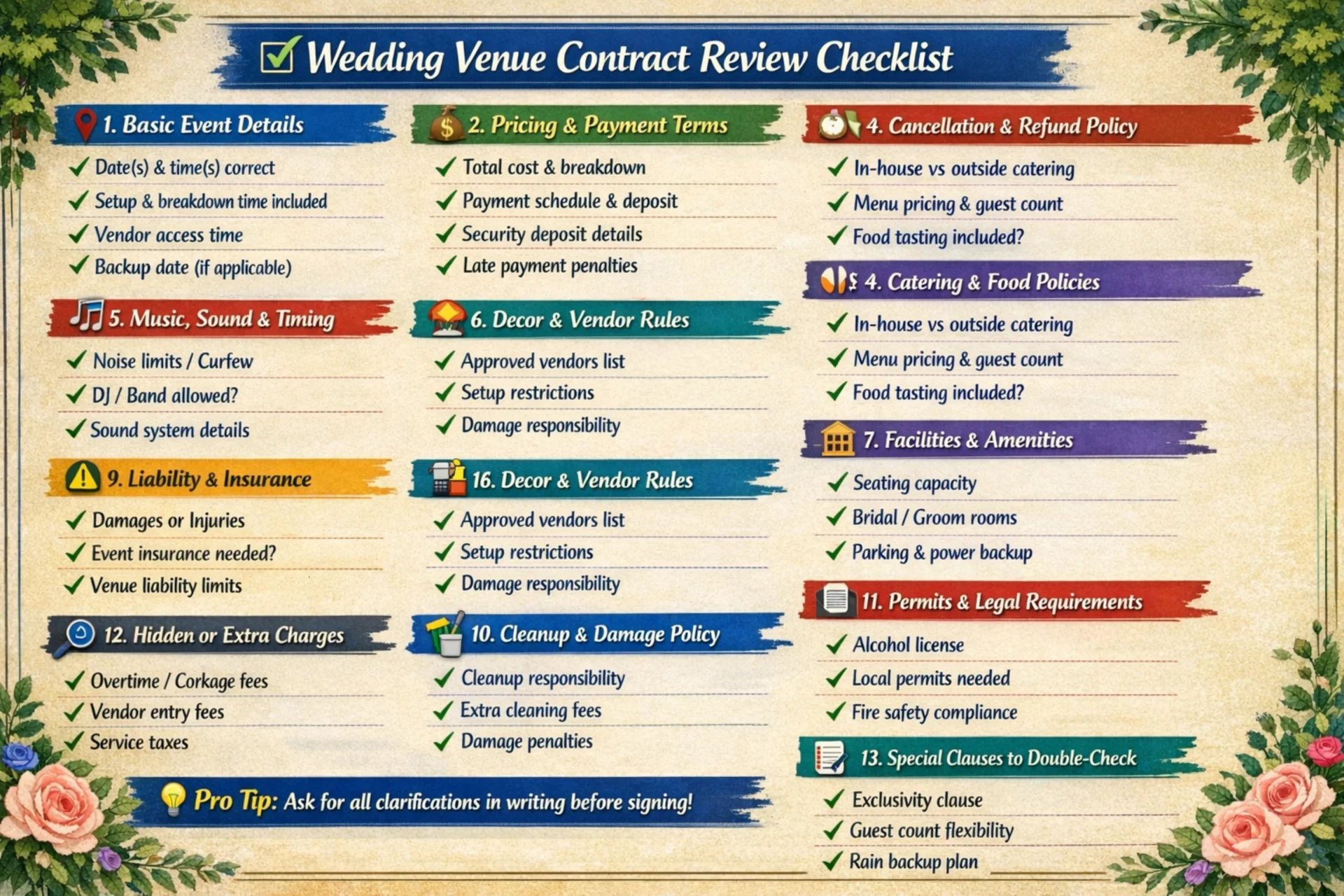
Contract Review Checklist — Read for These Specifically:
- Cancellation policy: How much is forfeited at 90 days, 60 days, 30 days? Get specific numbers — vague language in this clause is a warning sign.
- Date change terms: Some venues offer one free rescheduling; most charge a fee or hold the deposit against a future booking.
- Liability for damage: What is the couple responsible for if guests cause damage? Is there an insurance requirement?
- Force majeure clause: Does the contract cover situations beyond anyone's control — flooding, government curfew, civic disruptions? Check what obligations apply on both sides.
- What's included vs. what's extra: Tables, chairs, linens, generator backup, event staff — get this in writing. Assume nothing is included unless the contract says so.
- Access and pack-up timing: When can the decorator begin setup? When must the venue be fully cleared? Setup hours and post-event pack-up time affect decorator costs significantly — know the window before quoting.
9. Your One-Page Master Checklist (Save This) 📌
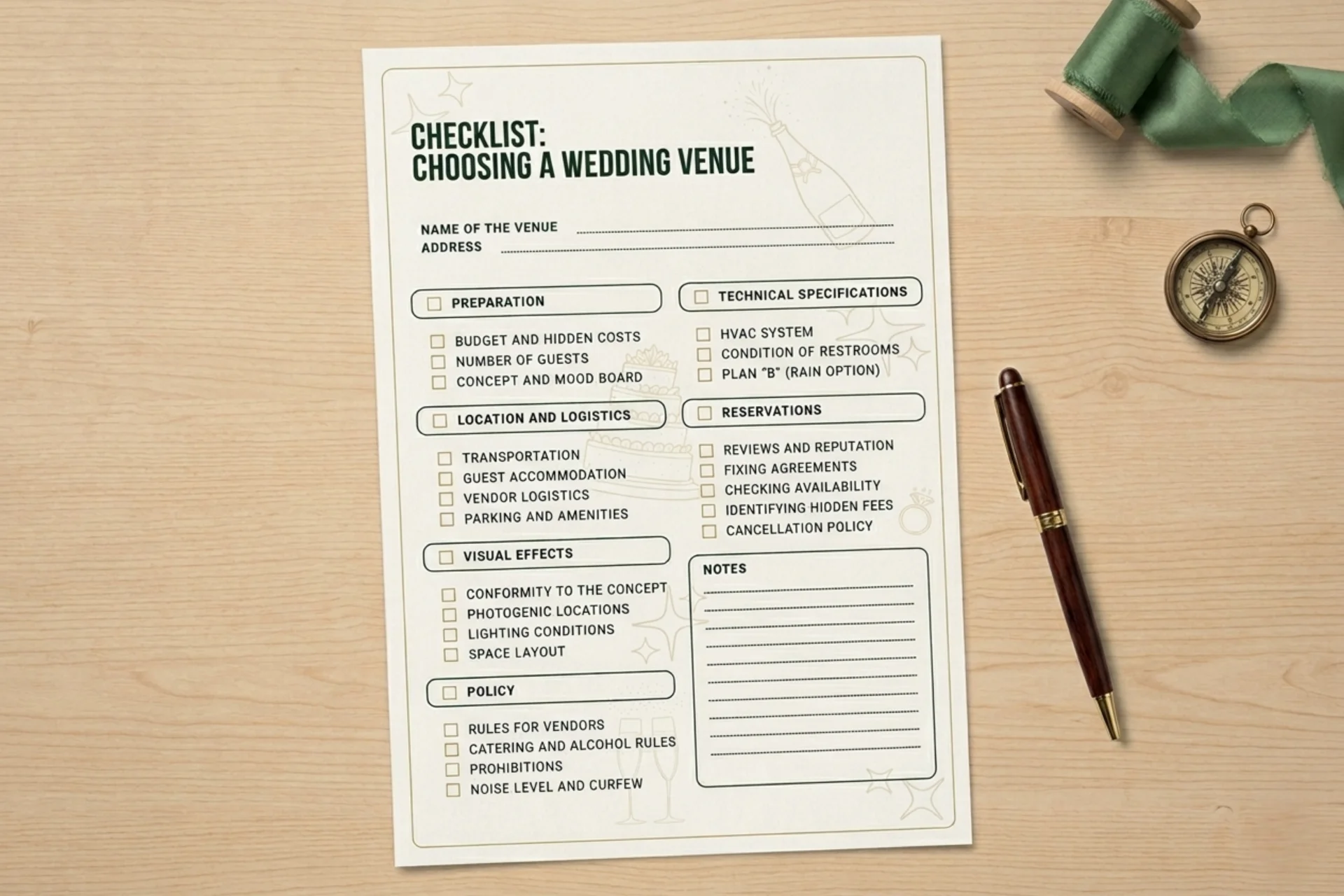
Below is a condensed version to take on every site visit. Screenshot it, print it, put it in the notes app — just make sure it's in hand before the venue coordinator starts showing you their event gallery and the good chai arrives.
Your Wedding Deserves a Venue That Was Actually Chosen — Not Just Booked 🌸
The couples who look back on their wedding day with genuine satisfaction are usually the ones who treated the venue decision as seriously as the guest list. They asked the uncomfortable questions early, read the contract before signing, and chose a space that worked for their day — not for someone else's Instagram feed.
The team at Eternal Weddingz has helped hundreds of couples navigate venue shortlists across India's top destinations — from Rajasthan palace weddings to intimate Goa beach ceremonies to elegant Delhi receptions. No sales pitch, no one-size-fits-all recommendation. Just honest planning advice and a network of venues that have been vetted in person. If you're starting the venue search — or stuck in the middle of one — reach out. The first conversation is free, and it could save you from a very expensive mistake.